
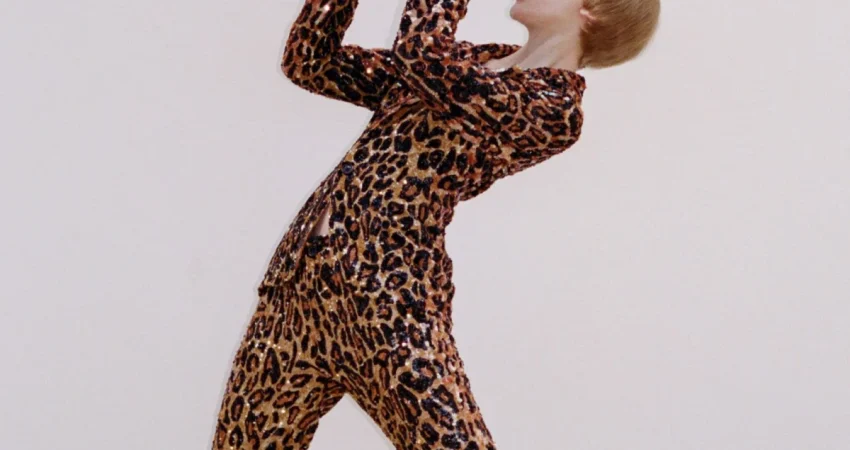
The halls of Central Saint Martins (CSM) in London, traditionally a site for the initiation of the next generation of creative talent, recently served as the backdrop for a significant milestone in British contemporary fashion. Ashish Gupta, the London-based designer renowned for his eponymous label Ashish, returned to his alma mater to document his Spring collection, marking a quarter-century of operation in an industry known for its volatility. The choice of location was not merely aesthetic but deeply symbolic, as Gupta utilized the corridors, libraries, and studios where his professional journey began to frame a collection that serves as both a retrospective and a poignant critique of the current global sociopolitical climate.
The Spring lookbook features twenty-five distinct looks, representing each year the designer has been in business since his graduation from the prestigious CSM Master of Arts (MA) Fashion program in 2000. Under the current leadership of MA Director Fabio Piras, the institution opened its doors to Gupta, acknowledging his status as one of the most successful and enduring alumni of the late Professor Louise Wilson’s tenure. This homecoming highlights a career that has consistently bridged the gap between high-fashion craftsmanship and grassroots activism, utilizing sequins and slogans to navigate the complexities of identity, politics, and labor.
Historical Context and the Influence of Central Saint Martins
To understand the significance of Gupta’s twenty-five-year anniversary, one must examine the environment that shaped his creative output. Gupta originally arrived in London from India with a background in advertising, a discipline that heavily influenced his later mastery of the "slogan" garment. His transition to fashion was solidified at Central Saint Martins during a period often cited as a golden era for the institution. Under the tutelage of Professor Louise Wilson OBE—a figure known for her rigorous and often uncompromising approach to design education—Gupta developed the subversive wit that would become his trademark.
The MA Fashion program at CSM has historically been a primary feeder for the global luxury market, producing designers such as Alexander McQueen, Christopher Kane, and Phoebe Philo. For Gupta, the program provided the technical foundation to launch an independent label that remained self-funded and distinct from the corporate structures of major fashion conglomerates. His return to the college last week, amidst a new cohort of "freshers" enrolling for the academic year, underscores the cyclical nature of the London fashion ecosystem and the enduring relevance of the "CSM aesthetic"—one defined by individuality, rebellion, and intellectual rigor.
A Chronology of the Ashish Label: 2000–2025
The trajectory of the Ashish brand over the last two and a half decades reflects broader shifts in the fashion industry and the UK’s cultural landscape.
- 2000–2005: The Emergence of the Sequin King. Following his graduation, Gupta quickly garnered attention for his unique fusion of Western sportswear silhouettes with traditional Indian embroidery techniques. His ability to render everyday items, such as the plastic grocery bag or the classic tracksuit, in hand-stitched sequins established his "high-low" design philosophy.
- 2006–2014: London Fashion Week Regularity. Ashish became a staple of the London Fashion Week schedule, known for high-energy runway shows that challenged industry norms regarding diversity and gender. During this period, the brand expanded its global footprint, gaining a cult following among celebrities and retailers who sought out his vibrant, irreverent aesthetic.
- 2015–2020: The Rise of the Slogan. As global politics became increasingly polarized, Gupta’s work took on a more overtly political tone. His "Immigrant" T-shirt and collections addressing the aftermath of the Brexit referendum positioned him as a designer who used the runway as a platform for protest.
- 2021–2025: Resilience and Reflection. Navigating the challenges of the COVID-19 pandemic and the subsequent economic downturn in the UK, Gupta shifted toward more intimate presentations and a deeper focus on the "Handmade Tale"—the artisanal labor behind his New Delhi-based production.
The Spring Collection: Slogans as Placards of Protest
In a departure from previous seasons where political messages were often integrated into the knitwear or sequined patterns of the garments themselves, the Spring collection utilizes hand-written placards. This choice evokes the visual language of student demonstrations and street protests, aligning with the collection’s theme of global unrest. Gupta has stated that the current global move toward authoritarianism and the rise of far-right ideologies informed the "darker" undertone of this anniversary collection.
The slogans featured in the lookbook address a wide spectrum of contemporary issues:
- "Libraries Not Data Centres": A critique of the prioritization of digital infrastructure over public intellectual spaces and the erosion of physical archives.
- "UK Garage Not UK Farage": A quintessentially British play on words that pits the inclusive, multicultural history of the UK Garage music scene against the populist rhetoric of right-wing political figures.
- "It’s a Dress Not a Yes": A clear statement on bodily autonomy and the ongoing conversation surrounding consent and women’s rights.
- "One of my best friends is Straight": A subversive reversal of the "some of my best friends are gay" trope, reflecting Gupta’s long-standing commitment to LGBTQ+ visibility.
Beyond the explicit text, the collection employs "coded" references to historical acts of defiance. A leopard-print trouser suit serves as an homage to Jane Fonda’s activism during the Vietnam War era. Other images feature models carrying pots and pans—a reference to the "cacerolazo," a form of protest popular in South America and Spain where citizens create noise to signal their dissatisfaction with government policies.
Technical Analysis: The "Handmade Tale" of New Delhi
While the political messaging often captures the headlines, the technical execution of Gupta’s work remains the backbone of the brand. Every garment in the Ashish archive, including those in the twenty-five-look anniversary collection, is produced in his dedicated atelier in New Delhi. This facility employs highly skilled artisans who specialize in traditional embroidery and sequin work.
A notable feature of the Spring collection is the trompe l’oeil effect achieved through sequins. Pieces that appear to be traditional crochet or classic argyle knitwear are, upon closer inspection, entirely constructed from hand-applied sequins. This level of craftsmanship distinguishes the brand from fast-fashion imitations and reinforces the "A Handmade Tale" slogan—a play on Margaret Atwood’s dystopian novel that redirects the narrative toward the value of human labor in an increasingly automated world.
According to industry data, the luxury embroidery sector in India contributes significantly to the global fashion supply chain, yet the artisans behind the work are rarely acknowledged by Western brands. Gupta’s transparent relationship with his New Delhi atelier serves as a model for ethical production and cultural exchange, ensuring that the financial and creative benefits of the brand are shared across borders.
Implications for the Future of Independent Design in London
The celebration of Ashish’s twenty-fifth year comes at a precarious time for independent designers in the United Kingdom. The combination of increased export costs post-Brexit, rising rents in the capital, and the lingering effects of high inflation has created a challenging environment for mid-sized creative businesses.
Gupta’s longevity is an anomaly in a field where many labels struggle to survive past the five-year mark. His success suggests that a combination of a distinct aesthetic "niche" (in this case, high-concept sequins), a lean business model, and a strong moral or political stance can foster a loyal customer base that sustains a brand through economic cycles.
Furthermore, his return to Central Saint Martins highlights the critical role of educational institutions in fostering long-term industry resilience. By providing space for established alumni to produce work, the college facilitates a transfer of knowledge and inspiration between generations. As current students observe Gupta’s process, they are presented with a blueprint for a career that prioritizes creative integrity over rapid commercial expansion.
Conclusion: Fashion as a Tool for Navigation
As the fashion industry continues to grapple with its role in a world defined by climate change and political instability, the work of Ashish Gupta offers a case study in how a brand can remain relevant by engaging directly with the "darkness" of the times. The Spring collection does not seek to provide solutions but rather to "alleviate the gloom" through a combination of humor, beauty, and pointed critique.
By marking twenty-five years with a return to his roots, Gupta reinforces the idea that fashion is not merely about the production of clothing, but about the documentation of a lived experience. Whether through a sequined leopard suit or a placard demanding more libraries, the Ashish brand remains a vital voice in the London creative landscape, proving that even in dark times, there is a place for the subversive brilliance of the handmade.

0 Comments