
The global beauty landscape is currently undergoing a significant shift as minimalist aesthetics, which dominated much of the early 2020s, give way to a period of maximalism characterized by bold patterns, vibrant color palettes, and experimental textures. This transition is documented through the lens of high-profile public figures and the creative professionals who orchestrate their appearances. As the mid-summer season progresses, the industry is witnessing a convergence of historical revivals—ranging from 1920s flapper influences to 1970s volume—paired with modern, avant-garde applications of color and print.

The Rise of Patterned Cosmetics and Maximalist Textures
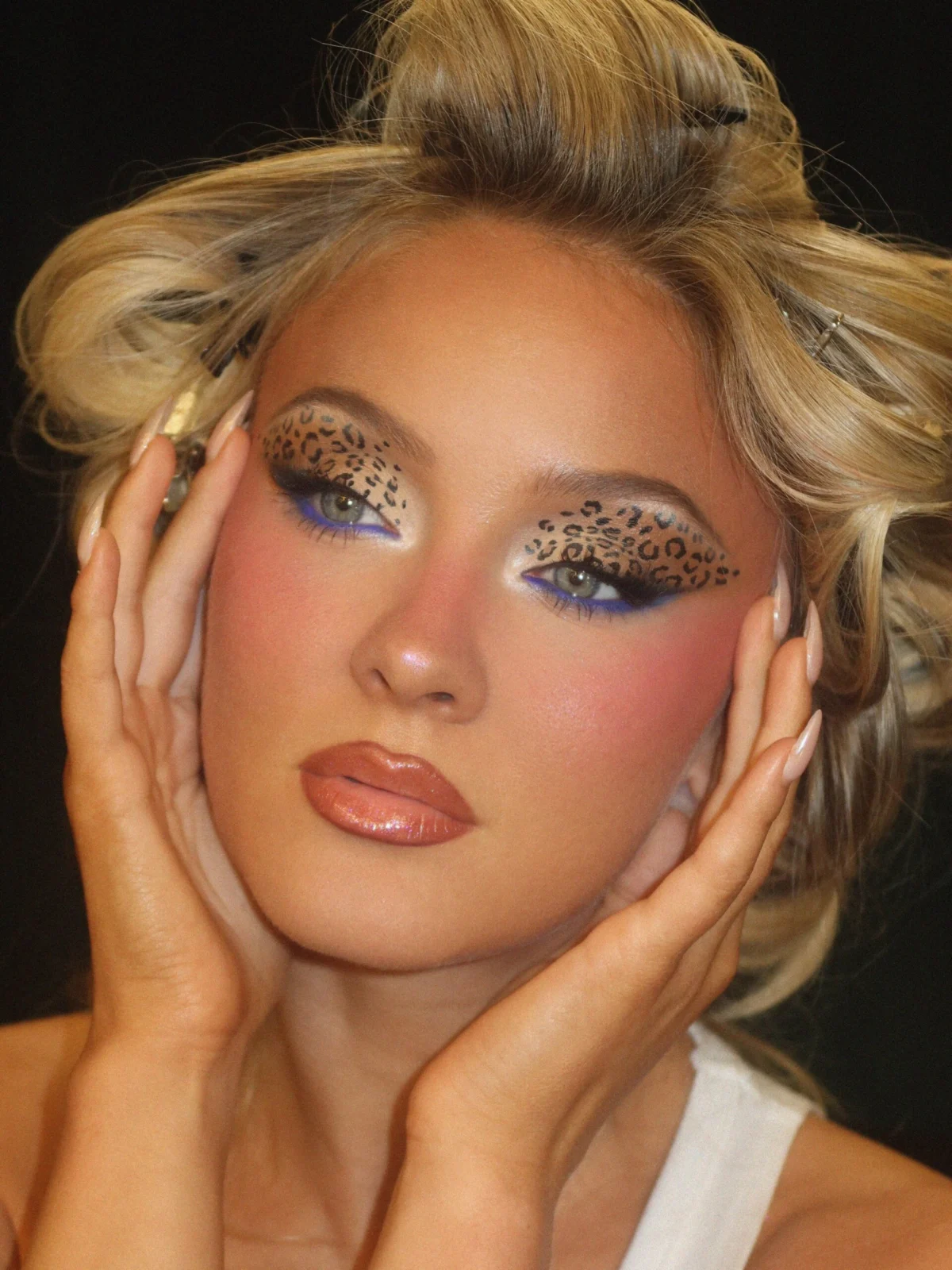
A primary driver of the current beauty discourse is the move toward "unapologetic" prints, most notably seen in the recent appearance of Swedish singer Zara Larsson. Larsson’s adoption of "leopard lids" represents a technical evolution in eyeshadow application, where animal prints are meticulously rendered onto the eyelid. This trend aligns with a broader resurgence of animalia in fashion, often referred to as "Mob Wife" or "Indie Sleaze" aesthetics, which have seen a 45% increase in social media engagement over the past quarter.
Complementing the patterned lids, the use of unconventional colors—such as Larsson’s "lick of blue"—highlights a departure from neutral palettes. Industry data suggests that sales of vibrant eyeliners and pigmented shadows have risen by approximately 18% year-over-year, as consumers seek to replicate the high-contrast looks seen on red carpets and international stages.

The maximalist trend extends to nail artistry, a sector of the beauty industry projected to reach a valuation of $27.1 billion by 2031. Dua Lipa’s recent "dotty silver nails" serve as a case study in how texture and metallic finishes are being utilized to create three-dimensional interest. Nail artists are increasingly moving away from simple monochromatic applications in favor of intricate designs that incorporate chrome powders, dotting techniques, and architectural shapes. This shift reflects a consumer desire for personalized, "wearable art" that serves as a primary accessory.
Reality Television and the Democratization of Glamour
The influence of reality television on beauty trends remains a potent force, as evidenced by the recent Love Island UK finale. Jasmine Müller, the series runner-up, utilized a specific technique—a baby blue pop in the inner corners of a precisely lined cat-eye—that highlights the strategic use of "brightening" colors. This technique, often used by makeup artists to create the illusion of wider, more awake eyes, has seen a surge in popularity on platforms like TikTok, where the hashtag #InnerCornerPop has garnered millions of views.

The "Love Island effect" often results in immediate retail spikes for specific products. Historically, when a contestant utilizes a distinct shade or brand, search volume for those items can increase by up to 300% within 24 hours of the broadcast. The precision of Müller’s liner suggests a high level of technical proficiency, bridging the gap between professional "red carpet" standards and the highly accessible glamour of reality television.
Historical Revivals: From Flapper Bobs to 1970s Volume
While some celebrities are pushing toward the future with bold colors, others are finding inspiration in the archives of the 20th century. The "Bob" remains the most significant hair trend of the year, with a diverse array of iterations gaining traction.

The Return of the Flapper Aesthetic
Nara Smith’s recent appearance featuring a glossy auburn bob with outward-curled ends is a direct homage to the 1920s flapper era. This look requires a high-shine finish, achieved through the application of glossing serums and precision heat styling. The "flipped-out" ends provide a structural contrast to the face, a technique used in the early 20th century to emphasize jawlines and necklines. Data from salon booking platforms indicates that requests for "short, structured bobs" have increased by 22% since the start of the summer season, suggesting that the "Team Bob" movement is a sustained shift rather than a fleeting trend.
The 1970s Sophisticate
In contrast to the structured 1920s look, Olivia Dean has become a proponent of 1970s-inspired volume. Her signature bouncy, curly blowout represents a move toward "effortless" sophistication. This style relies on the preservation of natural hair texture while adding height and movement through professional blowout techniques. The 1970s revival is part of a larger cultural nostalgia, where "radiant" and "sun-kissed" skin finishes are paired with voluminous hair to create a look that is both glamorous and approachable.

The Role of the Creative Professional
A critical component of the beauty industry’s current trajectory is the recognition of the artists behind the looks. Makeup artists such as Eden Lattanzio are being credited for their experimental use of color theory. Lattanzio’s recent work involving matte lilac lids—meticulously matched to the subject’s retinas—demonstrates a sophisticated understanding of monochromatic harmony.
The relationship between the celebrity and the artist is increasingly collaborative. Statements from top-tier hairstylists and makeup artists indicate that the creative process now involves extensive mood-boarding and historical research. The goal is no longer just "beautification" but the creation of a visual narrative that aligns with the celebrity’s personal brand and the specific event’s requirements.

Statistical Analysis of Beauty Trends
The following data points provide context for the current shifts in the beauty market:
- Color Cosmetics Growth: The global color cosmetics market is expected to grow at a CAGR of 5.5% through 2028, with "bold" and "neon" segments outpacing traditional neutrals.
- Social Media Impact: Trends originating on Instagram and TikTok now reach mainstream adoption 60% faster than they did five years ago, leading to shorter, more intense trend cycles.
- Hair Care Pivots: As short haircuts like the bob become more popular, there has been a corresponding 12% increase in the sale of scalp-health products and high-hold styling waxes, as shorter styles require more frequent maintenance and precise styling.
Broader Impact and Industry Implications
The trends observed this week reflect a broader socio-economic phenomenon. Historically, periods of economic uncertainty or social transition often lead to more expressive and "loud" fashion and beauty choices—a concept known as "dopamine dressing" or "maximalist escapism." By opting for leopard-print eyelids or vibrant pastel shadows, consumers and celebrities alike are engaging in a form of visual optimism.

Furthermore, the emphasis on "Team Bob" and vintage revivals suggests a desire for structure and classicism amidst the experimentation. The beauty industry is currently operating in a dual-mode: one side focuses on high-tech, futuristic color applications, while the other seeks comfort in the proven elegance of past decades.
From a commercial perspective, these trends dictate the research and development (R&D) cycles of major beauty conglomerates. Brands are now prioritizing "pigment payoff" and "long-wear textures" to satisfy the demand for the bold looks seen on figures like Zara Larsson and Jasmine Müller. Additionally, the rise of the "celebrity-artist" duo has led to more frequent product collaborations, where the professional’s expertise is used to validate the product’s performance for the everyday consumer.

Conclusion
The current state of celebrity beauty, as highlighted by the recent appearances of Dua Lipa, Nara Smith, and others, is a testament to the industry’s diversity. Whether through the lens of 1970s curls or 3D silver nails, the message is clear: the modern beauty standard is defined by variety and the willingness to experiment. As these looks move from the Instagram feeds of editors to the vanity tables of the general public, the influence of these specific "Beauty Marks" will continue to shape the aesthetic landscape of the year. The integration of bold patterns, historical references, and professional artistry ensures that the beauty industry remains a dynamic and vital sector of global culture.

0 Comments