
The surge in outdoor recreation over the past decade has transformed the American wilderness from a niche destination into a primary hub for domestic tourism, necessitating a rigorous reevaluation of camping etiquette and environmental stewardship. As millions of citizens seek refuge in national parks, state forests, and Bureau of Land Management (BLM) territories, the intersection of human activity and ecological preservation has become a focal point for conservationists and park authorities alike. Maintaining the integrity of these natural spaces requires more than a casual appreciation of the outdoors; it demands a standardized adherence to protocols designed to mitigate human impact on fragile ecosystems and ensure a harmonious experience for all visitors.
The Ecological Framework: Protecting Fragile Ecosystems
The cornerstone of modern camping etiquette is rooted in the "Leave No Trace" (LNT) philosophy, which provides a framework for minimizing the footprint left by human presence. One of the most common misconceptions among novice campers involves the use of biodegradable soap. While marketed as environmentally friendly, these products are not intended for direct use in streams, lakes, or rivers. Biodegradable soaps require soil bacteria to break down effectively; when introduced directly into water systems, they can disrupt the chemical balance of the aquatic environment, introducing phosphates and surfactants that can lead to algal blooms and harm sensitive macroinvertebrates. Best practices dictate that any washing—whether of dishes or the body—should occur at least 200 feet away from any water source, with gray water disposed of in a small "cat hole" to allow the soil to filter out impurities.
Furthermore, the physical placement of a campsite has profound implications for local flora. The trampling of vegetation can lead to soil compaction, which prevents water infiltration and hinders root growth, eventually leading to erosion. Modern etiquette emphasizes pitching tents only on established or durable surfaces, such as gravel, rock, or pre-designated pads. In high-use areas, sticking to existing sites prevents the "sprawl" of human impact, while in remote backcountry settings, campers are encouraged to spread their activities to avoid creating new, permanent scars on the landscape. This practice protects unique micro-habitats, such as cryptobiotic soil crusts found in arid regions, which can take decades to recover from a single misplaced footstep.
The Bio-Security Threat: Firewood and Invasive Species
The management of campfires represents another critical pillar of outdoor conduct, specifically regarding the sourcing of fuel. The transport of firewood over long distances is a primary vector for the spread of invasive insects and diseases, such as the Emerald Ash Borer, the Asian Longhorned Beetle, and Sudden Oak Death. These pests can decimate entire forests, leading to massive ecological shifts and billions of dollars in management costs.
To combat this, the "Don’t Move Firewood" campaign, supported by the USDA and various state agencies, mandates that campers use only locally sourced wood or heat-treated bundles certified to be pest-free. By purchasing wood within a 10-mile radius of the campsite, or gathering downed wood where permitted, campers act as a frontline defense against the homogenization of North American forests. Additionally, the use of established fire rings and the complete extinguishment of embers are non-negotiable safety protocols designed to prevent the catastrophic wildfires that have increasingly plagued the Western United States.
Social Etiquette and the Psychology of the Wilderness
While ecological protection is paramount, the social dimension of camping etiquette is equally vital for maintaining the "wilderness character" of public lands. The primary motivation for many campers is the pursuit of tranquility and a reprieve from urban noise pollution. Consequently, sound management is a significant component of outdoor decorum. This includes the responsible use of generators—which should be restricted to specific hours—and the moderation of voice levels. The "golden rule" of the woods suggests that a campsite should not be audible from the next designated spot.
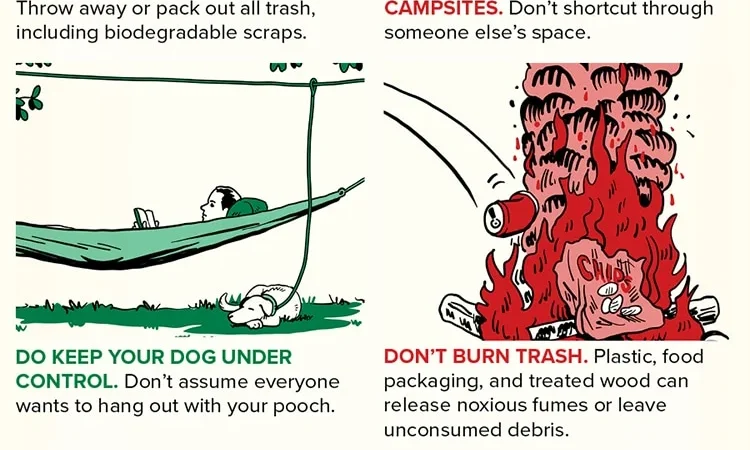
Visual and light pollution also factor into the social experience. As "Dark Sky" initiatives gain momentum across the National Park Service (NPS), campers are encouraged to use headlamps with red-light filters and avoid high-intensity LED floodlights that can disrupt both the nocturnal rhythms of local wildlife and the stargazing opportunities of fellow campers. Respecting the privacy of others also involves avoiding "cutting through" occupied campsites, a gesture that maintains the illusion of solitude even in crowded campgrounds.
Chronology of Outdoor Ethics in America
The evolution of camping etiquette in the United States reflects a broader shift in the national consciousness regarding the environment.

- Late 19th to Early 20th Century: The "Pioneer Era" of camping focused on "taming" the wild. Campers often cut down live trees for boughs to sleep on and dug trenches around tents for drainage—practices that are now strictly prohibited.
- 1940s-1960s: Following World War II, the rise of the automobile and the development of the Interstate Highway System led to a boom in car camping. The emphasis was on recreation and accessibility, often at the expense of environmental foresight.
- 1970s: The birth of the modern environmental movement and the passage of the Wilderness Act (1964) began to shift the focus toward preservation. The Forest Service started developing the early iterations of "Leave No Trace."
- 1990s-Present: The formalization of the Leave No Trace Center for Outdoor Ethics in 1994 provided a unified set of principles. Today, etiquette is increasingly driven by digital awareness and the need to manage the "Instagram effect," where popular locations face unprecedented degradation due to social media-driven surges in traffic.
Supporting Data: The Impact of Human Presence
The necessity for strict etiquette is underscored by recent data from the Outdoor Industry Association (OIA) and the National Park Service. In 2023, the outdoor recreation economy accounted for $1.1 trillion in economic output, representing 2.2% of the U.S. GDP. However, this economic boon comes with a physical cost.
According to NPS reports, the cost of deferred maintenance across the park system exceeds $22 billion, a portion of which is dedicated to repairing trails and campsites damaged by improper use. Furthermore, a study by the Journal of Environmental Management indicated that in high-traffic areas, soil compaction can reduce water absorption by up to 80%, significantly increasing the risk of flash flooding in riparian zones. Invasive species, often moved via firewood or muddy boots, are estimated to cause $120 billion in damages annually in the U.S. alone, affecting timber industries and biodiversity.
Official Responses and Regulatory Measures
In response to the increasing pressure on natural resources, federal and state agencies have moved beyond mere suggestions, implementing more stringent regulations. The National Park Service has expanded its permit systems for popular backcountry routes, effectively capping the number of humans in a given area to prevent "over-tourism."
"Our mission is to preserve unimpaired the natural and cultural resources of the United States for the enjoyment, education, and inspiration of this and future generations," an NPS spokesperson stated in a recent briefing regarding seasonal closures. "Etiquette is the bridge between ‘enjoyment’ and ‘preservation.’ When visitors fail to follow these basic tenets, we are forced to move from education to enforcement, which may include fines or the permanent closure of sensitive habitats."
The Bureau of Land Management has also increased its "Leave No Trace" outreach, particularly for "dispersed camping" (camping outside of developed campgrounds). Because these areas lack trash collection and toilet facilities, the onus of responsibility falls entirely on the individual, making the adherence to etiquette a matter of legal and ethical necessity.
Broader Impact and Future Implications
As climate change continues to stress natural ecosystems through prolonged droughts and shifting migration patterns, the role of the individual camper becomes even more significant. An ecosystem already under stress has a lower threshold for human-induced damage. For instance, a forest weakened by drought is more susceptible to the invasive pests carried in out-of-state firewood.
The future of public land access may depend heavily on the collective behavior of the camping public. If etiquette is ignored, the "tragedy of the commons" suggests that these shared resources will inevitably decline, leading to more "pay-to-play" models, restricted access, and a loss of the very wildness that people seek. Conversely, a culture of high-standard etiquette fosters a community of stewards who not only protect the land but also advocate for its expansion and funding.
In conclusion, camping etiquette is not a set of arbitrary rules designed to limit freedom; it is a sophisticated system of social and ecological checks and balances. By understanding the science behind biodegradable soap, the biology of invasive species, and the social dynamics of shared spaces, campers can ensure that the "great outdoors" remains great for the generations that follow. The transition from a consumer of nature to a steward of nature is the hallmark of the modern outdoorsman.

0 Comments