
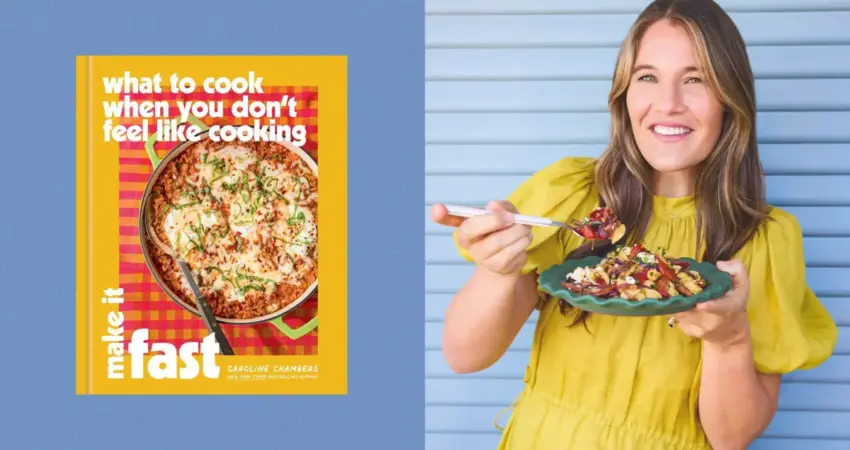
Caroline Chambers, a celebrated culinary author and voice in the home cooking community, recently sat down with Chris Morocco of Bon Appétit to discuss her latest cookbook, Make It Fast, and her philosophy on cooking when time and energy are scarce. The conversation, which follows Chambers’ deeply personal essay on postpartum meal solutions in Bon Appétit’s "The Fourth Trimester" series, delves into the practicalities of feeding a family amidst a demanding life, highlighting her commitment to authenticity, humor, and actionable advice for home cooks.
Chambers’ first book garnered significant acclaim, earning a spot on Bon Appétit’s list of favorite cookbooks for 2024. Her follow-up, Make It Fast, directly addresses the pervasive challenge of insufficient time in the kitchen. This theme is not merely a catchy title but a core tenet of her approach, born from years of direct engagement with her audience through her Substack newsletter, "What To Cook When You Don’t Feel Like Cooking."
The Tyranny of Time in the Modern Kitchen
The central premise of Make It Fast is that the perceived burden of cooking dinner often stems from a fundamental lack of time. Chambers articulated this in her discussion with Morocco, stating, "I think that a huge, huge part of why cooking dinner can feel like such an absolute hellscape is that we simply do not have the time. We’re overbooked, overworked, we’re trying to make time to be good parents and good friends and somehow get in a few minutes of exercise in." This sentiment resonates deeply with a broad spectrum of individuals juggling professional careers, familial responsibilities, and personal well-being.
The book’s organizational structure is designed to combat this time crunch. Chambers explains the utility of its thematic chapters, such as the "15-minute chapter," which offers immediate, achievable solutions, and the "walk away" chapter, dedicated to recipes requiring minimal active prep time but allowing for longer, unattended cooking periods. This approach empowers readers by providing a clear understanding of the time commitment involved, making daunting meal preparation feel more manageable. For instance, a recipe categorized under "15 minutes" offers a realistic expectation, allowing a busy parent to confidently commit to it. Similarly, a "walk away" recipe, requiring perhaps 30 minutes of initial preparation, can be started before attending to other tasks, such as supervising homework or responding to emails.
Revolutionizing Recipe Transparency: Prep Time Included
A notable innovation in Make It Fast is Chambers’ decision to integrate all ingredient preparation times directly into the recipe instructions. This contrasts with many traditional cookbooks that list prep time separately or omit it altogether, leading to a disconnect between reader expectation and actual execution. Chambers elaborated on the genesis of this practice: "Like Bon Appétit, I have years of hearing directly from my readers via my Substack… When something takes longer to chop than I thought it would take them, I hear about it."
This reader feedback loop has been instrumental in shaping her methodology. By acknowledging and addressing the "pain points" of her audience, Chambers aims to demystify cooking and foster greater confidence. She believes that explicitly detailing when to prepare each ingredient enhances efficiency, allowing for parallel cooking tasks. "Mince the garlic while the chicken sears. Chop the herbs while the pasta cooks," she suggested as examples. This "mise en place" strategy, when clearly articulated, prevents novice cooks from completing all prep work at the beginning, which can significantly inflate the overall time spent. In a culinary landscape where "time is of the essence," this meticulous approach to instruction is invaluable.
The Pantry Essentials for Speed and Flavor
When asked about time-saving ingredients, Chambers’ recommendations are both practical and inspiring, showcasing her knack for elevating everyday staples. Beyond the obvious convenience of pre-washed greens, she highlighted her fondness for bagged salads, specifically mentioning Taylor Farms Caesar as a recurring favorite that pairs well with simple proteins like steaks for a quick yet satisfying dinner.
Her list of essential pantry items reflects a strategic approach to maximizing flavor and minimizing effort:
- Lemons: A versatile ingredient for adding brightness and acidity to a wide range of dishes.
- Rice: Chambers cooks large batches of rice and freezes it in individual portions, providing a ready-to-go carbohydrate base for numerous meals. This batch-cooking strategy is a common tactic employed by time-strapped cooks to streamline weekly meal preparation.
- Frozen Garlic and Ginger Cubes: These pre-minced aromatics offer a significant shortcut in flavor development. The availability of such convenience items has grown exponentially in recent years, reflecting consumer demand for faster meal solutions.
- Better Than Bouillon: This concentrated broth base is a staple for adding depth of flavor to soups, stews, and sauces without the need for long simmering times. Chambers notes her preference for low-sodium chicken but also enjoys the more adventurous flavors like "sofrito" and "sautéed onion."
- Trader Joe’s Salsa Verde: This condiment serves as a versatile poaching liquid for chicken thighs, which can then be shredded for quick meals.
- Chili Crisp: Chambers is a proponent of chili crisp for its ability to impart instant flavor and texture. She specifically praises Red Clay’s southern chili crisp for its unique combination of peanuts and shallots.
Bridging the Generational Cooking Gap
Morocco raised a pertinent question about the perceived decline in complex home cooking, such as roasting a whole chicken, in favor of convenience items like rotisserie chickens. Chambers posited that a significant factor contributing to this trend is a generational shift in culinary education. "I have a theory that cooking is really hard for everyone right now, not only because none of us have the time to do it, but also because none of us were taught how to do it," she stated.

She explained that the current generation of parents were often the first to be dual-income households, meaning mothers were less likely to be at home to pass down traditional cooking skills to their children. This has resulted in a knowledge gap where fundamental techniques, like properly cutting an onion or mincing garlic, are not universally understood. "If you don’t know how to cut an onion, or mince a garlic clove, you’re instantly pissed. The second you start cooking a recipe, and it tells you to cut an onion, you instantly feel like you suck at cooking and it takes forever," she observed.
Chambers’ brand, "What To Cook When You Don’t Feel Like Cooking," paradoxically thrives because her audience wants to cook but struggles with the motivation or perceived difficulty. The underlying desire, she believes, is the profound sense of accomplishment that comes from creating a delicious meal. By mastering simpler, accessible recipes, individuals are more likely to build the confidence needed to tackle more ambitious dishes, such as roasting a whole bird.
Navigating the Rotisserie Chicken Phenomenon
When it comes to the ubiquitous rotisserie chicken, Chambers offers a pragmatic yet charming response. While her book What To Cook features a dedicated section on utilizing them, her most frequent method is simply eating it directly. She describes the appeal of the pre-cooked bird as a lifesaver for busy families, easily portioned for children of various ages and served alongside simple sides like steamed vegetables and salads. She even admits to a more primal enjoyment, confessing to tearing into a rotisserie chicken by hand during a drive home from the grocery store, a relatable image of domestic chaos and immediate gratification.
The Challenges of Feeding Young Eaters
The realities of parenting and mealtime negotiations were also a central theme. Chambers, a mother of four boys aged 7, 6, 4, and 14 months, shared the common parental struggle of picky eaters. She described the frustration of preparing a meal that children had previously raved about, only to have them reject it. "These kids kill me," she quipped.
Chambers theorizes that children often use food preferences as a means of asserting their individuality and control. This behavior, while understandable in the context of developing autonomy, presents a significant challenge for parents. To address this, she has implemented a "very strict and probably absolutely not child-therapist-approved two-bite rule." Under this policy, children must try at least two bites of their dinner. If they genuinely dislike it, alternative options like peanut butter and jelly sandwiches or hummus with vegetables are provided. She noted that while her older and younger sons often end up eating their entire meals, her 6-year-old son is currently consuming a considerable number of PB&Js, which she admits are admittedly delicious, featuring Dave’s Killer Bread, a specific brand of peanut butter, and Bonne Maman strawberry jam.
The "Cobbler’s Kids" Phenomenon: Cooking When You Don’t Feel Like It
The inevitable question of what Chambers herself cooks when she’s too exhausted to cook was met with a resounding "HELL YES." She acknowledged the "cobbler’s kids get no shoes" adage, referring to the common paradox of culinary professionals struggling with their own home cooking. Living in a rural area with limited takeout options, her go-to "takeout" meal involves steaming frozen dumplings and broccoli florets simultaneously, while preparing a quick peanut sauce. This simple yet universally enjoyed meal is a testament to her philosophy of efficiency and flavor. She also humorously noted that her 6-year-old son’s aversion to this meal conveniently allows him to have his peanut butter sandwich for dinner, utilizing the already-present peanut butter.
Sage Advice for the Home Cook
Morocco expressed his admiration for two specific pieces of advice from Make It Fast: "Lay corn flat on its side to cut it," and "salt and pepper are not married." Chambers, a self-taught cook who credits resources like America’s Test Kitchen and the Bon Appétit Test Kitchen for her early learning, found this feedback particularly meaningful.
The "salt and pepper are not married" adage stems from research she encountered in the book Eight Flavors. This research suggests that the ubiquitous pairing of salt and pepper in recipes is largely a historical marketing phenomenon rather than a culinary necessity. Chambers encourages home cooks to consider seasoning each element of a dish independently, allowing for more nuanced and intentional flavor profiles.
She further offered additional practical tips from her book for those struggling with meal preparation:
- Embrace Versatile Proteins: Suggesting options like ground turkey or pre-cooked chicken can significantly reduce cooking time.
- Leverage Frozen Vegetables: Frozen vegetables offer convenience without compromising nutritional value and can be used in a multitude of dishes.
- Don’t Fear Simple Sauces: A quick pan sauce or a flavorful dressing can elevate even the most basic ingredients.
- Master One-Pan Meals: Dishes cooked in a single pan or skillet minimize cleanup, a crucial consideration for busy households.
The Culinary Impact of Make It Fast
Caroline Chambers’ Make It Fast emerges not just as a collection of recipes, but as a comprehensive guide to navigating the modern challenges of home cooking. By prioritizing transparency, efficiency, and achievable techniques, Chambers empowers readers to reclaim their kitchens and find joy in feeding themselves and their families, even on the busiest of days. Her authentic voice and practical wisdom resonate deeply, offering a much-needed antidote to the pressures of contemporary life, proving that delicious, home-cooked meals are indeed accessible to everyone, regardless of time constraints. The book’s focus on the intersection of family life, work demands, and culinary practice positions it as an essential resource for a generation seeking to simplify their lives without sacrificing the comfort and connection that good food provides.

0 Comments