
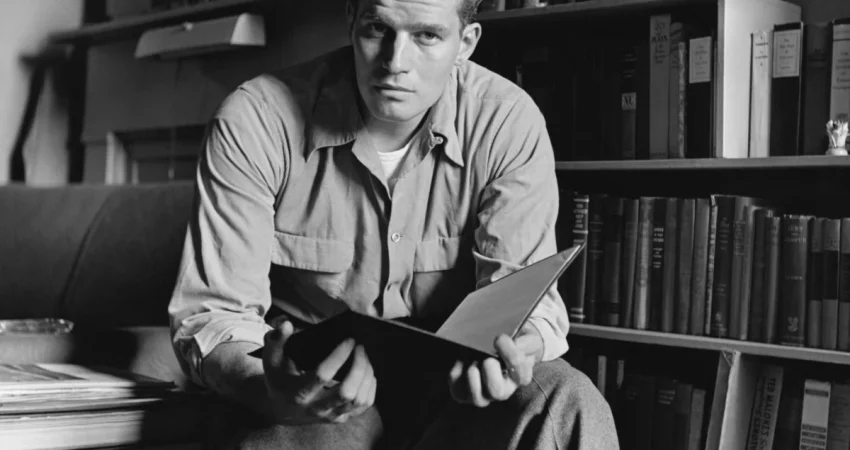
Charlton Heston, a titan of Hollywood whose commanding presence graced iconic roles from Moses parting the Red Sea in The Ten Commandments to the triumphant chariot racer Judah Ben-Hur, a performance that secured him an Academy Award, often viewed the film set as a sanctuary. In his 1995 memoir, In the Arena, Heston reflected, "The studio was where I lived, really…where the work was." Yet, beneath the dazzling veneer of his cinematic triumphs, Heston harbored a profound appreciation for the quiet solace of his private life, a sentiment deeply rooted in his upbringing. "Making films or plays is inescapably a collective undertaking, and many of the people who do it are designated public property," he confessed. "Still, you need time alone, all by yourself. As a guy brought up in the Michigan woods, I really need it." Born in Evanston, Illinois, in 1923, Heston spent his formative years in the secluded "backwoods" of Michigan before forging a remarkable acting career that led him to establish homes in the vibrant metropolises of New York City and the sun-drenched landscapes of Beverly Hills. This exploration delves into the varied residences that shaped the life of this cinematic legend, culminating in the sprawling California estate that served as his sanctuary for decades until his passing in 2008.

Early Residences: A Foundation in Simplicity
Heston’s journey into homeownership began with a modest apartment in New York City’s Hell’s Kitchen, a far cry from the opulent sets he would later inhabit. Married to Lydia Clarke in 1944, the couple resided in a "nineteenth-century railroad flat," as described in Heston’s memoir. This humble abode, situated four flights up, comprised just two small rooms and an alcove for their bed. Its two narrow windows offered a view of the street, and the apartment notably lacked central heating, relying on the gas oven for warmth during the colder months—a stark contrast to the climate-controlled environments of modern living. Heston recalled the apartment as a "steal" at $30 a month, humorously noting that the "cockroaches [were] thrown in for free."
The couple’s resourcefulness was evident in their furnishing choices. They opted for affordable linoleum for the kitchen floor and pre-owned carpeting for the living room. Demonstrating a practical and hands-on approach, Heston himself crafted much of the furniture. He ingeniously built a bed frame into the alcove, installed a closet in a kitchen corner, and created bookshelves along one wall of the living room. The remainder of their furnishings was acquired from the Salvation Army, an organization for which Heston would later record commercials, expressing his enduring gratitude: "The fundraising tapes I’ve done for the Salvation Army ever since leave me still in their debt. They helped us set up a livable space to start off in." This period of early domesticity underscores a period of financial pragmatism and shared effort as the couple built their life together.

The Rise to Prominence and a Penthouse View
Heston and Clarke’s time in Hell’s Kitchen was relatively brief, marking a turning point in their lives as Heston’s career began to ascend. His breakthrough role as Brad Braden in Cecil B. DeMille’s 1952 epic, The Greatest Show on Earth, propelled him into the Hollywood spotlight. This burgeoning success coincided with a significant upgrade in their living situation towards the end of the 1950s. They relocated to a "truly awesome penthouse apartment across from the UN" in Manhattan. This new residence boasted a more spacious layout, featuring a large living room with a fireplace, a 20-foot-high ceiling, two bedrooms, and two terraces offering a picturesque view of the East River. Despite the enhanced luxury, the rent remained remarkably affordable, never exceeding $480 per month, reflecting a period where the cost of living in prime urban areas was considerably lower than in subsequent decades.
Family Life and Early Roles
The Heston household expanded with the arrival of their son, Fraser Clarke Heston, in 1955. Significantly, Fraser’s acting debut occurred at a remarkably young age, portraying baby Moses in his father’s iconic film, The Ten Commandments. Director Cecil B. DeMille, instrumental in casting Heston in the role of Moses, had a prescient vision. Heston recounted in his memoir how DeMille, upon learning of his wife’s pregnancy and her inability to travel to Egypt for filming, inquired about the due date. Upon hearing it would be in February, DeMille shrewdly noted, "Just three months after that, we shoot the Baby Moses scenes… If your baby’s a boy, he could play the part." Following Fraser’s birth, a telegram from DeMille confirmed the casting: "Congratulations. He’s cast in the part." This remarkable coincidence marked the beginning of Fraser’s own connection to the cinematic world, intertwined with his father’s legendary status.

The family grew further in 1961 with the adoption of their daughter, Holly Ann Heston. Heston expressed the profound joy of welcoming Holly into their lives, writing, "We brought Holly home on the second day of her life; she was instantly and forever ours." He also offered a tender, albeit characteristically Heston-esque, reflection on fatherhood: "A father loves his son partly responding to a chromosome identity… You want your son to be you—also himself, and better. But I think a man loves his daughter with a kind of helpless male devotion. I think Holly began to understand that when she was four days old." These personal anecdotes reveal a deeply devoted family man, whose paternal love extended beyond his professional persona.
The "House that Ben-Hur Built": A California Dream
As Charlton Heston’s career continued its meteoric rise, the need for a more expansive family home became apparent. While filming the 1958 Western The Big Country, Heston realized the limitations of their urban dwellings. "I needed a house," he wrote, "I wanted room for Fray to run in—what I’d had in the Michigan woods." His search led him to a picturesque location in Coldwater Canyon, Beverly Hills, a site of less than three acres offering proximity to the Beverly Hills Hotel and surrounded by approximately 800 acres of undeveloped land teeming with wildlife. The natural beauty of the landscape captivated him, prompting an immediate decision to purchase the land and build a home from the ground up. "I bought it the day I saw it," he declared.

The design of this ambitious project was entrusted to architect Bill Beckett. Heston recalled Beckett’s meticulous approach, which involved studying numerous issues of Architectural Digest for inspiration and spending a night in a sleeping bag on the property to intimately understand the light and land. Construction of the home commenced while Heston was away filming Ben-Hur, and it was completed around the same time production wrapped. His son, Fraser, later shared that his father "always said it was the house that Ben-Hur built," a testament to the film’s immense financial success that enabled this significant real estate endeavor.
The expansive estate was meticulously designed to accommodate the Heston family’s needs and Heston’s desire for privacy and amenities. The main residence featured four bedrooms, dedicated staff quarters, and an impressive two-story library, a space likely to house Heston’s extensive collection of books and historical artifacts. Beyond the primary living quarters, the property was equipped with a private screening room for viewing films, a photo studio, a swimming pool for recreation, and a tennis court. This comprehensive array of facilities underscored Heston’s commitment to creating a self-sufficient haven, a retreat from the demands of his public life.

A Sanctuary of Solitude and Inspiration
The Beverly Hills estate, affectionately referred to as "the ridge," became Heston’s ultimate sanctuary. It was here that he found the profound solitude he craved, a stark contrast to the collaborative nature of filmmaking. "That’s why I love my ridge so much," he wrote in his memoir. "There are a couple of hundred acres of canyon around me still close to the way God made them. Most of the people I want to see, the things I want to do, happen right here." The estate’s extensive amenities facilitated a lifestyle where he could remain connected to his work and the world, yet retain his cherished privacy. "Pool, tennis court, Jacuzzi, gym, library, screening room—I’ve done TV interviews by satellite from here, linking me to London, live," he elaborated. "The only time I really have to leave is for a very serious meeting… or when you’re actually doing the work… a film or a play. I like that." This demonstrates a deliberate creation of a home that supported both his professional obligations and his personal need for peace and quiet.
The profound impact of his family and his beloved home also served as a powerful motivator for his continued professional dedication. In a 2004 photograph, Heston is seen at his California home, seated in a director’s chair, with a vintage French-language poster of his 1958 film, Touch of Evil, visible in the background. He reflected on how the presence of his two children and the responsibility of maintaining "the ridge" deepened his resolve: "The delights of our completed family and the ridge where we would raise our children deepened my determination to make it all secure. For me, it meant reading a lot of scripts." This sentiment highlights the interconnectedness of his personal life and professional ambition, with his home serving as both a reward and a driving force.

Legacy and Continued Presence
Charlton Heston resided at his Beverly Hills estate until his death in 2008, succumbing to complications of pneumonia. The property, deeply intertwined with his life and career, remained a significant part of his legacy. In 2015, the home was listed for $12.25 million, a move that Fraser Heston described as a "difficult decision." He explained that his mother, Lydia Clarke Heston, who passed away in 2018, no longer resided there, and the family felt it was "the right time" to part with the estate.
The property eventually found a new owner in French film director Luc Besson. By 2020, Besson placed the house back on the market for $14.9 million, indicating a continued appreciation for its unique appeal and Hollywood history. Most recently, in 2025, an undisclosed seller listed the property for $10.5 million, continuing its trajectory through the real estate market. Each transaction underscores the enduring allure of a home associated with such a monumental figure in cinematic history, a place that was not just a residence but a tangible embodiment of a legendary career and a life lived with purpose and a profound appreciation for both the grand stage and the quiet sanctuary of home. The story of Charlton Heston’s homes is a narrative of evolution, from humble beginnings to an architecturally significant estate that served as the backdrop for a celebrated life.

0 Comments