
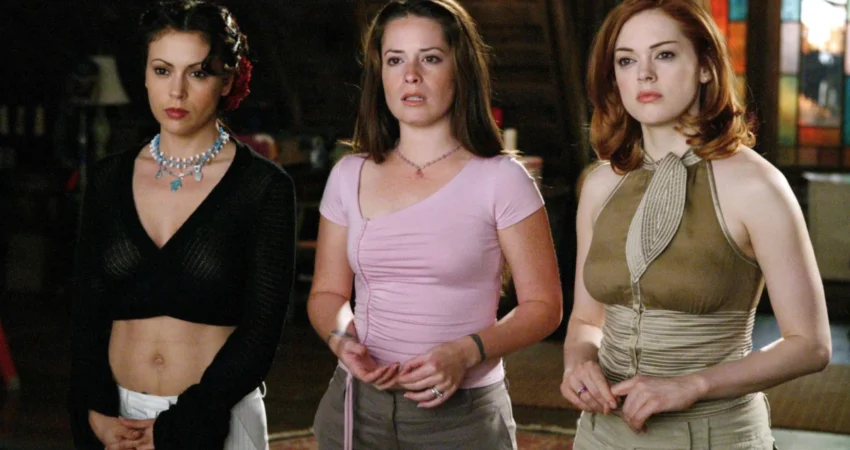
Holly Marie Combs, an actress whose career has spanned over three decades and defined a generation of supernatural television, has formally addressed her prolonged absence from the entertainment industry. Speaking on a recent episode of the "House of Halliwell" podcast, Combs confirmed that she has entered a period of official retirement from acting. The revelation provides a definitive answer to fans who have noted her lack of screen credits since 2019. Combs, best known for her portrayal of Piper Halliwell on the long-running series Charmed, cited a combination of familial responsibilities, a shifting industry landscape, and a lack of compelling creative opportunities as the primary drivers behind her decision to step away from the cameras.
The announcement marks a significant turning point for the actress, who began her career as a teenager and maintained a consistent presence on network television for twenty-five years. Her decision to prioritize her private life over her professional pursuits reflects a broader trend among seasoned performers who have reassessed their priorities in the wake of global shifts and personal milestones.
The Catalyst for Change: Family and the Global Pandemic
The decision to retire was not an overnight occurrence but rather a gradual realization that crystallized during the COVID-19 pandemic. Like many professionals across various sectors, Combs utilized the period of global lockdowns to reassess her life’s trajectory. At the time, she was navigating the complexities of raising her three sons—Finley, now 22; Riley, 19; and Kelley, 17—whom she shares with her former husband, David W. Donoho.
During her appearance on the August 25 episode of "The House of Halliwell," a rewatch podcast she hosts alongside former co-stars Brian Krause and Drew Fuller, Combs explained that the pandemic provided a rare opportunity to focus entirely on her family’s needs without the pressure of auditioning or filming schedules. This period of domestic stability highlighted the sacrifices required by a career in television, which often demands fourteen-hour workdays and months of travel. For Combs, the trade-off between professional advancement and being present for her children’s formative years became increasingly difficult to justify.
Navigating the Challenges of Ageism in Hollywood
Beyond her personal life, Combs addressed the systemic issues within the entertainment industry that contributed to her withdrawal. Specifically, she highlighted the narrowing "job pool" for women as they transition into their 40s and 50s. Despite the industry’s vocal commitments to diversity and inclusion, many veteran actresses report a significant decline in the quality and quantity of roles available to them as they age.
Combs noted that the scripts reaching her desk failed to spark the creative enthusiasm necessary to lure her away from her home life. She characterized the roles offered to women in her age demographic as often being less interesting or secondary to younger leads. "The stuff that I was getting and coming across my desk was just nothing that I was like, ‘Oh my gosh, this is really great. I need to do this,’" she remarked during the podcast.

Industry data supports Combs’ observations. According to various studies on Hollywood inclusion, while female representation has improved in certain metrics, women over the age of 40 remain underrepresented in leading roles compared to their male counterparts. This "glass ceiling" for aging actresses often results in a talent drain, as established performers choose to pursue other interests rather than accept roles that do not utilize their full range of experience.
A Career Defined by Consistency and Iconicity
To understand the weight of Combs’ retirement, one must look at the breadth of her contribution to American television. Her career is characterized by three distinct, highly successful runs on major network series, a feat few actors achieve.
- Picket Fences (1992–1996): Combs first rose to prominence as Kimberly Brock in this critically acclaimed CBS drama. Her performance earned her a Young Artist Award and established her as a capable dramatic actress early in her career.
- Charmed (1998–2006): As Piper Halliwell, the middle (and later eldest) sister of a trio of witches, Combs became a household name. She appeared in all 178 episodes of the series, eventually serving as a producer for the final four seasons. Charmed remains a cult classic and a staple of syndicated television worldwide.
- Pretty Little Liars (2010–2017): Transitioning into "mother" roles, Combs played Ella Montgomery on the hit Freeform series. Her presence provided a grounded, veteran element to the teen drama, introducing her to a new generation of viewers.
Her last significant appearance was a 2019 guest role on Grey’s Anatomy, where she reunited with her Charmed co-star Alyssa Milano. Since then, her professional focus has shifted toward fan conventions and the podcasting medium, which allows her to engage with her legacy on her own terms.
The Rewatch Podcast Phenomenon and Fan Engagement
While she has retired from traditional acting, Combs remains deeply connected to her fanbase through "The House of Halliwell." This project is part of a growing trend where former television stars revisit their most famous works through digital audio platforms. These podcasts serve multiple purposes: they provide a steady stream of "nostalgia content" for fans, offer stars a platform to share behind-the-scenes insights, and generate revenue through advertising and live tours without the grueling physical demands of a film set.
For Combs, the podcast represents a way to remain "present" in the industry while maintaining the boundaries of her retirement. It allows her to celebrate the "escapism" of acting—a feeling she admitted to missing—without the logistical hurdles of modern production. During the podcast, she spoke wistfully about the "moment" of acting, describing it as a form of mindfulness where one is entirely immersed in the work.
Potential for a Future Return: The Empty Nest Timeline
Combs was careful not to describe her retirement as an irreversible "closed door." Instead, she linked a potential return to the screen to her youngest son’s education. Currently, her youngest, Kelley, is finishing high school. Combs suggested that once he has successfully graduated and transitioned into adulthood, she might find herself with the "time on her hands" necessary to entertain a comeback.
This "empty nest" return is a common trajectory for many professional women who pause their careers to focus on child-rearing. If the right role—one that "blows up her skirt," as she colorfully put it—were to emerge in a few years, Combs indicated she would be open to the possibility. However, she emphasized that any future project would have to offer a level of creative fulfillment that justifies the disruption to her current peace.

Industry Implications and the "Great Resignation" of Talent
The retirement of a performer like Holly Marie Combs reflects a broader dialogue regarding the sustainability of careers in the modern entertainment era. The rise of streaming services has led to a "peak TV" environment where more content is produced than ever before, yet the working conditions and residual structures have often become more precarious for actors.
Furthermore, the "Great Resignation" seen in the general labor market has a parallel in Hollywood. Established actors, particularly those who have achieved financial security through long-running syndication hits like Charmed, are increasingly choosing to step back rather than participate in an industry that they feel no longer values their demographic.
Analysts suggest that the loss of veteran talent like Combs is a detriment to the industry’s narrative depth. When experienced actresses exit the workforce due to a lack of compelling roles, it limits the types of stories that can be told, particularly those centering on the complexities of middle age and womanhood.
Conclusion: Contentment Over Fame
For the time being, Holly Marie Combs appears entirely content with her life away from the spotlight. Her transition from a series lead to a full-time parent and podcast host marks a successful navigation of the often-volatile life of a child star turned adult professional. While the "Power of Three" may be on a permanent hiatus in the literal sense, Combs’ legacy continues to thrive through digital media and the enduring popularity of her past work.
As she waits for her youngest son to complete his high school journey, the industry is left to wonder if the right "juicy role" will eventually surface to tempt one of television’s most reliable stars back to the screen. Until then, Combs remains a prominent example of an artist choosing personal fulfillment and family stability over the relentless demands of Hollywood.

0 Comments