
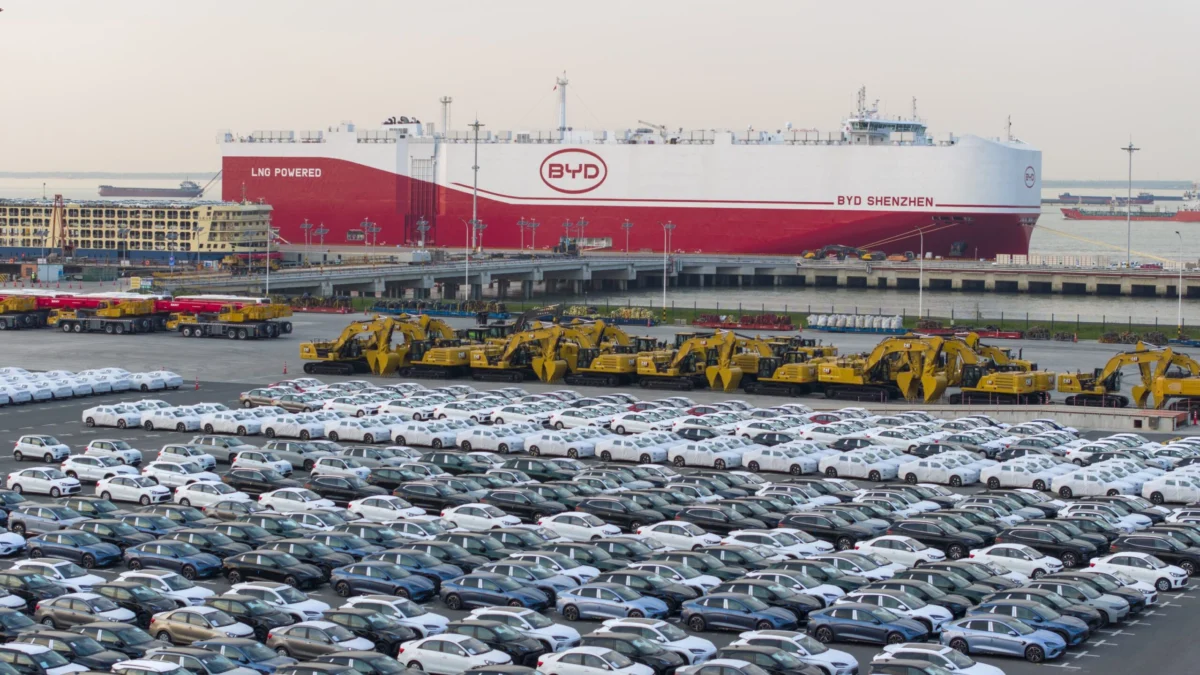
The automotive market in China, the world’s largest, is currently navigating its most challenging year since 2021, grappling with a significant downturn in consumer demand for passenger vehicles. This contraction follows a period of record-high sales achieved in 2025, signaling a sharp reversal in market dynamics that has sent ripples through both domestic and international manufacturers operating within the colossal Chinese market. The confluence of rising operational costs, a strategic recalibration of government subsidies, and intense competition has created a volatile landscape, forcing industry players to re-evaluate their strategies and brace for a period of profound consolidation.
A Steep Descent from Record Highs: The 2026 Market Contraction
The first half of 2026 witnessed a precipitous decline in passenger vehicle sales, falling by a staggering 20.2% year-on-year. This sharp drop prompted the China Passenger Car Association (CPCA) to revise its full-year retail sales projection for 2026 from an earlier forecast of flat year-on-year growth to an anticipated decline of 14%. The revised forecast estimates a final delivery volume of 20.4 million units by the end of 2026, a substantial reduction from the record 23.7 million units sold in 2025. Cumulative sales for the first six months of the year stood at a concerning 8.7 million units, underscoring the severity of the market’s contraction.
The previous year’s stellar performance in 2025 was largely driven by a combination of factors, including a robust post-pandemic economic rebound, aggressive promotional campaigns by automakers, and sustained government incentives aimed at stimulating the adoption of New Energy Vehicles (NEVs). These factors had created a buoyant market, setting a high benchmark that 2026 has failed to meet, leading to a "payback" effect as consumer demand, potentially frontloaded, has now tapered off.
While the CPCA’s revised outlook presents a stark picture, some industry analysts anticipate an even bleaker scenario. Xiao Feng, head of Hong Kong/China Industrials Research at Citic CLSA, projects a cumulative auto sales decline of 20% year-on-year, surpassing the CPCA’s forecast by a notable margin. Despite this overall pessimism, Feng maintains a slightly more optimistic view for the NEV segment, which includes electric and hybrid cars and vans, forecasting a more moderate sales decline of 5% to 6% year-on-year. This distinction highlights the relative resilience, albeit diminished, of the NEV sector compared to traditional internal combustion engine (ICE) vehicles.
Tu Le, founder of Sino Auto Insights, succinctly captured the prevailing sentiment, telling CNBC that 2026 "is going to continue to be a brutal year." He attributed this challenging environment to intensified competition among original equipment manufacturers (OEMs) fiercely vying for a shrinking pool of consumer demand. This cutthroat environment, coupled with broader economic uncertainties, has created a perfect storm for the Chinese automotive industry.
Underlying Factors: A Confluence of Economic and Policy Headwinds
The downturn in China’s automotive market is not attributable to a single cause but rather a complex interplay of economic pressures, shifts in government policy, and rising production costs. These factors have collectively eroded consumer purchasing power and confidence, leading to a significant pullback in discretionary spending on big-ticket items like automobiles.
One of the primary culprits identified is the sharp increase in transportation energy costs. Data from China’s National Bureau of Statistics reveals that transportation energy costs soared by 15.3% year-over-year in June 2026. This significant rise has had a direct and devastating impact on the demand for ICE vehicles. Retail sales of ICE vehicles plummeted by 39% year-on-year in June, with pure gasoline models experiencing an even steeper decline of 42%. Critically, ICE vehicles accounted for a staggering 78% of the total decline in passenger vehicle sales during that month, underscoring their vulnerability to fluctuating fuel prices. The global geopolitical landscape, particularly the ongoing conflict in the Middle East, has contributed to this surge in fuel costs, leading to supply chain disruptions and elevated crude oil prices worldwide.
Concurrently, Beijing’s strategic pullback of NEV subsidies has played a crucial role in tempering demand. For years, generous government subsidies were instrumental in fostering China’s nascent EV market, stimulating consumer appetite and driving rapid adoption. However, as the market matured and domestic manufacturers gained technological prowess, the government began phasing out these incentives, aiming to create a more market-driven environment and reduce fiscal outlays. While a necessary step for long-term sustainability, the immediate effect has been a dampening of demand. As Xiao Feng noted, "Policy only moves demand around," suggesting that the current lackluster sales could be a "paying back the frontloaded demand from last year" when consumers rushed to purchase EVs before the subsidies fully expired.
Beyond consumer-facing challenges, Chinese automakers are also facing immense pressure from the supply side due to rising raw material and component costs. Key inputs for battery production, such as lithium, nickel, cobalt, and essential memory chips, have seen sharp price increases. This inflationary pressure directly impacts manufacturing costs, squeezing already tight profit margins. According to CPCA Secretary General Cui Dongshu, industry-wide sales profit margins plunged to a mere 3.4% for the period between January and May 2026, while overall industry profits fell by 20% year-on-year. Compounding this, intense competition in a contracting market has led to price wars, with passenger vehicle prices falling by more than 1% year-on-year in June, further eroding the financial health of automakers.
The Looming Shakeout: Consolidation and Survival Thresholds

The confluence of reduced demand, escalating costs, and intense pricing pressure is setting the stage for a significant market consolidation in China’s highly fragmented automotive sector. Xiao Feng of Citic CLSA anticipates a brutal market shakeout, predicting that by 2030, China’s vast EV market will consolidate into a handful of dominant players, likely seven or eight major manufacturers. This forecast suggests that many smaller, less capitalized, or less efficient automakers, particularly newer EV startups that emerged during the subsidy boom, will struggle to survive.
Feng’s analysis further delineates the critical sales thresholds necessary for long-term viability in this hyper-competitive environment. He estimates that an automaker in China needs to achieve annual sales of 500,000 units merely to break even. To achieve sustainable profits and invest in future innovation, sales must reach 1 million units annually. Furthermore, to fully realize economies of scale and maintain a competitive edge, a manufacturer needs to deliver 2 million units per year. Automakers failing to meet these stringent figures will likely find themselves "largely out of [the] market," either through bankruptcy, acquisition, or simply fading into irrelevance.
This rigorous environment is expected to reshape the competitive landscape, with a clear distinction between domestic powerhouses and foreign incumbents. Feng specifically predicts that American automakers, despite their global presence, may struggle to survive the fierce competition in China, hinting at challenges related to localization, speed of innovation, and perhaps market preference. In contrast, he identifies a strong cohort of potential survivors, including leading domestic makers such as BYD, Geely, and Leapmotor, alongside established global giants like Germany’s Volkswagen and Japan’s Toyota. These companies, with their scale, technological capabilities, and established brand presence, are better positioned to weather the storm.
However, even these giants are not immune to the current market pressures. Volkswagen Group, for instance, reported a 25.9% year-on-year drop in delivery figures for the first half of 2026 in China, despite its aggressive pivot into electric cars. This highlights the pervasive nature of the downturn, affecting even the most formidable players.
Examining the first-half 2026 sales figures against Feng’s survival thresholds reveals the current state of play among key contenders:
- BYD: Reported a robust 1.8 million sales, positioning it well above the sustainable profit threshold and nearing the economies of scale benchmark. BYD’s integrated battery and vehicle production, coupled with its strong domestic brand, provides a significant advantage.
- Geely: Trailed with 1.4 million deliveries, also comfortably within the range for sustainable profits and on track towards economies of scale. Geely’s diverse portfolio and strategic partnerships contribute to its resilience.
- Leapmotor: Recorded 356,000 deliveries, falling short of the break-even point of 500,000 units, indicating significant financial pressure for the relatively newer EV maker.
- Volkswagen Group: Reported 973,000 deliveries in China during the same period, placing it just shy of the 1 million unit mark for sustainable profits, reflecting the challenges faced by even dominant foreign brands.
- Toyota: Posted 579,000 deliveries between January and May, surpassing the break-even threshold but still below the sustainable profit level, illustrating the intense competitive environment for traditional automakers.
These figures underscore the immediate financial pressures on many players and the urgency for strategic adjustments to ensure long-term viability in a consolidating market.
The Export Lifeline: Fueling an Anticipated 2027 Recovery
Despite the bleak outlook for the remainder of 2026, industry experts are cautiously optimistic about a rebound in 2027. Xiao Feng anticipates "much better demand next year," framing China’s auto market as inherently cyclical. He points to natural replacement cycles as vehicle fleets age, alongside an expected improvement in the broader economic outlook, as key drivers for a recovery. A healthier economic environment, potentially bolstered by targeted government stimulus measures, could re-ignite consumer confidence and spending.
Crucially, this anticipated recovery is expected to receive a significant boost from a surging export market. As domestic demand falters, Chinese automakers are strategically capitalizing on rising fuel costs and increasing demand for affordable, efficient vehicles in overseas markets. According to the CPCA, total passenger vehicle exports grew by 11.5% month-on-month in June 2026 and surged by an impressive 82.3% year-on-year, reaching a substantial 877,000 units. This remarkable export performance is proving to be a critical lifeline for manufacturers, offsetting some of the domestic market’s contraction.
The global context plays a significant role in this export surge. Fengming Lu, Assistant Professor in the Department of Political and Social Change at The Australian National University, highlighted on CNBC’s "The China Connection" that overseas consumers are "pivoting [to] Chinese-made EVs because of the operation costs." The ongoing war in the Middle East, with its resultant shipping disruptions and soaring fuel prices worldwide, has emerged as "one of the major motivations" driving buyers towards more cost-effective electric vehicles. Chinese EV manufacturers, with their rapid innovation cycles, competitive pricing, and increasingly robust product offerings, are well-positioned to meet this burgeoning international demand.
The strategic importance of exports extends beyond merely compensating for domestic shortfalls; it also positions Chinese automakers as formidable global players. This international expansion, however, could also invite scrutiny and potential protectionist measures from other countries concerned about market dominance and trade imbalances. Nevertheless, for the immediate future, exports represent a vital avenue for growth and stability for China’s automotive industry.
In conclusion, 2026 marks a pivotal and challenging year for China’s automotive sector, characterized by a sharp decline in domestic sales, intense competition, and severe margin pressures. While the immediate future remains arduous, leading to an anticipated market consolidation, the industry is poised for a strategic shift. The burgeoning export market, driven by global demand for efficient vehicles and exacerbated by international fuel price volatility, is expected to provide a crucial buffer. Combined with the inherently cyclical nature of the auto market and a projected improvement in China’s economic outlook, this export-led growth is expected to pave the way for a domestic recovery in 2027, albeit within a more consolidated and fiercely competitive landscape. The current turbulence, therefore, is not merely a setback but a transformative period that will redefine the leaders and shape the future trajectory of China’s automotive might on both domestic and global stages.

0 Comments