
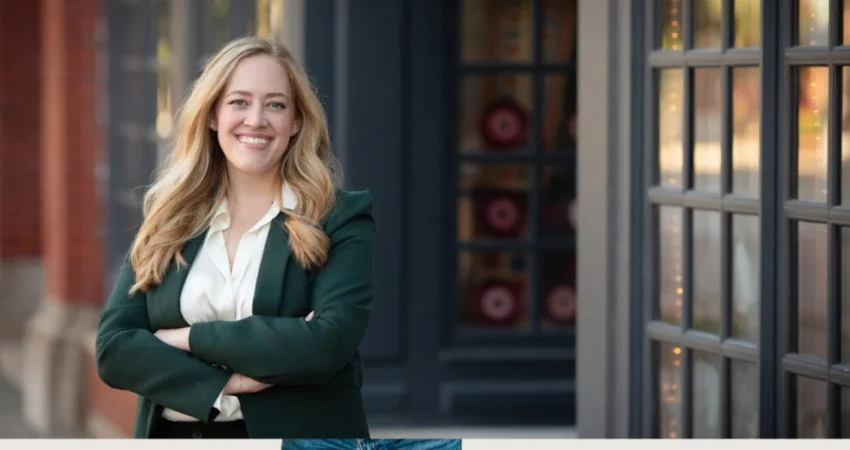
Macomb County special victims prosecutor Christina Hines has emerged victorious from her Democratic primary, setting her sights on flipping one of Michigan’s most intensely competitive House seats in the upcoming 2026 general election. Her compelling campaign narrative, centered on the urgent need for more mothers and fewer millionaires in Congress, resonates deeply within the diverse communities of Michigan’s 10th Congressional District. Hines, a lifelong resident of Macomb County, brings a unique blend of frontline legal experience protecting vulnerable children and the relatable daily realities of a working mother navigating contemporary economic challenges.

A Distinguished Career Advocating for the Vulnerable
For years, Christina Hines has operated within the stark realities of the justice system, in environments most families hope their children never encounter. As a dedicated special victims prosecutor, her career has been defined by an unwavering commitment to safeguarding the innocent and seeking justice for those who have suffered unimaginable trauma. She has meticulously built cases for survivors of sexual abuse, dismantling complex human trafficking networks, and relentlessly pursuing justice in cold-case assaults. Beyond the courtroom, Hines has played a crucial role in shaping law enforcement practices across Michigan, training officers on sensitive and effective techniques for interviewing child victims—a process designed to gather vital evidence without inflicting further psychological harm. This profoundly challenging yet essential work has instilled in her a singular understanding of what it truly means to protect a child and advocate for a community’s most vulnerable members. Her professional life has been a testament to her deep-seated belief in upholding justice and ensuring safety, experiences that now form the bedrock of her political platform.

Michigan’s 10th District: A Pivotal Battleground
The 2026 election cycle places Michigan’s 10th Congressional District squarely in the national spotlight. This open seat, anchored in southern Macomb County, is widely regarded as one of the nation’s most closely divided and highly contested electoral battlegrounds. With no incumbent, both Democratic and Republican parties have designated MI-10 as a top-tier target, pouring significant resources into what promises to be a hard-fought contest. Historically, Macomb County has often served as a bellwether for statewide and even national political trends, reflecting a blend of working-class communities, suburban growth, and diverse socio-economic concerns. The district’s voters are known for their independent streak, often swinging between parties depending on the candidates and prevailing issues. The outcome here will not only determine a new representative but could also significantly influence the balance of power in the U.S. House of Representatives. Analysts predict a high-turnout election, with intense campaigning focused on local issues, economic stability, and leadership qualities. Hines’s primary victory underscores her local appeal and the effectiveness of her message within this crucial demographic.

The Campaign Trail: A Mother’s Perspective on Governance
Christina Hines’s campaign is characterized by an authentic, grassroots approach that contrasts sharply with traditional political strategies. She has personally knocked on an astounding 25,000 doors across the district, engaging directly with voters and immersing herself in their daily lives and concerns. This relentless door-to-door effort is not merely a tactic; it embodies her core philosophy that genuine representation stems from direct, unfiltered dialogue with constituents.

Her central campaign pitch—that Congress suffers from an overabundance of millionaires and a severe deficit of mothers who truly understand the everyday struggles of American families—is both a pointed critique of the status quo and a compelling declaration of her own candidacy. This message resonates powerfully in an era where public trust in institutions is often strained, and voters express a desire for elected officials who share their lived experiences. Currently, mothers, particularly those with young children, remain significantly underrepresented in legislative bodies at all levels of government. For example, while women constitute over 50% of the U.S. population, they hold only about 28% of seats in Congress. The percentage of mothers with school-aged children is even smaller, highlighting a critical gap in representation that Hines aims to bridge.

Hines herself speaks openly about the financial realities facing countless families, detailing the simultaneous arrival of daycare bills and mortgage payments, the ever-increasing cost of prescription co-pays, and the relentless pressure of grocery runs. These are not abstract policy points for her; they are the lived experiences that shape her daily life as a working mom of three. This candidness fosters an immediate connection with voters, many of whom face identical challenges. Her campaign isn’t just about winning a seat; it’s about injecting a vital, empathetic, and pragmatic perspective into national policy-making—a perspective rooted in the understanding that economic policies directly impact kitchen tables, school budgets, and family well-being.

Weaving Family into the Fabric of the Campaign
Life on the campaign trail for Christina Hines, much like her demanding career as a prosecutor, defies a "typical" day. Her schedule is a dynamic blend of family responsibilities and relentless campaigning. Mornings often begin with the familiar rush of preparing her three children for school, a scene familiar to millions of parents. The day might then pivot to fundraising events, strategic meetings with advisors, or intensive door-knocking sessions, followed by media interviews or community forums. Yet, the campaign is not a separate entity from her family life; it is deeply interwoven into it.

Her children are active participants, often accompanying her to events, helping to distribute campaign literature, and even joining her in conversations with voters. This immersion offers them a direct, unfiltered view of civic engagement and public service. While this integration fosters a sense of shared purpose, it also presents significant challenges. Hines openly acknowledges the sacrifices, including missed family dinners and weekends spent campaigning rather than at home. However, she navigates these trade-offs with transparency, explaining to her children the profound "why" behind her pursuit of public office. The unwavering support of her husband and extended family has been indispensable, serving as a critical buffer during moments when the demands of the campaign threaten to overwhelm. This collective effort underscores a powerful message: that a family’s strength can be a foundational asset in the demanding world of politics.

Policy Shaped by Lived Experience
For Christina Hines, the intersection of motherhood and public policy is not theoretical; it is deeply personal and immediate. Her experience as a mother profoundly shapes her understanding of the issues she champions. When she discusses the escalating costs of childcare, the complexities of healthcare access, the rising prices at the grocery store, the struggle for affordable housing, or the burden of college tuition, she views these challenges not as "abstract numbers on a spreadsheet" but through the lens of their direct impact on her own children and the countless families she encounters daily.

This maternal perspective brings an invaluable layer of empathy and pragmatism to her policy discussions. For instance, the average annual cost of infant care in Michigan is approximately $10,859, a figure that can consume a significant portion of a family’s income, often equaling or exceeding college tuition in many states. Hines understands this burden firsthand, allowing her to articulate the need for robust, accessible, and affordable childcare solutions with genuine conviction. Similarly, her professional background as a child abuse and sexual assault prosecutor has always underscored the critical importance of protecting children and families. Being a mother has only deepened this conviction, reinforcing her belief that a society’s true strength is measured by its commitment to its youngest and most vulnerable members. Her policy positions are thus not academic exercises but direct responses to the real-world pressures and needs she experiences and observes within her community.

The Unforeseen Realities of Running for Office
Running for a competitive congressional seat presents a myriad of unexpected challenges, and Christina Hines has learned that maps and poll numbers, while informative, can never fully capture the intricate pulse of a community. She expresses a particular surprise at the tendency, within political circles, to overlook or take for granted the irreplaceable value of direct, face-to-face engagement with constituents.

Hines firmly believes there is "no substitute for actually sitting at someone’s kitchen table, knocking on their door, or listening to them tell you what’s happening in their life." This hands-on approach stands in stark contrast to campaigns that rely heavily on data analytics, mass media, or broad demographic generalizations. After personally engaging with voters at over 25,000 doors, Hines asserts that her campaign’s priorities are not dictated by "a DC think tank" but are organically derived from the authentic conversations she has had with residents across the district. She has discovered that local community members possess an unparalleled understanding of their own challenges and aspirations. This commitment to listening actively and empathetically has become one of her most cherished aspects of the campaign trail, allowing her to craft a platform that genuinely reflects the needs and concerns of Macomb County.

The Deep Personal Cost and Enduring Purpose
The decision to run for public office, particularly as a mother of three, has demanded significant personal sacrifice from Christina Hines and her family. The most profound cost, she admits, has been the relentless demand on her time. The campaign trail is unforgiving, often requiring her presence at events, meetings, and voter engagements that clash with precious family moments. There have been numerous missed dinners, weekends dedicated to campaigning, and difficult choices between her children’s immediate needs and the broader demands of her political calling.

In navigating these challenges, Hines has adopted a philosophy of transparent communication with her children, openly explaining the "why" behind her demanding schedule. She strives to ensure that the time they do spend together is intentional, present, and deeply meaningful. She also credits her husband and extended family as an "incredibly lucky" support system, stepping in to "carry me through the moments when I couldn’t do it all myself."

Beyond the logistical challenges, Hines frames her campaign as a profound personal calling, asserting that such callings inherently "require sacrifice." She views this period of intense public service as an important lesson for her children: "I think it’s important for my children to see that, too, that sometimes we are called to give more of ourselves, to put our faith into action, and to lift our lives up in service of God and His purpose." She hopes they internalize the message that a life of purpose, though not always easy, is ultimately a deeply meaningful one.

Her ultimate aspiration for her children is for them to learn that influence and impact are not solely the domain of the wealthy, powerful, or well-connected. She wants them to understand that "when you believe something is worth fighting for, you show up and you do the work, even when it’s hard and even when you’re afraid." Above all, Hines desires to instill in them a fundamental understanding of public service as an act of profound community love—a responsibility to actively shape the future and contribute to the ongoing endeavor of making their country "more perfect." If they grow up with this sense of obligation to leave the world better than they found it, she will consider her sacrifices worthwhile.

Broader Implications: The Rise of Mother-Candidates
Christina Hines’s campaign is part of a growing national trend: an increasing number of mothers, particularly those with young children, are stepping forward to seek public office. This movement is driven by a recognition that diverse representation in government leads to more relevant and effective policy-making. Organizations like Vote Mama, which has endorsed Hines, play a crucial role in this shift. Vote Mama is dedicated to dismantling the structural barriers that historically prevent mothers from running for and winning elections, such as the high cost of childcare, the lack of campaign funds for family support, and societal expectations that often penalize mothers for having political ambition.

The rise of mother-candidates has significant implications for American politics. When mothers are elected, they often bring firsthand experience to policy debates on issues like paid family leave, affordable childcare, maternal healthcare, education funding, and economic equity. Their perspectives can shift legislative priorities, leading to policies that are more responsive to the needs of working families. For instance, states with higher representation of women, and particularly mothers, in their legislatures tend to have more progressive family-friendly policies. However, mother-candidates still face unique hurdles, including overcoming implicit biases about their capacity to balance family and public service, securing adequate funding, and managing rigorous campaign schedules while caring for dependents. Hines’s journey exemplifies both the profound challenges and the immense potential of this evolving landscape in American political representation.

In the highly anticipated 2026 general election, Christina Hines stands as a compelling candidate for Michigan’s 10th Congressional District. Her unique background as a prosecutor dedicated to protecting children, combined with her lived experience as a working mother navigating everyday financial realities, offers a fresh and deeply empathetic voice. Her grassroots campaign, built on direct engagement and a profound understanding of her community’s needs, positions her as a formidable contender in this pivotal race. Hines’s candidacy is not just about winning a seat; it’s a powerful statement about the evolving face of American leadership and the essential role that mothers can play in shaping a more representative and responsive government for the future.

0 Comments