
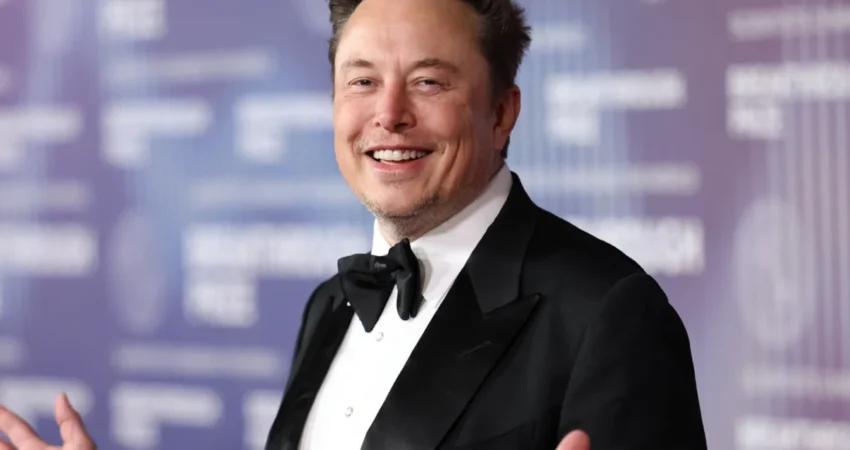
Justine Musk, an author who was married to the billionaire from 2000 to 2008, used her platform in the documentary to describe a relationship defined by a rigid power hierarchy. Among the most striking revelations was her account of their wedding reception in 2000. According to Justine, while the couple was dancing, Elon leaned in and whispered, "I am the alpha in this relationship." This moment, she suggests, served as a harbinger for the years of "gaslighting" and marginalization she claims to have experienced as the Musk empire began its meteoric ascent.
The Psychological Dynamics of the Musk Marriage
The documentary delves deep into the personal friction that existed behind the scenes of Musk’s early successes with Zip2 and PayPal. Justine recounted how the "alpha" dynamic manifested in their daily lives, alleging that Elon frequently spoke down to her and made her feel "insignificant." She noted that he was "constantly remarking on the ways he found [her] lacking," a behavior she characterized as a systematic erosion of her self-worth.
Justine’s testimony provides a counter-narrative to the public persona Musk has cultivated as a visionary focused solely on the future of humanity. Instead, she portrays a man deeply influenced by personal insecurities. She recalled instances where he was intensely self-conscious about his appearance and public image, specifically regarding his choice of attire. Justine alleged that he once told her, "I can’t look cool or hip, because I need to look like an engineer." This insight suggests that Musk’s public branding as a "hardcore" engineer and work-focused leader was a calculated identity, often maintained at the expense of personal authenticity.
The term "gaslighting"—a form of psychological manipulation where a person is made to question their own memory or perception—was central to Justine’s description of their time together. She claimed that the power imbalance was not merely a byproduct of his professional stress but a fundamental component of his personality.
A Timeline of the Musk-Justine Relationship
To understand the weight of these revelations, it is necessary to look at the chronology of their relationship, which spanned the formative years of Musk’s career:
- Early 1990s: The pair met while attending Queen’s University in Ontario, Canada. Justine was an aspiring writer, and Elon was a student with burgeoning ambitions in physics and economics.
- 2000: The couple married just as Musk was becoming a multi-millionaire following the sale of Zip2 and the growth of X.com (which would become PayPal).
- 2002: The couple suffered the tragic loss of their first child, Nevada Alexander Musk, to Sudden Infant Death Syndrome (SIDS) at just 10 weeks old.
- 2004–2006: Seeking to expand their family, the couple turned to IVF, resulting in the birth of twin boys (Griffin and Vivian) in 2004, followed by triplet boys (Kai, Saxon, and Damian) in 2006.
- 2008: Justine and Elon filed for divorce. The proceedings were highly publicized, particularly after Justine wrote a viral article for Marie Claire titled "I Was a Starter Wife," which detailed the financial and emotional fallout of their split.
Contradicting Narratives: The Death of Nevada Musk
One of the most poignant and contentious points in the documentary involves the death of the couple’s firstborn, Nevada. In recent years, Elon Musk has spoken publicly about the tragedy, claiming on social media that he felt his son’s last heartbeat and held him in his arms as he passed away.

However, in Musk, Justine directly contradicts this account. She stated that she was the one holding the infant during his final moments, not Elon. This discrepancy highlights a recurring theme in the documentary: the struggle over narrative control. Gibney’s film suggests that Musk often reshapes personal and professional histories to fit a specific emotional or heroic arc, a tendency that Justine argues extends even to their shared grief.
The loss of Nevada reportedly created a permanent rift in the marriage. Justine has previously noted that Elon refused to talk about the death, labeling her desire to grieve openly as "emotionally manipulative." This stoicism and refusal to engage with emotional vulnerability became a cornerstone of their eventual estrangement.
Pronatalism and the "Breeder" Philosophy
The documentary also explores Musk’s evolving views on family and population. In recent years, Musk has become a vocal advocate for "pronatalism," frequently tweeting about the "underpopulation crisis" and the need for high-IQ individuals to have more children to save Western civilization.
Justine offered a scathing critique of this worldview, claiming that Elon views the mothers of his children as "breeders." She alleged that in his mind, "the breeders are interchangeable," suggesting that the individual identity and emotional needs of his partners are secondary to the goal of procreation.
This claim is supported by the rapid expansion of Musk’s family tree following his divorce from Justine:
- With Grimes (Claire Boucher): Three children (X Æ A-12, Exa Dark Sideræl, and Techno Mechanicus).
- With Shivon Zilis: Three children (twins Strider and Azure, and a third child born in 2024).
- With Ashley St. Clair: Reports indicate at least one child, bringing his known total to 14 children.
Justine’s comments suggest that Musk’s public obsession with birth rates is mirrored in a personal life where women are valued primarily for their reproductive capacity rather than as equal partners. This "alpha" mentality, first voiced at their wedding, appears to have transitioned into a broader ideological framework.
Supporting Data: The Alex Gibney Perspective
The documentary Musk is the latest in a series of deep-dive investigative films by Alex Gibney, who is known for tackling powerful entities and individuals, including the Church of Scientology (Going Clear) and Enron (The Smartest Guys in the Room). Gibney’s involvement adds a layer of journalistic rigor to the claims made by Justine and other interviewees.

According to production notes, the film involved over two years of research and dozens of interviews with former employees, business associates, and family members. While Elon Musk declined to be interviewed for the project, the film utilizes archival footage and his extensive public record on X (formerly Twitter) to provide his perspective.
The documentary arrives at a time of heightened scrutiny for Musk. Beyond his personal life, his leadership of X, his political shift toward right-wing populism, and federal investigations into Tesla’s Autopilot systems have made him a polarizing figure. Justine’s testimony serves to humanize—and complicate—the "techno-king" narrative, suggesting that the drive to conquer Mars or revolutionize transport may be rooted in the same "alpha" compulsions that fractured his first family.
Broader Implications and Public Reaction
The release of Musk is expected to spark significant debate regarding the private lives of "Great Man" figures in history and industry. Factual analysis of the documentary suggests a pattern of behavior that critics describe as "dark triad" traits—narcissism, Machiavellianism, and psychopathy—though these are clinical terms that the film approaches through the lens of personal testimony rather than medical diagnosis.
Official responses from the Musk camp have been characteristically dismissive. Representatives for Musk have previously characterized Justine’s public comments as attempts to remain relevant, while Musk himself often uses his platform on X to mock his critics. However, the specific allegation regarding the death of his son Nevada poses a unique challenge to his public credibility, as it touches on a deeply personal and verifiable event.
For the public, Justine Musk’s insights offer a cautionary tale about the intersection of extreme wealth, ego, and family life. Her description of feeling "insignificant" stands in stark contrast to the massive cultural significance her ex-husband holds. As the documentary moves from the festival circuit to a wider release, it is likely to influence the ongoing discourse regarding the ethics of "visionary" leadership and the human cost of building a galactic legacy.
In the final analysis, Musk does not just tell the story of a billionaire; it tells the story of the people left in his wake. Justine Musk’s decision to speak out reflects a growing movement to hold tech icons accountable not just for their balance sheets, but for the interpersonal environments they create. As Justine concludes in the film, the "alpha" may lead the pack, but the cost of following can be a total loss of self.

0 Comments