
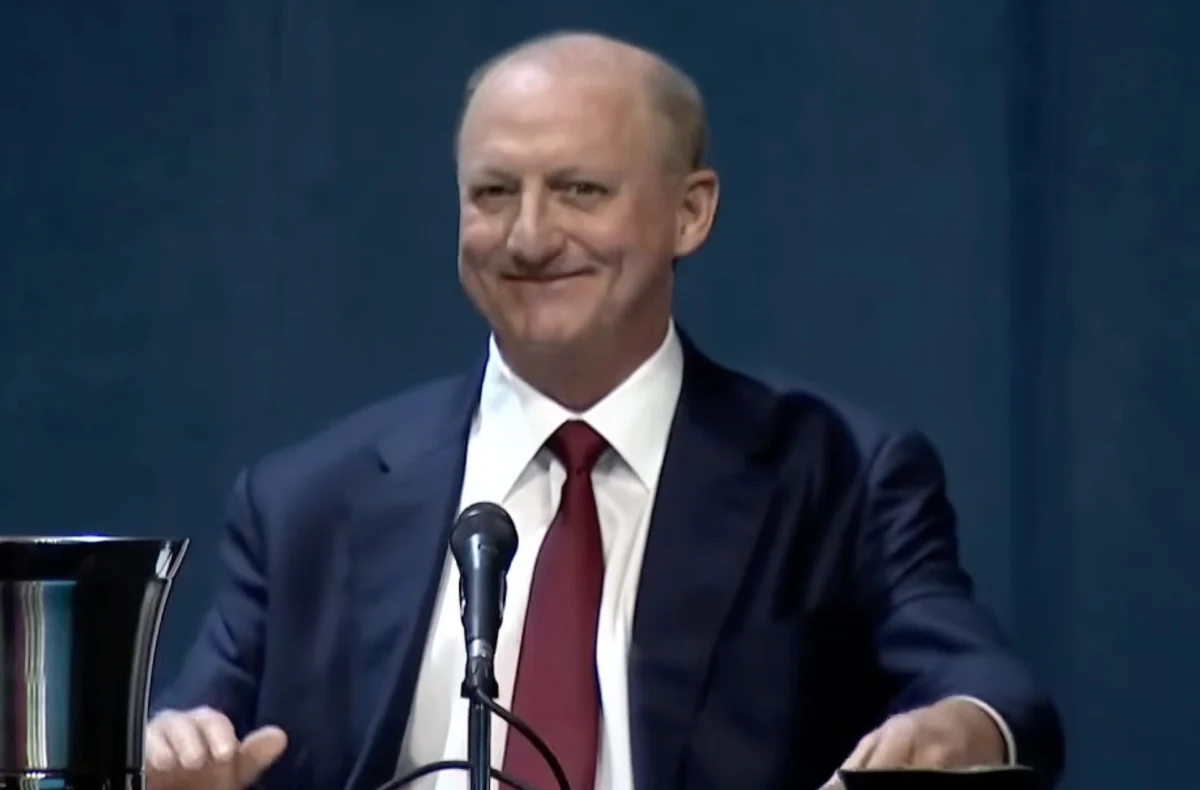
Omaha, NE – Berkshire Hathaway, the sprawling conglomerate built by legendary investor Warren Buffett, reported a robust 16% surge in operating earnings for the second quarter of 2026, reaching $12.98 billion, up from $11.16 billion in the same period a year prior. This strong financial performance was primarily driven by significant gains across its energy, railroad, and diverse manufacturing businesses, successfully offsetting a softer showing from its expansive insurance operations. More critically, the quarterly results provided the clearest indication yet that Greg Abel, 64, who officially assumed the CEO mantle from Buffett at the start of the year, is embarking on a more assertive strategy to deploy Berkshire’s colossal cash reserves through intensified share buybacks and strategic stock purchases.
Abel’s Inaugural Quarters: A Decisive Shift in Capital Allocation
The second fiscal quarter under Abel’s leadership marks a pivotal moment for Berkshire Hathaway, signaling a departure from the conservative capital deployment posture that characterized the final years of Warren Buffett’s direct investment oversight. For 14 consecutive quarters leading up to this period, Berkshire had been a net seller of equities, reflecting Buffett’s consistent struggle to identify compelling value opportunities in what he frequently described as an overvalued market. This prolonged period of net selling contributed significantly to the accumulation of an unprecedented cash hoard, which peaked at a staggering $397.4 billion at the end of the first quarter of 2026.
Shareholders, accustomed to Buffett’s disciplined yet opportunistic approach to capital allocation, had increasingly vocalized their desire for a more active deployment of these funds, which were largely held in low-yielding U.S. Treasuries. Abel’s actions in the second quarter appear to be a direct response to this sentiment, initiating a strategic drawdown of this cash pile. By the close of June, Berkshire’s cash reserves had decreased to $365.5 billion, a substantial reduction of nearly $32 billion within a three-month span. This reduction was a direct consequence of a multi-pronged capital deployment strategy, encompassing significant share repurchases, a notable return to net equity buying, and the strategic acquisition of Taylor Morrison, a prominent homebuilder.
Segmental Performance: Engines of Growth and Areas of Constraint
The diversified nature of Berkshire Hathaway’s portfolio was evident in its Q2 performance. The manufacturing, service, and retailing segment emerged as a standout performer, reporting a substantial 24% jump in earnings to $4.47 billion. This segment, encompassing a vast array of businesses from industrial products to consumer goods and services, demonstrates the underlying strength and resilience of Berkshire’s non-financial operating companies. This growth underscores the robust demand and efficient operations within these diverse sectors, many of which are deeply embedded in the American economy.
Berkshire Hathaway Energy (BHE), a significant component of Abel’s previous executive portfolio, also delivered impressive results, with profit surging by 27% to $891 million. BHE’s operations span electricity generation, transmission, and distribution, as well as natural gas pipelines, reflecting its critical role in North America’s energy infrastructure. The consistent growth in this sector highlights the stable, regulated earnings power of utility businesses, further bolstered by ongoing investments in renewable energy and infrastructure upgrades.
BNSF Railway, one of the largest freight railroad networks in North America, also contributed positively, posting a 6% increase in earnings to $1.56 billion. As a vital artery for the transportation of goods across the continent, BNSF’s performance is often seen as a bellwether for industrial activity and consumer demand. Its steady growth reflects healthy freight volumes and efficient operational management, despite broader economic fluctuations.
Conversely, the insurance sector, a traditional cornerstone of Berkshire’s financial strength, proved to be a weak spot in the second quarter. Underwriting earnings declined by 13% to $1.73 billion, down from $1.99 billion a year earlier. This dip can be attributed to a combination of factors, including increased competition, potential higher catastrophe losses (though specific details were not provided), and general market pressures. Furthermore, insurance investment income, a crucial component of Berkshire’s earnings derived from the vast "float" generated by its insurance operations, also saw a 9% decline to $3.06 billion. This reduction in investment income could be influenced by a variety of factors, including changes in interest rates affecting bond yields, or shifts in the underlying investment portfolio’s composition and performance.
Aggressive Share Repurchases and a Return to Equity Investing
One of the most significant indicators of Abel’s new strategic direction was the dramatic increase in share repurchases. Berkshire repurchased approximately $4.5 billion of its own Class A and Class B shares during the second quarter. This figure represents a sharp acceleration compared to the mere $235 million spent on buybacks in the first three months of 2026, Abel’s initial quarter as CEO. While some market analysts had anticipated an even more aggressive buyback program, this substantial increase nonetheless signals a clear intent to return capital to shareholders when the company’s shares are perceived as undervalued. Buffett, known for his long-standing preference for buybacks over dividends, had previously set a clear policy allowing repurchases when the stock trades below his estimate of intrinsic value, a policy Abel appears to be actively embracing.
Beyond buybacks, Berkshire Hathaway reversed its long-standing pattern of selling stocks, becoming a net buyer of equities in the second quarter with nearly $20 billion in net purchases. This strategic pivot, breaking a 14-quarter streak of net selling, underscores a renewed confidence in the equity market and a willingness to deploy capital into publicly traded companies. This shift could reflect Abel’s independent assessment of market opportunities or a collaborative evolution of investment strategy within Berkshire’s top leadership.
Strategic Acquisitions and Portfolio Evolution
The quarter’s capital deployment also included the closing of Berkshire’s acquisition of Taylor Morrison. While specific financial terms were not detailed in the public filing, this acquisition marks a significant foray into the housing market, a sector that has experienced considerable volatility but also sustained demand in recent years. Taylor Morrison, a prominent national homebuilder, provides Berkshire with a direct stake in residential construction and real estate development, diversifying its vast portfolio further into tangible assets and cyclical industries. This move aligns with Berkshire’s history of acquiring well-managed, understandable businesses with durable competitive advantages.
Perhaps one of the most talked-about investments was the disclosure earlier in the year of a $10 billion investment in Alphabet, the parent company of Google. The second-quarter filing indicated that Alphabet is now among Berkshire’s five largest equity holdings by market value at the end of June, joining long-time stalwarts such as American Express, Apple, Bank of America, and Coca-Cola. This investment is particularly noteworthy given Buffett’s historically cautious approach to technology companies, although Apple has been a significant exception. Buffett himself told CNBC that he initiated the Alphabet investment after consulting with Greg Abel, emphasizing the role of AI development as a key rationale. This suggests a forward-looking perspective and a recognition of the transformative potential of artificial intelligence, marking a potentially new era for Berkshire’s equity portfolio composition. The inclusion of Alphabet diversifies Berkshire’s top holdings, adding a high-growth technology titan to a list traditionally dominated by financial services, consumer goods, and industrial giants.
Market Reaction and Investor Outlook
Despite the robust operational results and the strategic shift in capital deployment, shares of Berkshire Hathaway have shown a relatively modest performance year-to-date, rising just 3% through the end of June. This underperformance stands in contrast to the broader S&P 500 index, which gained a more substantial 13% over the same period, reflecting a tech-driven market rally. However, there has been a noticeable uptick in Berkshire’s stock performance more recently, with shares climbing 9% over the last three months, suggesting that investors are beginning to react positively to Abel’s more proactive capital management.
The market’s long-standing anticipation for Abel to put Berkshire’s cash to work outside of U.S. Treasuries now seems to be materializing. The "Oracle of Omaha," Warren Buffett, had consistently expressed difficulty in finding attractive investment opportunities, leading to the ballooning cash pile. Abel’s initial moves signal a readiness to engage with the market more directly, both through public equity investments and strategic acquisitions, while also demonstrating a commitment to enhancing shareholder value via buybacks.
The Road Ahead: Abel’s Leadership and Berkshire’s Evolving Legacy
Greg Abel’s first two quarters as CEO represent a critical transitional phase for Berkshire Hathaway. Inheriting a corporate behemoth with an unparalleled legacy, Abel faces the dual challenge of maintaining Berkshire’s unique culture of decentralized management and long-term value creation, while also evolving its investment strategy to meet contemporary market dynamics. His initial actions suggest a willingness to be more proactive in capital allocation, a move that could reshape Berkshire’s growth trajectory and its perception among investors.
The shift from a net seller to a significant net buyer of equities, coupled with increased buybacks and strategic acquisitions, indicates a clear mandate from Abel to generate higher returns on Berkshire’s vast capital base. This period will be closely watched by investors and analysts alike, as Abel navigates the complexities of a global economy and seeks to imprint his own strategic vision on one of the world’s most iconic and successful conglomerates. The foundation laid by Warren Buffett provides an extraordinary platform, and Abel’s early moves suggest a thoughtful yet decisive approach to building upon that legacy, ensuring Berkshire Hathaway remains a formidable force in the investment and business world for decades to come.

0 Comments