
The cultural landscape of early 20th-century France was a vibrant tapestry woven with the threads of artistic innovation, patronage, and entrepreneurship. Yet, amidst the luminaries who shaped this era, the name Gustave Fayet, despite his profound influence, has largely receded from public consciousness. This fall, the Fondation Louis Vuitton in Paris is poised to rectify this oversight with a monumental exhibition, "Gustave Fayet, Collector—Designer," a cornerstone of its esteemed "Icons of Modern Art" series. Running from October 9, 2024, through March 8, 2025, the exhibition will occupy the entirety of the Frank Gehry-designed architectural marvel, shedding light on Fayet’s multifaceted contributions as a collector, patron, designer, and artist.
Fayet’s remarkable life was characterized by an extraordinary ability to champion nascent artistic talent and to weave his own creative endeavors into the fabric of the avant-garde. His Paris residence, once a testament to his discerning eye, functioned as an unofficial museum dedicated to the works of Paul Gauguin. Fayet’s personal collection was so extensive that it mirrored the collections of major institutions of the time. His prescience extended to Pablo Picasso, whom he introduced to the French art scene before the artist had even reached the age of twenty, organizing one of the earliest public exhibitions of his work in France. This early support for Picasso, who would go on to become one of the most influential artists of the 20th century, underscores Fayet’s keen eye for groundbreaking talent.
Beyond his role as a collector and early supporter of modern masters, Fayet was a significant figure in the world of decorative arts and design. His close relationships with prominent figures of the era, such as fashion designer Jeanne Lanvin and couturier Paul Poiret, further attest to his central position within Parisian cultural circles. Lanvin, the founder of the eponymous fashion house, commissioned Fayet to design rugs for her personal apartment, a testament to his skill as a designer. Similarly, Poiret, a revolutionary figure in fashion known for his avant-garde designs, contributed to a significant personal event in Fayet’s life by designing his daughter’s wedding dress. These collaborations highlight Fayet’s ability to bridge the worlds of fine art and applied arts, demonstrating a holistic appreciation for creative expression.

The exhibition at the Fondation Louis Vuitton promises to unravel the complex and influential career of this overlooked figure. By dedicating its entire exhibition space to Fayet, the institution signals the significant artistic and historical weight of his legacy. The show will explore his journey from his early artistic training to his pivotal role as a tastemaker and innovator, offering a comprehensive view of his impact on the art and design movements of his time.
From Artistic Roots to Patronage: The Early Life and Career of Gustave Fayet
Gustave Fayet was born in 1865 into a family of considerable means, with roots in landownership and the lucrative wine trade. His early artistic inclinations were nurtured within the family, as both his father and uncle were amateur artists. This familial encouragement likely sowed the seeds for his lifelong engagement with the arts. His formative years saw him actively participating in the art world, frequenting art fairs and developing a broad understanding of contemporary artistic trends.
A significant early professional step was his appointment as a curator at the Musée de Béziers. Here, he collaborated with Louis Paul, a sculptor who had been a student of the renowned Auguste Rodin. Their partnership resulted in the creation of ceramics inspired by Japonisme, an artistic and aesthetic movement that embraced Japanese art and design. These distinctive pieces were subsequently exhibited in one of Paris’s most prestigious galleries, marking Fayet’s early foray into curating and showcasing significant artistic works. This period established Fayet not just as an artistically inclined individual, but as someone with the vision and connections to bring art to public attention.
The Inheritance and the Birth of a Legendary Collection
The pivotal moment in Fayet’s trajectory occurred in 1899 when he inherited the family estate. This inheritance provided him with the financial independence and resources to embark on his passionate pursuit of art collecting in earnest. It was during this period that he began acquiring seminal works by artists who would define modern art, including Paul Gauguin and Pierre-Auguste Renoir.

The scope and quality of Fayet’s collection were extraordinary for its time. Many of the works that passed through his hands are now considered masterpieces and are central to the narrative of modern art. These include Vincent van Gogh’s poignant "Self-Portrait With Bandaged Ear," Paul Cézanne’s monumental "The Great Pine," and Gauguin’s evocative "Three Tahitians." The inclusion of these specific works in the Fondation Louis Vuitton exhibition underscores Fayet’s remarkable foresight and his role in preserving and promoting these crucial artistic contributions. His collection was not merely a passive accumulation of art; it represented an active engagement with the evolving artistic discourse, positioning him as a crucial conduit for the appreciation and dissemination of modern masterpieces. For a period, Fayet was so absorbed in his curatorial pursuits and the acquisition of art that he temporarily set aside his own artistic practice, a testament to the all-consuming nature of his passion for collecting.
The Abbaye de Fontfroide: A Renaissance of Artistic Vision
The year 1908 marked a profound turning point in Fayet’s life and artistic philosophy with the acquisition of the abandoned Abbaye de Fontfroide, a Cistercian abbey near Narbonne. This grand, historical site became Fayet’s canvas for a grand artistic experiment. His vision was to restore the abbey as a "total work of art," a holistic environment where various artistic disciplines would converge.
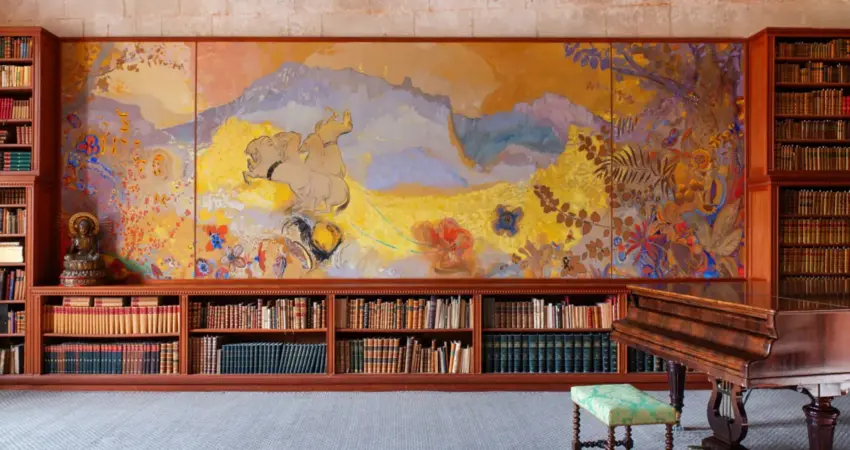
To realize this ambitious dream, Fayet assembled a collective of artists and creative individuals, whom he referred to as his "Fontfroideans." Among the most notable collaborators was Odilon Redon, the Symbolist painter. Redon was commissioned to create three magnificent murals for the abbey’s library, titled "Day," "Night," and "Silence." These powerful works, imbued with Redon’s characteristic dreamlike and symbolic imagery, will be displayed to the public for the first time in the Fondation Louis Vuitton exhibition, offering a rare glimpse into this significant artistic collaboration. The presence of these murals at the exhibition is a major draw, highlighting Fayet’s role in fostering such monumental artistic projects.
The restoration and artistic reimagining of Fontfroide also served as a catalyst for Fayet’s own creative resurgence. The abbey environment inspired him to explore new artistic avenues. Around 1911, he developed a unique artistic technique, employing watercolor on blotting paper. This innovative medium allowed him to create a substantial body of vibrant floral works. Robert Carsen, the artistic director of the exhibition, notes the distinctive quality of these pieces: "The drawings demonstrate an almost childlike spontaneity at a time when Gustave Fayet was a mature man." This observation points to a profound personal connection and artistic freedom that Fayet found in his later work.

From Watercolor to Woven Art: Fayet’s Design Innovations
Fayet’s artistic exploration did not remain confined to his personal creations. His distinctive watercolor techniques caught the attention of decorator Paul Dumas. Recognizing the commercial and aesthetic potential of Fayet’s floral designs, Dumas began reproducing them as fabric and wallpaper. This collaboration led to a significant entrepreneurial venture: the joint founding of Atelier de la Dauphine. This atelier was established to manufacture rugs based on Fayet’s watercolor designs.
The rugs produced by Atelier de la Dauphine represent a significant contribution to the decorative arts of the period. They exemplify the integration of fine art principles into functional objects, blurring the lines between artist and artisan. The exhibition will feature restored examples of these rugs, displayed alongside the original artworks that inspired them. This juxtaposition will offer visitors a comprehensive understanding of Fayet’s design process and the tangible impact of his artistic vision on interior design and craftsmanship. The fact that these designs were translated into durable and aesthetically pleasing rugs for domestic spaces speaks to Fayet’s desire to bring art into everyday life.
Fayet’s creative output continued to diversify. He later ventured into illustration, lending his artistic talents to the illumination of poetry and even creating a book specifically for his grandchildren. This demonstrates a consistent thread of creativity that spanned various forms of artistic expression, from grand murals to intimate literary works.
Chronology of a Cultural Force: Key Milestones in Gustave Fayet’s Life
- 1865: Born into a wealthy family of landowners and wine merchants in France.
- Early Career: Trained as a painter and worked as a curator at the Musée de Béziers, collaborating with sculptor Louis Paul on Japonisme-inspired ceramics.
- 1899: Inherits the family estate, marking the beginning of his significant art collecting activities.
- Early 1900s: Acquires key works by artists such as Gauguin, Renoir, Van Gogh, and Cézanne, establishing one of France’s most important private collections. Organizes early exhibitions for artists like Pablo Picasso.
- 1908: Purchases the abandoned Abbaye de Fontfroide, embarking on its restoration as a "total work of art."
- Circa 1911: Develops his distinctive watercolor technique on blotting paper, creating a significant body of floral artwork.
- Post-1911: Collaborates with Paul Dumas to reproduce his watercolor designs as fabrics and wallpapers, leading to the founding of Atelier de la Dauphine for rug production.
- Later Years: Engages in illustration, creating illuminated works of poetry and children’s books.
- October 9, 2024 – March 8, 2025: "Gustave Fayet, Collector—Designer" exhibition opens at the Fondation Louis Vuitton, Paris, bringing his legacy to a global audience.
Supporting Data and Context: The Art Market and Cultural Milieu
The early 20th century was a period of immense flux in the art world. The rise of Impressionism and Post-Impressionism had challenged traditional academic art, paving the way for new movements like Fauvism and Cubism. Collectors like Gustave Fayet played a crucial role in shaping the market for these emerging artists, providing financial support and critical validation. The prices for works by artists like Gauguin and Van Gogh, while significant, were often more accessible than they are today, allowing discerning collectors to acquire groundbreaking pieces.

Fayet’s engagement with artists like Picasso at such an early stage of his career is particularly noteworthy. In the early 1900s, Picasso was still a young artist working in Paris, honing his style and seeking recognition. Fayet’s patronage and early exhibition efforts provided a vital platform for Picasso’s burgeoning career, contributing to his eventual international fame. This proactive support for emerging artists was a hallmark of Fayet’s collecting philosophy, distinguishing him from those who might have focused solely on established masters.
The context of the decorative arts movement of the time also provides valuable insight into Fayet’s work with rugs and fabrics. The Arts and Crafts movement, which had gained traction in the late 19th century, emphasized craftsmanship and the integration of art into everyday life. Fayet’s venture with Atelier de la Dauphine aligns with this ethos, demonstrating a commitment to producing aesthetically pleasing and well-crafted objects for domestic use. The collaboration with Paul Dumas, a recognized decorator, further solidifies this connection to the design world.
Official Statements and Anticipation for the Exhibition
While direct statements from Fayet’s estate or descendants were not available at the time of reporting, the exhibition’s curatorial team has expressed significant enthusiasm. The Fondation Louis Vuitton, known for its ambitious and meticulously researched exhibitions, has positioned "Gustave Fayet, Collector—Designer" as a major event. The choice to dedicate the entire building to this exhibition signals a strong belief in the enduring relevance and impact of Fayet’s contributions.
The exhibition’s artistic director, Robert Carsen, has been quoted as emphasizing Fayet’s pioneering spirit. His remarks highlight the "new territory" Fayet explored, suggesting that the exhibition will reveal the depth and originality of his artistic endeavors. The inclusion of previously unseen works, such as Redon’s murals, is expected to generate considerable interest among art historians, collectors, and the general public. The Fondation Louis Vuitton’s commitment to showcasing lesser-known but highly influential figures underscores its mission to broaden the understanding of art history.

Broader Impact and Implications: Re-evaluating a Cultural Architect
The exhibition "Gustave Fayet, Collector—Designer" has the potential to significantly reframe our understanding of early 20th-century French art and culture. By bringing Fayet out of obscurity, the exhibition invites a re-evaluation of the roles played by patrons and designers in shaping artistic movements. His ability to act as both a discerning collector and a creative force in his own right offers a compelling model of artistic engagement that transcends traditional disciplinary boundaries.
The exhibition’s implications extend beyond art historical discourse. It also highlights the interconnectedness of various creative fields – painting, sculpture, fashion, and decorative arts – and the individuals who fostered these connections. Fayet’s story serves as a reminder that cultural progress is often driven by individuals who possess a unique combination of vision, passion, and the ability to bridge artistic communities.
Furthermore, the exhibition’s focus on Fayet’s design work, particularly his rugs and fabrics, underscores the growing appreciation for the applied arts and their contribution to the broader cultural landscape. The restoration of his designs for display alongside original artworks emphasizes the inherent artistic merit of these objects and their importance in understanding Fayet’s complete creative output.
In a world increasingly focused on rediscovering and re-evaluating historical figures, Gustave Fayet’s emergence at the Fondation Louis Vuitton represents a significant moment. It is an opportunity to celebrate a man whose imaginative spirit and influential actions left an indelible mark on the art and design of his era, a mark that is finally being brought into the full light of public recognition. The exhibition promises to be a landmark event, illuminating the life and work of a true, albeit long-undiscovered, luminary.

0 Comments