
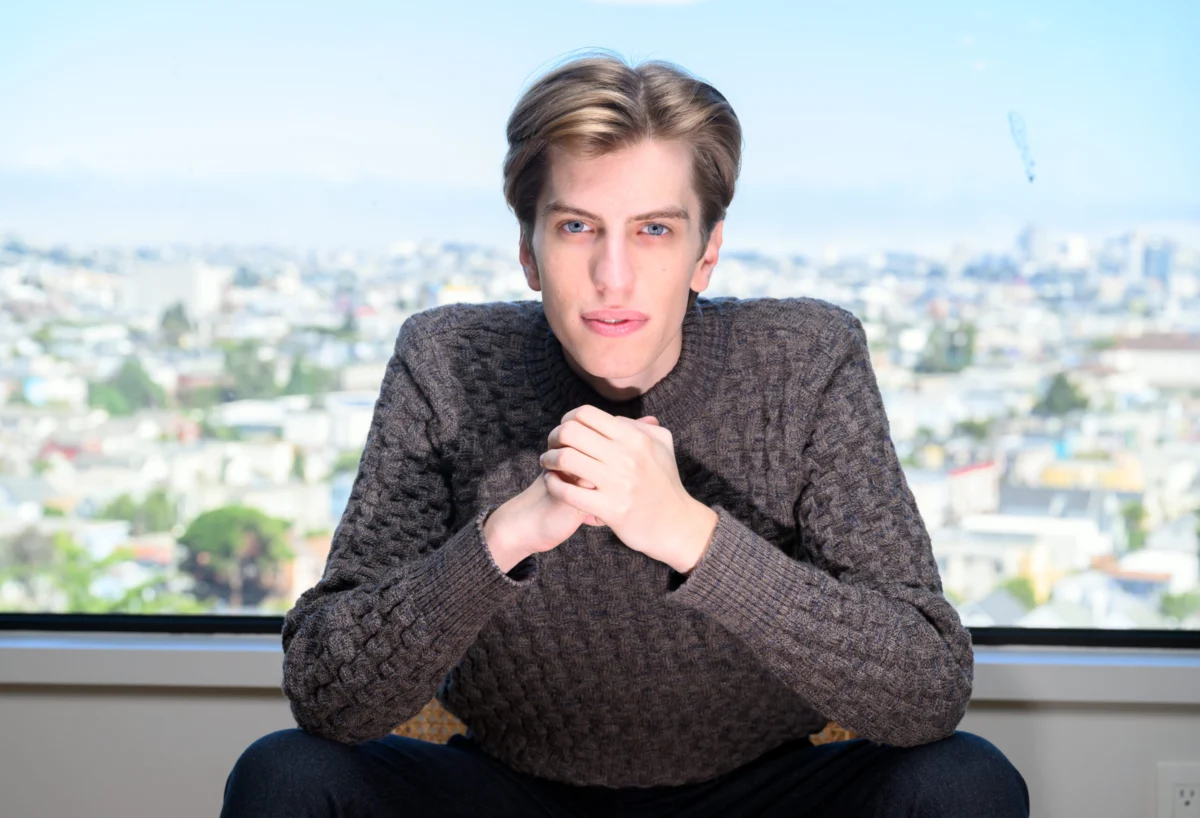
The high-flying AI-themed hedge fund, Situational Awareness, helmed by the self-proclaimed visionary and former OpenAI researcher Leopold Aschenbrenner, has experienced a precipitous decline, shedding billions of dollars in assets this week. The fund, which at its peak earlier this month managed an impressive $45 billion, saw its holdings plummet to approximately $10 billion by Thursday. This dramatic collapse followed a turbulent period marked by tumbling semiconductor stocks and a cascade of Wall Street margin calls, forcing the fund to offload its heavily leveraged positions, including significant stakes in hard-hit names like SK Hynix and CoreWeave, to Ken Griffin’s Citadel at a substantial discount.
Aschenbrenner, a polarizing figure who positioned himself as a prophet of the coming age of artificial superintelligence, has become the most prominent casualty yet of the intense volatility shaking the AI investment landscape. Just two years prior, Aschenbrenner had asserted in a sprawling, 165-page essay, "Situational Awareness," that he possessed a uniquely clear vision of the future, a manifesto that quickly became essential reading within Silicon Valley circles. Now, the limits of that vision have been starkly revealed against the unforgiving realities of public market dynamics and aggressive financial strategies.
The Rise of a Prodigy: From Academia to AI Prophecy
Leopold Aschenbrenner’s trajectory has been nothing short of meteoric, captivating both tech innovators and financial titans. Born in Germany to physician parents, Aschenbrenner exhibited an exceptional aptitude for mathematics and computer science from a young age, skipping multiple grades in the German school system and graduating high school at just 15. His academic brilliance continued at Columbia University, where he earned valedictorian honors at the precocious age of 19. During his time at Columbia, he garnered attention for his academic paper, "Existential Risk and Growth," signaling an early interest in the profound societal implications of advanced technologies.
Beyond his academic pursuits, Aschenbrenner was a co-founder of Columbia’s chapter of Effective Altruism, a philosophical and social movement that advocates for using evidence and reason to determine the most effective ways to benefit others. This intellectual network proved to be a significant pipeline for his early career, connecting him with other proponents of the philosophy, including Sam Bankman-Fried. Following his graduation in 2021, Aschenbrenner briefly worked at the Future Fund, the philanthropic arm of Bankman-Fried’s now-disgraced crypto firm, FTX, operating out of a Bahamas penthouse. This stint, though brief and preceding FTX’s spectacular collapse, offered him a firsthand look at high-stakes, unconventional operations in the burgeoning tech-finance nexus.
In 2023, Aschenbrenner transitioned to OpenAI, joining its elite Superalignment team under the leadership of Ilya Sutskever. His work focused on the critical challenge of ensuring advanced AI systems remain aligned with human interests. During his tenure, Aschenbrenner raised alarms internally about OpenAI’s security vulnerabilities, specifically penning a memo to the board warning that the company’s defenses were insufficient to guard against foreign espionage, explicitly naming China. This outspokenness ultimately led to his dismissal from OpenAI in 2024, with the company accusing him of improperly sharing confidential information – a characterization Aschenbrenner has consistently disputed, maintaining he was merely highlighting legitimate security concerns. Scott Aaronson, a respected computer scientist who previously worked on AI safety at OpenAI, publicly supported Aschenbrenner, stating, "I was sorry when he got pushed out because of sharing information in a way leadership didn’t approve of. It sounded like he was trying to do the right thing and they overreacted."
The "Situational Awareness" Manifesto and the Birth of a Hedge Fund
Weeks after his departure from OpenAI, Aschenbrenner parlayed his direct experience at the forefront of AI research into a sweeping, influential vision for the future. His June 2024 essay, also titled "Situational Awareness," presented a provocative argument: artificial general intelligence (AGI) was not a distant dream but an imminent reality, potentially arriving within years, and governments were dangerously underestimating the pace of this technological progression. The essay resonated deeply within the tech community, cementing Aschenbrenner’s image as a prodigy with unparalleled insight into AI’s trajectory for his admirers. Critics, however, contended that the manifesto overstated both the near-term capabilities of AI and Aschenbrenner’s certainty regarding the future.
Capitalizing on his burgeoning fame and the prevailing AI euphoria, Aschenbrenner launched his hedge fund in July 2024. The fund quickly attracted significant seed capital, reportedly raising $225 million from an impressive roster of tech luminaries, including Stripe co-founders Patrick and John Collison, former GitHub CEO Nat Friedman, and prominent investor Daniel Gross. This initial success marked the beginning of an extraordinary two-year run, during which Situational Awareness reportedly racked up gains exceeding 1,000% since its inception, as reported by The Wall Street Journal. At just 24 years old, Aschenbrenner appeared to be validating his prophetic pronouncements, leading many to believe he truly possessed the "situational awareness" he preached.

The Mechanics of an Implosion: Leverage, Semiconductors, and Margin Calls
The fund’s stunning reversal can be attributed to a confluence of factors, primarily its aggressive use of leverage and an ill-timed exposure to a volatile semiconductor market. While the exact leverage ratio has not been officially confirmed by the fund, sources familiar with the situation indicated Situational Awareness employed as much as 400% leverage. In financial terms, this means that for every dollar of its own capital, the fund borrowed an additional four dollars to invest. Such a strategy dramatically amplifies returns during bull markets but equally magnifies losses when the market turns.
The turning point came with a sharp downturn in semiconductor stocks, a sector deeply intertwined with the AI boom. Companies like SK Hynix, a major memory chip manufacturer, and CoreWeave, a specialized cloud provider for AI workloads, experienced significant declines. These companies are critical suppliers for the computational infrastructure required by advanced AI, and their stock performance is highly sensitive to shifts in demand, supply chain dynamics, and broader economic sentiment. The recent slump in this sector was driven by a mix of factors, including fears of oversupply in certain memory markets, potential softening of enterprise IT spending, and general market corrections after an extended period of rapid growth.
As the value of its underlying assets began to fall, Situational Awareness faced margin calls from its brokers. A margin call occurs when the value of securities in a margin account falls below a certain level, prompting the broker to demand that the investor deposit additional money or securities to bring the account back up to the minimum maintenance margin. Given the fund’s extreme leverage, even a moderate decline in its holdings would trigger substantial margin calls. Unable to meet these demands, Aschenbrenner’s fund was forced into liquidation, selling off its positions at a discount to satisfy its creditors. Citadel, a global hedge fund known for its market-making capabilities and robust balance sheet, emerged as the buyer of these distressed assets.
Beyond public equities, Situational Awareness also held significant stakes in private companies, notably a multi-billion-dollar investment in Anthropic. This private holding, while not directly subjected to public market volatility and margin calls in the same way, highlights the fund’s concentrated bets within the AI ecosystem. The Anthropic investment also takes on added significance given Aschenbrenner’s engagement to Avital Balwit, who serves as the chief of staff for Anthropic CEO Dario Amodei, as previously reported by Fortune.
Industry Reactions and Broader Implications
The rapid unravelling of Situational Awareness has sparked widespread commentary across Wall Street and Silicon Valley. Many financial veterans, particularly those with experience managing money, expressed little surprise at the fund’s collapse. "A lot of people saw this blow-up as a matter of not if, but when," remarked Jerry Diao, who runs a Wall Street coaching firm. Diao underscored the crucial distinction between long-term technological vision and the short-term realities of public market investing: "Maybe his views on AI are correct in the long run, but in the public markets, you have to be prepared for the short-term."
Critics pointed to Aschenbrenner’s lack of prior experience running a hedge fund, suggesting his initial success was more a product of market timing and luck than sophisticated financial acumen. The aggressive use of leverage, particularly for a relatively inexperienced fund manager betting on a nascent and highly speculative sector, was seen by many as an inherently risky strategy destined for trouble in any significant market correction.
Aschenbrenner’s personality, which he himself has described as possessing "weirdness" and "disagreeableness" – qualities he believed gave him an intellectual edge – has also come under scrutiny. A Columbia classmate, Sofia Montrone, described him as "child-like" and socially awkward, indicating a potential disconnect between his intellectual prowess and practical judgment in complex, high-pressure environments.
The implosion of Situational Awareness serves as a stark reminder of the inherent risks in highly concentrated, leveraged bets, even in sectors with undeniable long-term growth potential like artificial intelligence. It underscores the financial dictum that while innovation can drive extraordinary returns, market volatility and the fundamental principles of risk management remain paramount. For the broader AI investment landscape, this event may temper some of the unbridled enthusiasm, prompting investors to scrutinize both the technological promise and the financial strategies employed by AI-focused funds. While the AI boom continues to reshape industries, Aschenbrenner’s dramatic fall highlights that even prophets of the future are not immune to the harsh realities of Wall Street. The hedge fund did not immediately respond to a request for comment from CNBC regarding these developments.

0 Comments