
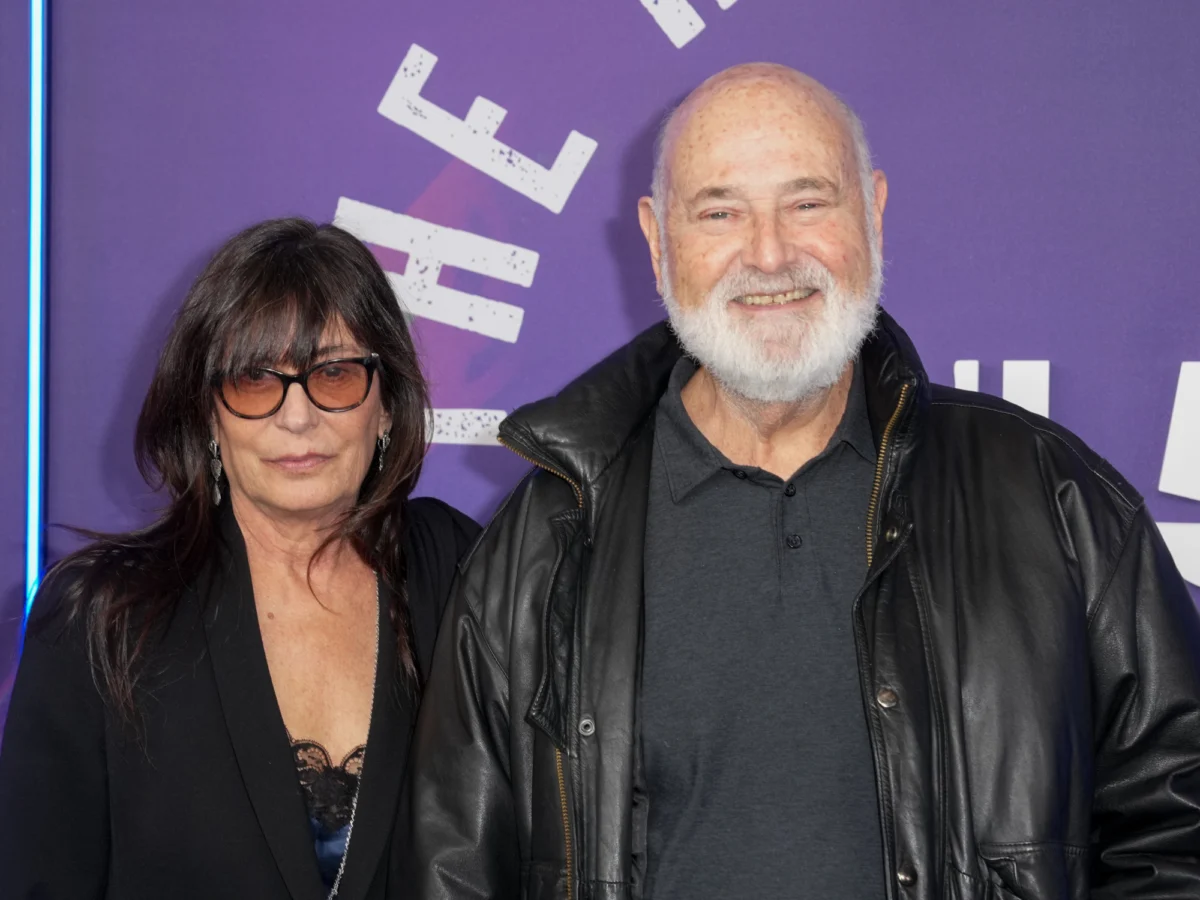
Four months after the violent deaths of legendary filmmaker Rob Reiner and his wife, photographer Michele Singer Reiner, their eldest son, Jake Reiner, has broken his silence. In a poignant and harrowing essay published on his Substack titled "Mom and Dad," the 34-year-old actor and writer provided a first-hand account of the night that altered his family’s trajectory forever. The essay serves as both a tribute to his parents’ lives and a raw exploration of the trauma following their murders on December 14 at their home in Brentwood, Los Angeles. Jake’s younger brother, 31-year-old Nick Reiner, currently faces two counts of first-degree murder in connection with the stabbings, a detail that has added a layer of profound complexity to the family’s public mourning.
The account provided by Jake Reiner offers the most intimate look yet into the events of mid-December, a period that saw the entertainment world stunned by the loss of one of its most influential directors. Rob Reiner, 78, was an Emmy-winning actor and an Oscar-nominated director responsible for cinematic staples such as When Harry Met Sally, A Few Good Men, and The Princess Bride. Michele Singer Reiner, 64, was a respected photographer and a steadying force within the family for over three decades.
A Chronology of the Night of December 14
According to the essay, the tragedy unfolded while Jake was attending a "Celebration of Life" for a close friend who had recently passed. The juxtaposition of mourning a friend while his own world collapsed was a central theme of his reflection. Jake recounted receiving a series of phone calls from his sister, 28-year-old Romy Reiner, who had discovered the bodies at the family’s Los Angeles residence.
"It was at that moment I received a call from my sister Romy telling me our father was dead," Jake wrote. The horror intensified minutes later when a second call confirmed that their mother, Michele, had also been killed. The logistical and emotional weight of that night was captured in Jake’s description of the 45-minute Lyft ride from downtown Los Angeles to the Westside. He described the journey as "unendurable," noting that he remained in a "trance" while his world collapsed around him.
Upon arriving at his childhood home, Jake found a scene transformed by police tape and emergency responders. Romy Reiner, who Jake notes will eventually tell her own story in her own time, was the primary witness to the immediate aftermath. The siblings were thrust into a reality that Jake describes as a "living nightmare," a sentiment he says persists every morning as he wakes up and realizes the events were not a dream.
The Investigation and Charges Against Nick Reiner
The legal proceedings surrounding the deaths have focused entirely on Nick Reiner. Los Angeles County prosecutors allege that Nick attacked his parents in their Brentwood home, utilizing a knife to inflict fatal wounds before fleeing the scene. He was apprehended shortly thereafter and has since pleaded not guilty to two charges of first-degree murder.
The case has been complicated by reports regarding Nick’s mental health and medication history. Sources close to the family suggest that Nick’s medication regimen was altered approximately one month before the murders occurred. This detail has become a focal point for the defense. Nick’s former legal counsel has publicly expressed a belief in his innocence, or at least a lack of criminal culpability, citing the potential psychological impact of the medication change.

Despite the gravity of the charges, Jake’s essay avoids direct condemnation of his brother by name, instead referring to him as "my brother" within the context of their parents’ "unconditional love." This choice highlights the internal struggle of a family dealing with a perpetrator who is also a victim of the same domestic tragedy.
The Financial and Emotional Dynamics of the Reiner Family
Background context provided by family insiders suggests that Rob and Michele Reiner had long struggled to support Nick through various personal challenges. Rob Reiner reportedly provided Nick with a financial "safety net," including a monthly allowance of approximately $10,000, in an effort to provide stability. However, insiders have noted that the family’s wealth could not mitigate the underlying "troubled dynamics" that Rob Reiner himself had occasionally alluded to in interviews prior to his death.
In his essay, Jake reflects on the "luxury" of having had exceptional parents. He described his mother as his "confidant" and someone who made him feel like "the funniest person of all time." Of his father, he noted that the director’s sense of humor and authenticity were foundational to his own identity. The loss of these figures has left what Jake describes as a permanent void, compounded by the violent nature of their departure.
Supporting Data: Parricide and Domestic Violence Statistics
The Reiner case, while high-profile due to Rob Reiner’s celebrity status, reflects broader trends in domestic homicides involving adult children and their parents. According to data from the Federal Bureau of Investigation (FBI) and various criminological studies, parricide—the killing of a parent—accounts for approximately 2% to 3% of all homicides in the United States annually.
In cases where adult children are the perpetrators, underlying mental health issues or long-standing family dysfunction are frequently cited as contributing factors. Legal experts note that the "medication defense" mentioned by Nick Reiner’s former lawyer is often used in high-stakes murder trials to argue a lack of premeditation or an inability to form criminal intent. However, California law maintains a high threshold for "not guilty by reason of insanity" pleas, requiring the defense to prove the defendant did not understand the nature of their act or could not distinguish right from wrong at the time of the crime.
The Burden of Public Mourning
A significant portion of Jake’s essay is dedicated to the unique difficulty of grieving in the public eye. He expressed frustration with the "dark" and "specific" nature of his grief, which he feels is difficult for outsiders to truly comprehend. "When you are not living through a tragedy the specific way Romy and I are, it’s hard to wrap your head around just how horrific this has been," he wrote.
Jake highlighted the administrative burdens that accompany sudden death—meetings, paperwork, and legal decisions—which he felt were demanded by the world before he and his sister had the opportunity to mourn. He noted that every movement he makes is now inextricably linked to the fact that his parents were murdered, creating a constant state of hyper-awareness and trauma.
Furthermore, he addressed the public’s curiosity regarding the details of the crime. While acknowledging that people have questions, Jake asserted that "some parts of this belong only to our family," and that maintaining privacy is the only way to "protect what little remains of something that was taken from us."

Broader Impact and the Legacy of Rob and Michele Reiner
The deaths of Rob and Michele Reiner have left a significant gap in the cultural landscape of Los Angeles. Rob Reiner was not only a titan of the film industry but also a prominent political activist. He was a co-founder of the American Foundation for Equal Rights, which was instrumental in the legal fight against Proposition 8 in California. His work in early childhood development, particularly through his "I Am Your Child" foundation, left a lasting impact on public policy.
Michele Singer Reiner was equally active in her pursuits, known for her photography that captured the intimacy of family life and the vibrancy of the entertainment world. Together, they were seen as a "power couple" who used their influence for social advocacy.
The loss of these figures is felt most acutely by Jake and Romy, who now face a future without the milestones they expected to share with their parents. Jake lamented that his parents would never attend his wedding, hold a future grandchild, or witness the eventual success of his career. "It simultaneously breaks my heart and enrages me," he admitted.
Future Implications and Legal Outlook
As the case against Nick Reiner moves forward, the legal system will have to weigh the evidence of the crime against the psychological state of the accused. The trial is expected to draw significant media attention, given the prominence of the victims and the tragic nature of the family involvement.
For Jake and Romy Reiner, the path forward involves navigating a world where "more than half of [their] family" was lost in a single night. Jake’s essay serves as a foundational document for their journey through grief, signaling a transition from the initial shock of the event to a long-term processing of its implications.
The Reiner family tragedy remains a stark reminder of the complexities of mental health, the fragility of domestic peace, and the enduring nature of grief. As Jake concluded in his essay, the "living nightmare" continues, but his decision to speak out provides a voice for those grappling with the unimaginable intersection of love, loss, and violence within a family unit. The world continues to watch as the legal process unfolds, seeking answers to a tragedy that has silenced one of Hollywood’s most storied voices.

0 Comments