
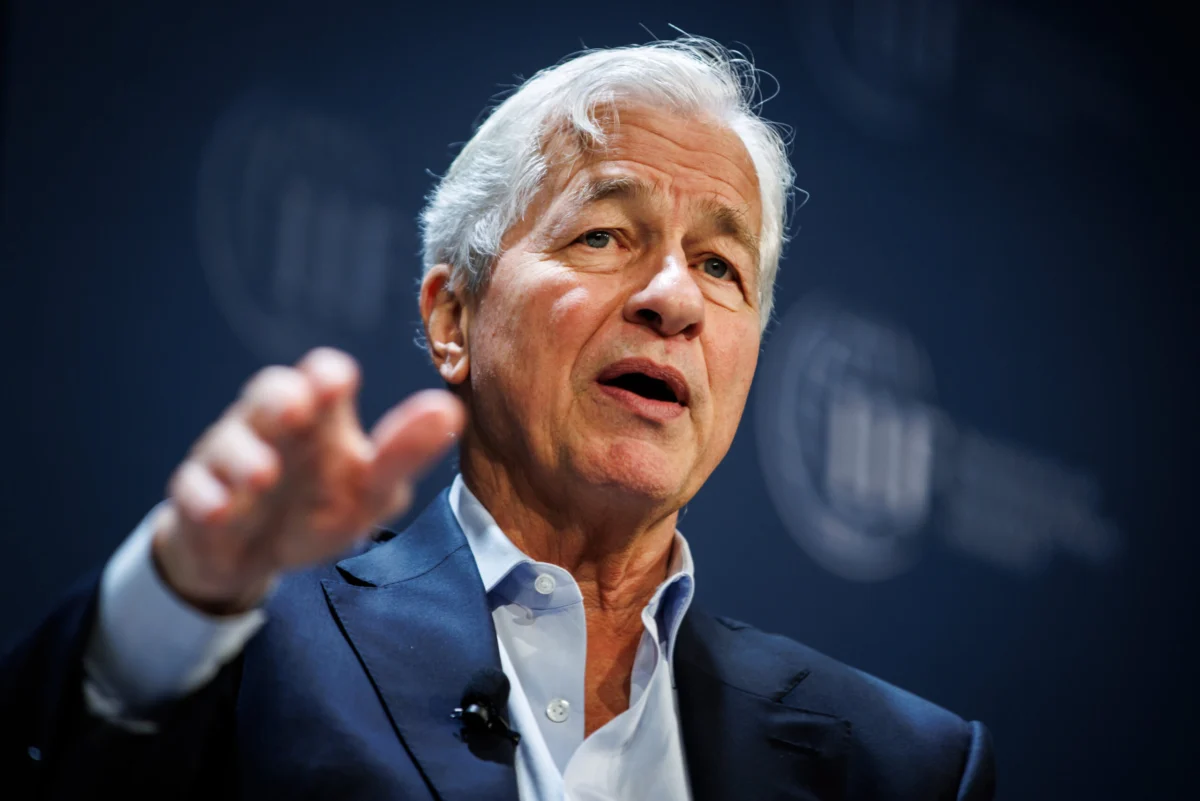
In a comprehensive interview with Wilfred Frost for "The Master Investor Podcast," released late Monday, Dimon articulated his profound concerns, stating that prevailing market sentiment fails to adequately account for a burgeoning confluence of geopolitical flashpoints and fiscal vulnerabilities. His commentary serves as a potent counterpoint to the recent market exuberance, which has seen major indices climb and investor confidence buoyed by moderating inflation and robust corporate earnings, even amidst persistent global instability.
A Looming Storm: Geopolitical and Fiscal Headwinds
Dimon, who helms the world’s largest bank by market capitalization, is renowned for his candid and often cautionary assessments of economic landscapes. His latest pronouncements underscore a deep apprehension regarding the stability of the global financial system. "I do think those risks are probably bigger than other people think," Dimon stated emphatically, drawing attention to a litany of threats. These include the ongoing conflicts in Ukraine and the Middle East, the escalating strategic competition and trade tensions between the United States and China, and the alarming trend of increasing military expenditures worldwide, all set against a backdrop of ballooning government deficits.
The JPMorgan chief suggested that while some risks might be partially "baked in" to current asset prices, the true magnitude and potential cascading effects of a major shock are not. "It’s possible something’s baked in, but what’s not baked in is what actually happens," he elaborated, hinting at unforeseen consequences that could trigger significant market dislocations. This perspective challenges the prevalent narrative of economic resilience, which has seen global markets largely shrug off recent geopolitical turmoil.
Contrasting Market Optimism with Dimon’s Caution
Dimon’s admonitions arrive at a time when the broader market has demonstrated remarkable resilience. The S&P 500, a key benchmark for U.S. equities, has delivered impressive returns this year, nearing a 10% gain year-to-date. This rally has been fueled by sustained consumer spending, a gradual moderation in inflationary pressures, and a fervent embrace of the artificial intelligence (AI) investment theme, which promises transformative technological advancements and substantial corporate growth.
Adding to this complex picture, JPMorgan Chase itself, alongside many of its industry peers, recently reported stellar quarterly results. These "blockbuster" earnings were significantly bolstered by surging revenues from trading activities and investment banking, further reinforcing a perception that the U.S. economy has weathered recent global challenges more effectively than anticipated by many analysts. Yet, Dimon’s warnings transcend immediate corporate performance, focusing instead on systemic, long-term risks that he believes are being dangerously overlooked.
He acknowledged the global economy’s enhanced resilience, particularly citing a reduced dependence on energy compared to past decades. However, he cautioned that this does not preclude the possibility of a sudden and dramatic inflection point. Likening the situation to a camel’s back, he said, "You may need more straws in the camel’s back to cause that tipping point," suggesting that while the current level of stress might not be sufficient, a cumulative effect of additional shocks could rapidly destabilize the system. "Even this current war starting up again, maybe that’s not enough to do it," he added, highlighting the ongoing re-escalation of conflicts.
The Peril of Persistent Fiscal Deficits
A core pillar of Dimon’s concern revolves around the United States’ persistent budget deficits. He warned that these fiscal imbalances are on an unsustainable trajectory and will inevitably necessitate a "reckoning," potentially leading to significantly higher interest rates. The U.S. national debt has surpassed $34 trillion, with annual deficits consistently exceeding $1 trillion. This growing fiscal burden necessitates continuous borrowing, which can exert upward pressure on interest rates as the government competes with private borrowers for capital.
"My view is it will become a problem," Dimon asserted, predicting a future where so-called "bond vigilantes"—investors who demand higher yields to compensate for perceived fiscal irresponsibility—will increasingly exert pressure, thereby driving up the cost of government borrowing. Should this scenario materialize, higher interest rates would reverberate throughout the economy, increasing the cost of mortgages, corporate loans, and other forms of credit, potentially stifling economic growth and exacerbating the debt burden.
Asset Allocation: Caution on Treasurys and Equities

When pressed on specific investment strategies, Dimon’s stance was unequivocally cautious. He explicitly stated that he would not purchase long-dated U.S. Treasurys at their current prices. "Personally, no," he responded, indicating his belief that the risk-reward profile for these assets is unfavorable.
His analysis suggests that even if inflation successfully retreats to the Federal Reserve’s target of 2%, the 10-year Treasury bond yield should realistically be in the range of 4% to 4.5%. This projection implies a significant potential for bond prices to fall, as bond yields and prices move inversely. For context, the 10-year Treasury yield has fluctuated, but Dimon’s predicted range represents a notable increase from recent levels, reflecting a more pessimistic outlook on the future trajectory of interest rates and the value of fixed-income assets.
Dimon extended his cautious sentiment to the broader equity market. While he acknowledged that he might consider an individual stock if it represented "a great investment" based on its specific merits, he reiterated that he would not be a buyer of the overall market at its current valuations. This generalized caution underscores his belief that the current market rally may not be sustainable given the underlying economic and geopolitical risks he perceives.
Artificial Intelligence: A Measured Perspective
Addressing the fervor surrounding artificial intelligence, Dimon adopted a more measured and historically informed tone. He drew parallels between today’s massive investment in AI and the early days of the internet boom, suggesting that while the long-term payoff is likely substantial, the journey will be fraught with uncertainty and likely diverge from current expectations.
"The amount of money being spent is huge. Will it in total pay off? Probably, just like the internet did," Dimon remarked. However, he swiftly introduced a critical caveat, reminding listeners that during the internet’s formative years, many of the early, prominent players, such as Yahoo and Netscape, eventually faded from prominence or were eclipsed by later entrants. Companies like Google (now Alphabet) and Facebook (now Meta Platforms) emerged later to dominate the digital landscape.
"Will it pay off the way you expect and the timetable you expect? Definitely not," Dimon cautioned. His perspective implies that while AI holds immense potential, investors should temper their expectations regarding immediate returns and be wary of speculative bubbles forming around companies that may not ultimately be the long-term winners. This nuanced view encourages a focus on fundamentals and sustainable business models rather than chasing speculative gains based on hype.
Broader Implications and the Path Forward
Dimon’s warnings carry significant weight due to his position at the helm of a global financial behemoth and his track record of prescient economic commentary, including his 2022 "hurricane" warning about impending economic headwinds. His latest insights compel a deeper consideration of the myriad challenges confronting the global economy.
For investors, Dimon’s comments serve as a crucial reminder to reassess their risk exposure, diversify portfolios judiciously, and exercise caution in an environment where asset valuations may not fully reflect underlying systemic risks. The prevailing market optimism, while understandable given recent economic data, might be masking vulnerabilities that could emerge with unexpected speed.
For policymakers, Dimon’s emphasis on fiscal deficits underscores the urgent need for sustainable budgetary practices. Unchecked government spending and mounting debt not only risk higher interest rates but also limit future policy flexibility in times of crisis. Furthermore, the geopolitical landscape demands sustained diplomatic efforts to de-escalate conflicts and manage great-power competition, as these tensions demonstrably spill over into economic instability.
Businesses, too, must integrate these warnings into their strategic planning, focusing on supply chain resilience, geopolitical risk assessments, and robust financial health to navigate potential turbulence. The global economy, despite its demonstrated capacity for resilience, remains susceptible to "tipping points" that could rapidly alter the economic trajectory.
In conclusion, Jamie Dimon’s comprehensive interview paints a picture of a global economy at a critical juncture. While pockets of strength and innovation persist, he cautions that the collective underestimation of geopolitical instability, fiscal unsustainability, and the speculative nature of certain market segments could lead to unforeseen consequences. His message is clear: vigilance, prudence, and a sober assessment of risks are paramount in navigating the complex economic landscape ahead.

0 Comments