
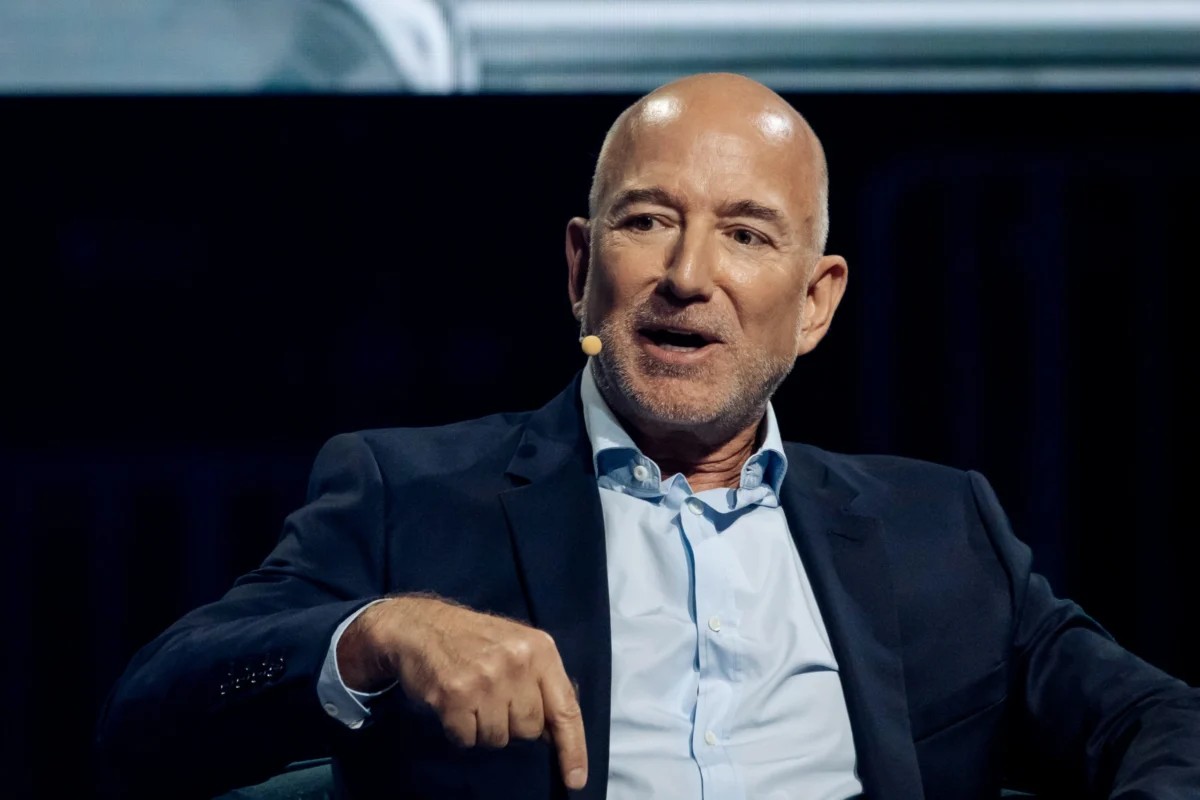
Jeff Bezos, the visionary founder of Amazon.com Inc., has filed plans to divest approximately 15 million shares of the e-commerce and cloud computing giant, a transaction valued at roughly $4.1 billion. This significant sale comes on the heels of Amazon’s stellar second-quarter earnings report, which propelled the company’s stock to an all-time high and pushed its market capitalization beyond the monumental $3 trillion threshold. The filing, made public on Tuesday, August 3, 2026, disclosed that the shares were sold under a pre-arranged Rule 10b5-1 trading plan, adopted months earlier on November 14, 2025. Following the announcement of the sale, Amazon’s stock experienced a modest decline of over 2% during Tuesday’s trading session, a typical, often temporary, market reaction to large insider divestments, particularly when company fundamentals remain robust.
The sales, executed through Morgan Stanley on Monday, August 2, 2026, represent a strategic move by Bezos, who, despite stepping down as CEO in 2021, remains a pivotal figure and the largest individual shareholder in the company he founded. The substantial proceeds are widely anticipated to support his diverse portfolio of ventures, including his aerospace company Blue Origin, and various philanthropic initiatives such as the Bezos Earth Fund.
A Strategic Move Under Pre-Planned Terms
The mechanism behind Bezos’s latest share sale is a Rule 10b5-1 trading plan, a common and legally sanctioned tool used by corporate insiders to sell company stock. Adopted on November 14, 2025, this plan allowed Bezos to schedule predetermined transactions in advance, thereby mitigating concerns about insider trading. Such plans are established at a time when the insider is not in possession of material non-public information, providing a clear legal framework for future stock sales. This transparency is crucial for high-profile executives and founders who regularly possess sensitive company information.
The Form 144 filing with the Securities and Exchange Commission (SEC) detailed the intention to sell 15 million common shares. Based on Monday’s closing price, the aggregate market value of these shares stood at approximately $4.07 billion. It was also noted in the filing that these particular shares originated from Bezos’s founder stock, acquired way back in 1994, underscoring the long-term appreciation of Amazon’s value since its inception. While the immediate market reaction was a slight dip, financial analysts often view sales under 10b5-1 plans as less indicative of a change in an insider’s confidence in the company, given their pre-scheduled nature and the typical motivations for diversification or funding other ventures.
Amazon’s Ascent: Earnings and AI Catalysts
The backdrop to Bezos’s share sale is Amazon’s exceptional financial performance, particularly its second-quarter 2026 earnings report, released last week on July 30, 2026. The company reported robust figures that significantly exceeded market expectations, sparking a vigorous rally in its stock. A primary driver of this impressive growth was Amazon Web Services (AWS), the company’s dominant cloud computing division. AWS demonstrated stronger-than-expected revenue growth, with analysts pointing to surging demand fueled by the global artificial intelligence (AI) boom.
Amazon’s substantial investments in AI infrastructure, research, and development are clearly translating into tangible business results. Enterprises across various sectors are increasingly leveraging AWS for their AI workloads, from sophisticated machine learning models to large language model (LLM) deployments. This accelerating demand has solidified investor confidence in Amazon’s strategic direction and its ability to capitalize on the transformative power of AI. Beyond AWS, Amazon’s core e-commerce business also showed resilience and growth, benefiting from continued innovation in logistics and customer experience, while its burgeoning advertising segment continued to carve out a significant share in the digital ad market.
The market’s enthusiasm for Amazon’s performance was palpable. The company’s shares rallied approximately 20% year-to-date, far outpacing the 12% gain recorded by the broader S&P 500 index over the same period. This strong performance underscores Amazon’s leadership position not just in retail and cloud, but increasingly as a pivotal player in the evolving AI landscape.
The $3 Trillion Club: A New Era for Amazon
Monday, August 2, 2026, marked a historic milestone for Amazon as its market capitalization surpassed $3 trillion, a testament to its relentless innovation and market dominance. This achievement places Amazon in an exclusive club, alongside tech titans like Apple, Microsoft, and Nvidia, companies that have similarly demonstrated extraordinary growth and market influence, often propelled by their strategic positions in high-growth sectors like AI and software.

Reaching the $3 trillion valuation signifies more than just a number; it reflects profound investor confidence in Amazon’s long-term growth trajectory. It signals that the market believes Amazon possesses the necessary innovation, operational efficiency, and market reach to continue expanding its various business segments, from cloud computing and e-commerce to digital advertising, streaming entertainment, and potentially new ventures. The company’s ability to consistently deliver strong financial results, coupled with its strategic focus on emerging technologies like AI, has cemented its status as one of the world’s most valuable enterprises. This valuation also highlights the immense wealth created for long-term shareholders, including its founder, Jeff Bezos, whose original investment has grown exponentially over three decades.
Bezos’s Long-Term Strategy and Diversification
Jeff Bezos’s decision to sell shares, while substantial in dollar value, is not an isolated incident but rather a continuation of a long-standing pattern of strategic divestments. Even after this sale, Bezos retains a significant stake in Amazon, underscoring his continued belief in the company’s future. Over the past several years, particularly since his transition from CEO to Executive Chairman in July 2021, Bezos has regularly sold Amazon stock, often through similar pre-arranged trading plans. For instance, he sold billions of dollars worth of shares in the years leading up to his step-down as CEO, a process widely understood as a means to diversify his personal wealth and, crucially, to fund his other ambitious projects.
His primary focus outside of Amazon is Blue Origin, his privately funded aerospace manufacturer and space tourism company. Bezos has publicly stated his commitment to Blue Origin, envisioning a future where millions of people live and work in space, and has indicated that proceeds from his Amazon stock sales are vital for funding this capital-intensive endeavor. In addition to space exploration, Bezos has also directed significant resources towards philanthropic efforts. In May 2026, he donated 220,200 shares to various non-profit organizations, further demonstrating his commitment to leveraging his wealth for societal benefit. The Bezos Earth Fund, a $10 billion commitment launched in 2020, aims to combat climate change and protect nature, representing another major recipient of his strategic financial planning.
Market Reaction and Analyst Perspectives
The immediate market reaction to Bezos’s share sale was a slight dip in Amazon’s stock price, with shares falling more than 2% on Tuesday. This is a common phenomenon when large blocks of shares are introduced to the market, as it can temporarily increase supply and exert downward pressure on prices. However, market analysts were quick to contextualize the sale, largely dismissing it as a cause for fundamental concern regarding Amazon’s outlook.
"This is a textbook 10b5-1 sale, fully transparent and pre-scheduled," commented Sarah Chen, a senior equity analyst at Global Markets Insights. "Given Amazon’s robust earnings and its leadership in the AI space, this minor pullback is likely a temporary fluctuation. Bezos has a clear history of divesting shares to fund his other passions, and it doesn’t signal a lack of confidence in Amazon’s continued growth." Other analysts echoed this sentiment, emphasizing that the sheer size of Bezos’s remaining stake, coupled with the company’s strong performance indicators—especially in AWS and AI integration—means that his personal diversification strategy is unlikely to impact the long-term investment thesis for Amazon. The market generally understands that founders of incredibly successful companies eventually seek to diversify their vast fortunes, especially when they have other significant projects requiring substantial capital.
Broader Implications for Amazon and the Tech Sector
Bezos’s share sale and Amazon’s recent financial triumphs carry broader implications for both the company and the wider technology sector. For Amazon, it reinforces the narrative of a mature, yet still rapidly growing, diversified tech conglomerate. The continued strength of AWS, driven by AI demand, positions Amazon not just as an e-commerce giant but as a foundational infrastructure provider for the digital economy. The company’s ability to consistently innovate across multiple fronts—from cloud services to logistics, advertising, and entertainment—demonstrates a resilient business model capable of adapting to and shaping market trends.
The $3 trillion market cap milestone serves as a benchmark for the immense value being created in the technology sector, particularly for companies that are at the forefront of AI development and deployment. It highlights a broader market trend where investors are heavily rewarding companies that show clear leadership and execution in artificial intelligence. This focus on AI is likely to intensify, with Amazon, alongside its peers, continuing to pour resources into developing advanced AI models, services, and applications that will redefine industries and consumer experiences.
While Jeff Bezos’s direct operational involvement in Amazon has lessened, his legacy and strategic influence remain profound. His ongoing financial maneuvers, while personal, are always watched closely by the market, given his status. However, the pre-planned nature of this sale, combined with Amazon’s stellar performance and clear strategic vision under current CEO Andy Jassy, ensures that this divestment is viewed as a calculated step in a founder’s financial journey, rather than a signal of underlying issues within one of the world’s most powerful companies. The proceeds will undoubtedly fuel other transformative ventures, perhaps even accelerating the progress of humanity’s journey into space or its fight against climate change, indirectly extending Bezos’s impact beyond the digital realm he so masterfully shaped.

0 Comments