
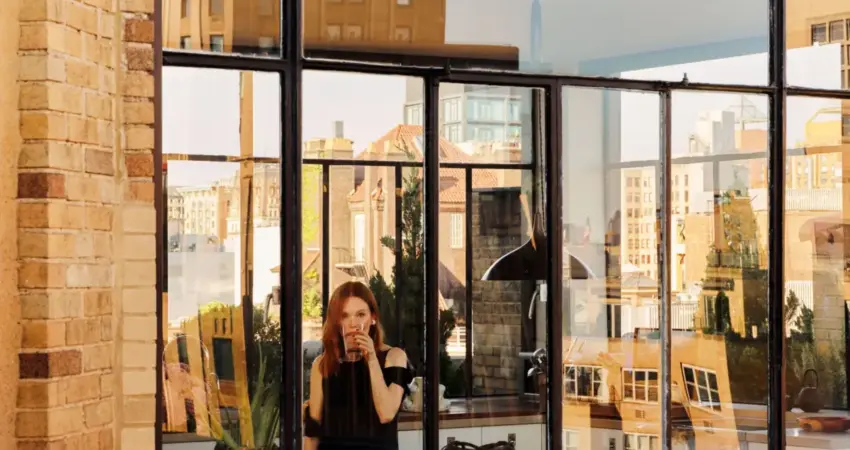
In a testament to her discerning eye for design, Oscar-winning actor Julianne Moore has meticulously curated a new sanctuary in the heart of her beloved Greenwich Village. This latest move signifies a natural evolution for the acclaimed actress and her husband, film director Bart Freundlich, as they transition into a new chapter of their lives, embracing a more intimate yet equally captivating urban dwelling. This isn’t merely a change of address; it’s a carefully orchestrated shift that reflects years of refined taste and a deep understanding of her personal aesthetic.

Moore and Freundlich have long been integral figures in the downtown New York City scene. For years, they raised their two children in the vibrant West Village, first in a loft and subsequently in a charming townhouse. This previous residence, celebrated for its exquisite garden designed with input from Brian Sawyer, was twice featured in Architectural Digest. The renovations and interior refinements for both their former homes were overseen by Moore’s brother-in-law, AD100 architectural designer Oliver Freundlich. Each project served as a canvas for Moore’s profound passion for interior design, showcasing her ability to infuse spaces with warmth, character, and a sophisticated sensibility.

However, life, much like real estate, is in constant flux. As their children matured and embarked on their own paths, the needs and desires of the couple shifted. Moore candidly explains the impetus behind their latest move: "For years I wanted to live in a town house, but that desire morphed as the kids got older. Lives change. We had a cottage in Montauk, but then our kids grew up—literally," she says with a laugh. "One is five-ten and the other is six-foot-two. So, now we have a big house in Montauk." This strategic decision to acquire a larger property in Montauk liberated Moore from the necessity of a sprawling urban abode, paving the way for a deliberate downsizing in Manhattan. "I am always looking," she notes. "Sometimes it seemed I must have looked at every apartment in the neighborhood."

Her persistent search ultimately led her to a serendipitous discovery: a two-bedroom duplex situated in a prime Greenwich Village location. "I had always wanted this apartment," she confesses. "I had spotted it when I was wandering." The apartment occupies a high floor, affording breathtaking panoramic views of the city skyline that Moore cherishes. From her vantage point, she can observe the iconic water towers, intricate decorative brickwork, elegant arches and columns, and the verdant tapestry of rooftop gardens. The apartment also boasts expansive terraces, offering a welcome solace and a connection to the outdoors, a crucial element for someone who previously cultivated a lush garden.

The building itself, originally constructed in the 1920s as a residential hotel, adds a layer of historical charm and eclectic character. "Most of the units are studios or one-bedrooms," Moore explains. "Because of that, there’s a diverse group who live here, lots of young people in small apartments or older people who have been here for years. It’s super funky." This inherent diversity of residents contributes to the building’s vibrant and unconventional atmosphere, a quality that clearly resonates with Moore.

The extensive renovation process, a collaborative effort between Moore and Freundlich, spanned eight months. This marked their sixth project together, demonstrating a well-established and efficient working relationship. "We hit the ground running," she states. "Fortunately, the woman who had lived here for 20 years had exquisite taste, and the apartment had been beautifully maintained. Most of the changes we made were cosmetic." Freundlich elaborates on their approach, emphasizing the delicate balance they sought to achieve: "The trick was to make the place functional but without losing any of the magic. We didn’t change the layout, though we did a lot of editing, reducing patterns, simplifying, adding storage."

One notable design challenge involved the kitchen, which features original steel-framed windows. To maintain the minimalist aesthetic and avoid upper cabinets, Freundlich ingeniously incorporated an adjacent pantry to provide ample storage. The primary bedroom presented another unique puzzle due to its angled wall. Freundlich expertly navigated this architectural quirk to seamlessly integrate a closet while still ensuring sufficient space for a king-size bed and ample room for Moore’s dedicated yoga practice.

A Curated Selection of Furnishings and Art
The apartment’s décor is a masterful blend of cherished pieces from the couple’s previous residences and thoughtfully acquired new additions, each selected to enhance the apartment’s unique character and Moore’s personal style. The Paavo Tynell light fixture in the kitchen, for instance, was a beloved element from their former home, its shades ingeniously crafted from repurposed curtain fabric. "The dining chairs I got in Paris in 1995," Moore recalls, "and they’ve been in every house I’ve had since."

New acquisitions, however, were crucial in defining the apartment’s contemporary elegance. The Pierre Chapo table in the entry, the Raoul Guys table in the kitchen, and the sophisticated living room seating by Charles Pfister for Knoll represent key additions that anchor the space.

The couple’s collaborative spirit extended to overcoming design hurdles. Moore shares a moment of deliberation regarding the library’s bookcases: "The bookcases in the library were lacquered in a taupe color—the owner had worked with [color expert] Donald Kaufman. We considered taking them out, but Oliver and I decided to work with them." This decision led to a more harmonious integration of existing elements with new design choices.

The living room mantel also presented a point of discussion. Moore initially envisioned a more dramatic sculptural piece, akin to a Valentine Schlegel artwork. However, recognizing the potential for it to overpower the room, they opted for a more understated yet elegant geometric marble version. This refined choice now serves as a sophisticated platform for her own cast-bronze creations, adding a personal artistic touch.

The extensive list of furnishings and art pieces within the duplex speaks volumes about Moore’s sophisticated taste and her collaboration with Freundlich. Each item is not merely decorative but contributes to the overall narrative of the space.

Key Furnishings and Art:

- Living Room: A striking sofa and chairs by Charles Pfister for Knoll are complemented by a Charlotte Perriand stool. The space is adorned with artworks by Louise Bourgeois and Nan Goldin, with a rug by Beni adding texture and warmth.
- Kitchen: The window-wrapped kitchen features a Raoul Guys table surrounded by French midcentury chairs acquired in Paris. A Paavo Tynell pendant light from Wyeth illuminates the space.
- Primary Bedroom: A custom bed by Dune, dressed in luxurious Matouk linens, forms the centerpiece. Vintage Anglepoise lamps rest on bedside tables, also by Dune. A poignant photograph of the moon, taken by Bart Freundlich, graces the room.
- Entry/Library: This multifunctional space showcases Moore’s Academy Award, books, and cherished family memorabilia displayed on custom bookshelves. A T. H. Robsjohn-Gibbings shelf from Lobel Modern holds a Picasso ceramic piece and mica glass candlesticks by Sophie Dries. Vintage tortoise shells add a unique natural element.
- Terraces: The outdoor spaces are furnished with elegant pieces, including black outdoor furniture by Richard Schultz for Knoll on the south terrace, paired with vintage white Bertoia chairs. A white ceramic vase by Completedworks sits on the table. The east terrace features Richard Schultz for Knoll chairs around a Barlow Tyrie teak dining table, with a ceramic stool by Marianne Vissiere.
- Art Collection: Beyond the notable works by Louise Bourgeois and Nan Goldin, the apartment features a photograph of the moon by Bart Freundlich, a Picasso ceramic, and various sculptures and photographs by artists such as David Armstrong, Thomas Struth, Robin Rice, and Isabel Rower.
A Serene Haven with an Urban Soul
The resulting ambiance of the duplex is one of profound serenity, a stark contrast to the bustling energy of Greenwich Village just outside its windows. "It feels very serene here," Moore states, her satisfaction evident. The apartment masterfully balances a sense of calm with a constant connection to the vibrant city she adores. "I wanted a sense of history, of time, of all the people who have lived here before us. We’re just passing through. That’s the magic of New York City." This sentiment underscores a deep appreciation for the layered narratives and enduring spirit of Manhattan.

The commitment to detail is evident in every corner of the duplex. From the Forbes & Lomax light switches throughout the apartment to the carefully selected hardware by Nanz and Lefroy Brooks, no element was overlooked. The incorporation of vintage pieces, such as the tortoise shells and the 1972 Richard Etts plaster lamp, adds layers of history and personality, creating a space that feels both timeless and deeply personal.

The renovation process itself, while demanding, was ultimately rewarding. Freundlich’s observation, "Believe me, Julie scrutinized every switch and knob," highlights Moore’s hands-on approach and her unwavering dedication to achieving her vision. Her taste, described as "consistent" yet "evolved," leans towards modernism, but she adeptly acknowledges and respects the prewar architecture of her new home. "It’s not tiny, but it’s not massive, either, so materials and choices become even more important," she notes, emphasizing the significance of thoughtful selection in a more intimate space.

The success of the renovation lies in its ability to create a functional yet magical environment, a testament to the couple’s shared design philosophy and their ability to collaborate effectively. The apartment is more than just a dwelling; it is a curated expression of Julianne Moore’s aesthetic sensibilities, a place where art, design, and personal history converge to create a truly captivating urban sanctuary. The duplex, perched high above the vibrant streets of Greenwich Village, offers not only a tranquil retreat but also a constant, inspiring connection to the city that has long been her muse and her home. The seamless integration of personal mementos, significant art pieces, and carefully chosen furnishings creates an environment that is both sophisticated and deeply lived-in, reflecting the multifaceted life of its renowned occupant.

0 Comments