
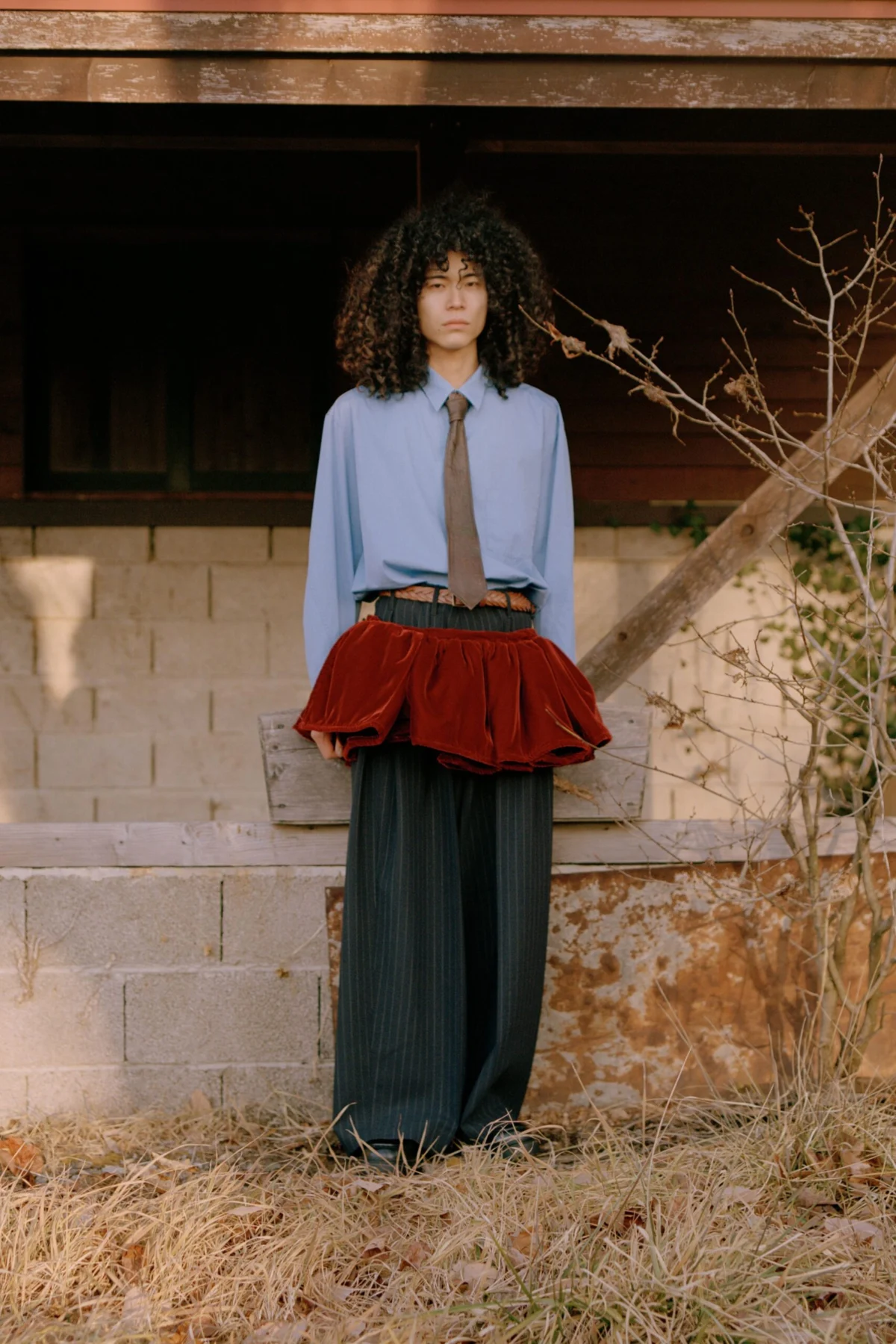
The Japanese fashion label Khoki has unveiled its Fall 2026 collection, marking a significant strategic pivot toward brand consolidation and the refinement of its visual language. Managed by a discreet collective of designers who have historically maintained a low public profile, the label has spent the current season interrogating its core identity following a period of commercial ambiguity. By grounding the new collection in the personal history of lead designer Koki Abe and the broader motifs of American folk art, the brand seeks to resolve previous inconsistencies that had left retailers and consumers questioning the label’s long-term trajectory. This season’s offering, characterized by "beauty in chaos" and the repurposing of domestic textiles, represents a concerted effort to stabilize Khoki’s market position while leaning into the whimsy that first garnered the brand a cult following in the menswear sector.
The Strategic Shift: From Experimental Dyeing to Brand Consolidation
The Fall 2026 collection arrives as a direct response to the challenges faced during the previous season. In its preceding outing, Khoki leaned heavily into traditional Kyoto hand-dyeing techniques. While the collection was praised for its artisanal merit and technical complexity, it inadvertently distanced the brand from its signature elements, most notably its distinctive quilting and eclectic patchwork. According to Koki Abe, the focus on Japanese heritage techniques created a disconnect in the brand’s narrative.
"In my mind, it was a kind of chaotic beauty, bringing together Japanese traditions and everything else into one collection," Abe noted during the collection’s presentation. "But from a sales perspective, it didn’t really translate."
Market data from the luxury menswear sector suggests that boutique labels often face a "sophomore slump" or a mid-lifecycle identity crisis when transitioning from niche experimentalism to scalable commerciality. Buyers from major international stockists reported confusion regarding Khoki’s core aesthetic during the Kyoto-centric season, leading to a dip in sell-through rates for some categories. The Fall 2026 collection, therefore, serves as a "course correction," reintroducing the brand’s most successful motifs—quilting, patchwork, and playful silhouettes—while framing them within a more coherent storytelling arc.
Chronology of the Fall 2026 Creative Process
The development of the Fall 2026 collection followed a rigorous internal audit by the Khoki design collective. The process began with a central question: "What makes something feel like Khoki?" This inquiry led the team through several months of research and development, moving away from high-concept artisanal themes and toward the more accessible, tactile world of flea markets and domesticity.
- Phase One: Conceptual Inquiry (Late 2024): The collective identified three pillars for the brand’s future: flea market aesthetics, beauty in chaos, and American folk art.
- Phase Two: Material Sourcing (Early 2025): Instead of sourcing traditional high-fashion textiles, the team turned to the domestic environment. Abe returned to his childhood home and the homes of relatives to salvage "uncool" or overlooked materials.
- Phase Three: Prototyping (Mid 2025): The design team experimented with combining rigid workwear fabrics, such as heavy canvas, with soft, domestic textiles like repurposed cushion covers and velvet.
- Phase Four: Visualization (Late 2025): The lookbook was shot in Abe’s childhood home, a setting that provided the necessary emotional and visual context for the clothing.
This timeline illustrates a shift from the "outsider" perspective of the Kyoto collection to an "insider" perspective rooted in personal history and nostalgia.
The Architecture of the Collection: Materiality and Design
The Fall 2026 collection is defined by its unexpected juxtaposition of textures and silhouettes. The most prominent pieces in the lineup are the "puffy floral" garments, which were constructed using repurposed cushion covers sourced from the homes of Abe’s parents and aunt. These items, which Abe once viewed as "uncool" during his youth, have been elevated into high-fashion statements that bridge the gap between "grandmacore" and avant-garde menswear.
Key Garments and Textiles
- Upcycled Cushion Florals: These pieces feature a distinctive three-dimensional quality, utilizing the original padding and embroidery of the cushion covers to create volume.
- The Bow-Legged Painter Pant: A staple of the brand, this silhouette was updated for Fall 2026 with more structured canvas, contrasting with the softer elements of the upper-body garments.
- Hybrid Workwear: One of the collection’s standout successes is the splicing of tough canvas workwear jackets with soft, hand-knit Cowichan sweaters. This hybridity speaks to the "beauty in chaos" theme, merging the utilitarian with the artisanal.
- Romantic Hardware and Detailing: Striped shirts were updated with romantic lace cuffs, while MA-1 bomber jackets—a mainstay of Japanese "Ametora" (American Traditional) style—were brightened with vibrant patchwork, referencing American folk art traditions.
The use of pinstripe trousers and velvet mini-skirts further emphasizes the brand’s refusal to adhere to traditional gender norms in menswear, opting instead for a fluid, expressive approach to dressing.
Supporting Data: The Rise of Upcycled Luxury and Folk Art Motifs
Khoki’s move toward repurposing domestic textiles aligns with broader trends in the global fashion industry. According to recent market analysis, the upcycled luxury segment is projected to grow at a Compound Annual Growth Rate (CAGR) of 8.5% through 2030. Consumers, particularly in the Gen Z and Millennial demographics, are increasingly seeking garments with "narrative value" and unique provenance.
Furthermore, the integration of American folk art into Japanese menswear has a long and documented history. Since the mid-20th century, Japanese designers have reinterpreted American "Americana" through a meticulous, often obsessive lens. Khoki’s Fall 2026 collection fits into this tradition but adds a layer of surrealism and whimsy that distinguishes it from more literal heritage brands like Visvim or Real McCoy’s. By using materials like lace and floral upholstery, Khoki subverts the ruggedness of traditional American workwear, creating a product that feels both familiar and entirely new.
Official Responses and Market Implications
While Khoki maintains a low profile, early feedback from luxury retailers suggests that the Fall 2026 collection has successfully addressed the "confusion" of the previous year. Fashion buyers at several high-end boutiques in Tokyo and New York have noted that the return to quilting and the introduction of the "childhood home" narrative provide a much-needed hook for storytelling on the retail floor.
"The previous season was technically brilliant, but it was hard for the customer to find the ‘Khoki’ in the clothes," said one anonymous buyer for a major e-commerce platform. "This season feels like a homecoming. The use of found materials and the specific silhouettes make it immediately recognizable. It’s charming, and that charm is what sells."
The decision to shoot the lookbook in Abe’s hometown—a place he described as feeling "boring and prison-like" during his youth—adds a layer of psychological depth to the collection. It reflects a growing trend among contemporary designers to find inspiration in the mundane and the provincial, rather than the metropolitan or the exotic.
Broader Impact on the Japanese Fashion Landscape
Khoki’s Fall 2026 collection contributes to a broader dialogue within the Japanese fashion industry regarding the sustainability of "collective" brands. Unlike traditional houses led by a single creative director, collectives often struggle with maintaining a consistent voice. Khoki’s successful consolidation this season suggests that a collective can maintain a strong identity if it anchors its work in shared themes—in this case, the intersection of domestic nostalgia and folk traditions.
The collection also highlights the ongoing evolution of "Ametora." By blending the ruggedness of the MA-1 and canvas workwear with the delicate nature of lace and floral upholstery, Khoki is helping to redefine what Japanese-influenced American style looks like in the mid-2020s. It is no longer just about replicating vintage denim or military gear; it is about using those archetypes as a canvas for personal expression and emotional storytelling.
As the Fall 2026 season approaches, Khoki appears to have successfully navigated its identity crisis. By looking backward at its roots—both as a brand and as individuals—the collective has found a way to move forward. The result is a collection that is not only "very Khoki" but also a sophisticated commentary on the power of nostalgia to transform the "uncool" into the essential.
Future Outlook for Khoki
The success of the Fall 2026 collection will likely dictate the brand’s trajectory for the next several years. If the "beauty in chaos" philosophy continues to resonate with consumers, Khoki may find itself at the forefront of a new wave of Japanese labels that prioritize emotional resonance over technical perfection. The brand’s ability to balance its whimsical impulses with the commercial realities of the fashion market will be the ultimate test of its longevity.
For now, the label has proven that by embracing its biggest strength—its whimsy—and grounding it in a clear, relatable narrative, it can overcome the hurdles of brand identity and market confusion. The Fall 2026 collection stands as a testament to the idea that sometimes, the best way to find the future is to return home.

0 Comments