
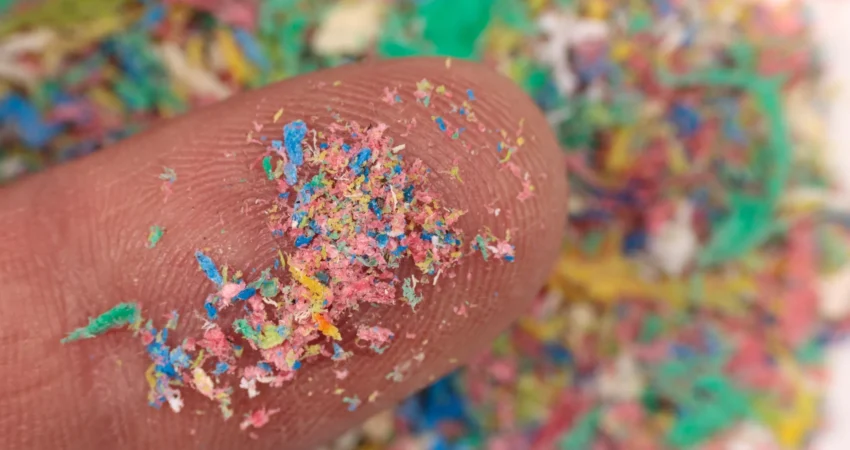
The World Institute of Kimchi (WiKim), a government-funded research institute operating under the Ministry of Science and ICT, has announced a groundbreaking discovery: a lactic acid bacterium isolated from kimchi possesses the remarkable ability to promote the removal of nanoplastics from the body by binding to them within the intestinal tract. This research, led by Drs. Se Hee Lee and Tae Woong Whon, offers a potential biological strategy to combat the growing public health concern posed by microplastic and nanoplastic contamination.
The Pervasive Threat of Nanoplastics
Nanoplastics, defined as ultrafine plastic particles measuring less than one micrometer (one-thousandth of a millimeter), are a ubiquitous environmental contaminant. They are generated from the gradual degradation of larger plastic materials, a process exacerbated by sunlight, mechanical abrasion, and microbial activity. These minuscule particles infiltrate our environment through various pathways, including contaminated food sources, drinking water, and even airborne particles.
The extremely small size of nanoplastics is particularly concerning. Unlike larger microplastics, which may be more readily expelled from the body, nanoplastics have the potential to breach the intestinal barrier. Once across this crucial defense line, they can translocate into the bloodstream and accumulate in vital organs such as the kidneys, liver, and even the brain. The long-term health consequences of such organ accumulation are still largely unknown, but emerging research suggests potential links to inflammation, oxidative stress, and disruptions in cellular function. Consequently, the scientific community has been actively seeking effective methods to mitigate nanoplastic exposure and accumulation within the human body. Biological approaches, leveraging the power of microorganisms, are emerging as a particularly promising avenue of investigation.
WiKim’s Innovative Research Uncovers a Natural Solution
The research team at WiKim focused their efforts on identifying specific microbial candidates that could interact with and potentially neutralize nanoplastics within the digestive system. Their investigation centered on Leuconostoc mesenteroides CBA3656, a lactic acid bacterium meticulously isolated from a traditional kimchi sample. Kimchi, a staple fermented food in Korean cuisine, is renowned for its rich microbial diversity and probiotic properties, making it a logical starting point for such research.
The study meticulously evaluated the adsorption capacity of L. mesenteroides CBA3656 against polystyrene nanoplastics (PS-NPs), a common type of nanoplastic used in laboratory research due to its widespread presence in consumer products. The experiments were conducted under controlled laboratory conditions, simulating various physiological environments.
Key Laboratory Findings and Comparative Analysis
Under standard laboratory settings, L. mesenteroides CBA3656 demonstrated a high adsorption efficiency of 87%. This figure was found to be comparable to that of a reference strain, Latilactobacillus sakei CBA3608, which achieved an 85% adsorption rate. While these initial results were promising, the true significance of L. mesenteroides CBA3656 became evident when researchers simulated the complex environment of the human intestinal tract.
In these simulated intestinal conditions, the adsorption rate of the reference strain, L. sakei CBA3608, plummeted dramatically to a mere 3%. This sharp decline highlights the challenges that many microorganisms face in maintaining their functional efficacy in the gastrointestinal tract, which is characterized by varying pH levels, enzymatic activity, and the presence of digestive fluids.
In stark contrast, L. mesenteroides CBA3656 exhibited remarkable resilience. It maintained a substantially higher adsorption level of 57% even under these simulated human intestinal conditions. This significant difference underscores the unique ability of the kimchi-derived strain to stably bind to nanoplastics within an environment that closely mimics the human gut. This stability is crucial for any potential therapeutic or preventative application.
In Vivo Validation: Animal Studies Confirm Efficacy
To further validate these findings and assess the real-world impact of L. mesenteroides CBA3656, the research team conducted experiments using a germ-free mouse model. Germ-free animals are essential for such studies as they lack their own indigenous gut microbiota, allowing researchers to isolate and observe the effects of introduced probiotics without interference.
The germ-free mice were divided into two groups: a control group that did not receive any probiotic treatment and an experimental group that was administered L. mesenteroides CBA3656. Following a defined period of administration and exposure to nanoplastics, the researchers analyzed the feces of the mice for nanoplastic content.
The results were compelling. Both male and female mice that received L. mesenteroides CBA3656 showed a more than twofold increase in the amount of nanoplastics detected in their feces compared to the control group. This significant observation strongly suggests that the probiotic bacterium actively contributes to the excretion of nanoplastics. The proposed mechanism is that the bacterium binds to the nanoplastics within the intestinal lumen, forming complexes that are then more readily eliminated from the body through defecation. This in vivo evidence provides critical support for the in vitro findings and moves the research closer to potential human applications.
Broader Implications for Public Health and Environmental Solutions
The findings from this study hold significant implications for both public health and the development of innovative environmental solutions. For decades, lactic acid bacteria found in fermented foods have been primarily recognized for their roles in food preservation, flavor development, and their well-documented probiotic benefits for gut health. This research expands that understanding considerably, demonstrating that these microorganisms can interact with and potentially mitigate the impact of environmental micropollutants like nanoplastics.
"Plastic pollution is increasingly recognized not only as an environmental issue but also as a public health concern," stated Dr. Sehee Lee, the lead researcher of the study. Her statement highlights the growing urgency and interconnectedness of environmental degradation and human well-being.
Dr. Lee further elaborated on the potential of traditional fermented foods: "Our findings suggest that microorganisms derived from traditional fermented foods could represent a new biological approach to address this emerging challenge." This perspective positions fermented foods not just as dietary staples but as potential sources of novel bio-solutions for contemporary environmental and health crises.
The WiKim team’s commitment to further exploration is evident in their concluding remarks: "We will continue to expand the scientific value of kimchi microbial resources to contribute to public health and environmental solutions." This forward-looking statement indicates ongoing research efforts and a dedication to harnessing the full potential of the microbial ecosystem inherent in kimchi.
Historical Context and Future Directions
The recognition of plastic pollution as a global crisis has escalated significantly over the past two decades. Initial concerns focused on larger plastic debris in oceans and landfills. However, advancements in analytical techniques have revealed the pervasive presence of microplastics and, more recently, nanoplastics in virtually every environmental compartment, including air, water, soil, and food chains.
The scientific community has been actively researching methods to detect, remove, and mitigate the impact of these plastic particles. While physical and chemical removal strategies are being explored, biological approaches, particularly those leveraging the inherent properties of microorganisms, have gained considerable traction due to their potential for sustainability and scalability.
The research from WiKim builds upon a growing body of work investigating the interactions between microorganisms and plastic pollutants. Previous studies have explored the plastic-degrading capabilities of certain bacteria and fungi. However, this study is one of the first to demonstrate a direct binding and excretion-promoting mechanism for nanoplastics by a specific probiotic strain within a simulated human intestinal environment.
Timeline of Research and Discovery (Inferred):
- Early 2000s – Present: Growing global awareness and scientific research into the environmental and health impacts of plastic pollution, including microplastics and nanoplastics.
- Mid-2010s: Increased focus on identifying biological solutions for plastic pollution.
- Late 2010s – Early 2020s: WiKim initiates research into the microbial composition of kimchi and its potential health benefits beyond traditional fermentation.
- Recent Years: Specific investigation into the interaction of kimchi-derived lactic acid bacteria with nanoplastics.
- Present Announcement: Public disclosure of the discovery of Leuconostoc mesenteroides CBA3656‘s efficacy in binding and promoting nanoplastic excretion.
Supporting Data and Methodological Rigor
The strength of WiKim’s findings lies in the rigorous methodology employed. The use of both in vitro (laboratory simulations) and in vivo (animal studies) models provides a comprehensive assessment of the bacterium’s capabilities.
- Adsorption Efficiency: The quantitative data on adsorption efficiency (87% for CBA3656 under standard conditions, 57% under simulated intestinal conditions) provides concrete evidence of the bacterium’s binding capacity.
- Comparative Analysis: The stark contrast in performance between L. mesenteroides CBA3656 and the reference strain under simulated intestinal conditions (57% vs. 3%) is a critical piece of supporting data, highlighting the strain’s unique suitability for the human gut.
- Animal Model Validation: The twofold increase in fecal nanoplastic content in treated mice offers robust in vivo validation of the proposed excretion mechanism. This data moves the research beyond theoretical possibilities to demonstrated biological effects.
Official Responses and Broader Context
While specific direct reactions from other governmental bodies or international organizations were not detailed in the initial announcement, the context of this research aligns with global initiatives focused on combating plastic pollution and promoting public health.
The Ministry of Science and ICT, under which WiKim operates, is a key governmental entity driving scientific and technological innovation in South Korea. This announcement reflects the ministry’s commitment to supporting research that addresses pressing societal challenges.
Internationally, organizations like the United Nations Environment Programme (UNEP) and the World Health Organization (WHO) have increasingly emphasized the need for comprehensive strategies to tackle plastic pollution, including research into human health impacts and innovative mitigation solutions. WiKim’s discovery is likely to be of interest to such bodies as they seek to develop evidence-based policies and interventions.
The potential for probiotic interventions to address environmental contaminants represents a significant paradigm shift. It suggests a future where dietary choices and the consumption of traditional fermented foods could play a direct role in mitigating exposure to emerging pollutants.
The Path Forward: Challenges and Opportunities
Despite the promising nature of this discovery, further research and development will be necessary to translate these findings into practical applications for humans. Key areas for future investigation include:
- Human Clinical Trials: The efficacy and safety of L. mesenteroides CBA3656 in humans need to be rigorously evaluated through clinical trials.
- Dosage and Administration: Determining the optimal dosage and method of administration for human consumption will be crucial.
- Interaction with Other Gut Microbes: Understanding how L. mesenteroides CBA3656 interacts with the complex native gut microbiota of humans is essential.
- Long-Term Effects: Long-term studies will be needed to assess any potential cumulative effects or unintended consequences.
- Broader Applicability: Investigating the bacterium’s efficacy against a wider range of nanoplastic types and sizes would broaden its potential impact.
Nevertheless, this research represents a significant step forward in the fight against nanoplastic pollution. It underscores the immense, and often untapped, potential of natural microbial resources, like those found in traditional fermented foods, to provide innovative and sustainable solutions to some of the most pressing challenges of our time. The World Institute of Kimchi’s discovery offers a beacon of hope, suggesting that nature itself may hold the keys to mitigating the pervasive threat of plastic contamination to human health and the environment.

0 Comments