
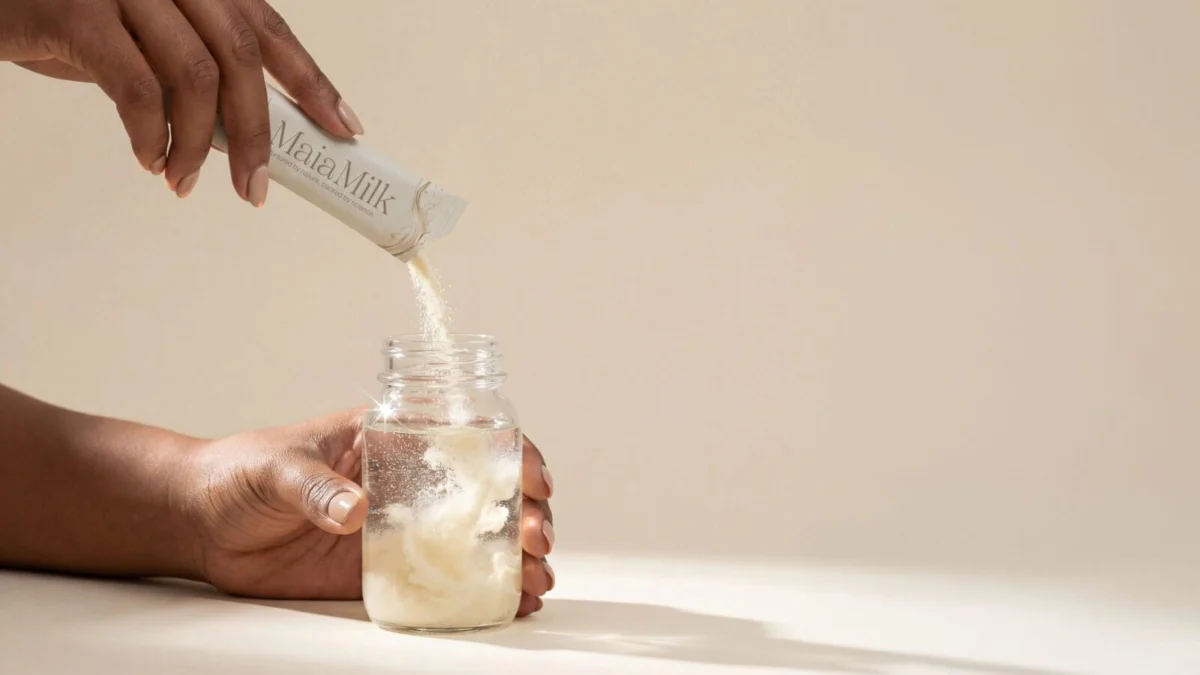
The landscape of infant feeding is undergoing a significant transformation with the introduction of MaiaMilk, a groundbreaking shelf-stable, freeze-dried donor human milk product designed to bridge the critical gap between hospital-grade donor milk and informal peer-to-peer sharing. This innovation offers parents a meticulously screened and tested human milk option that can be prepared instantly at home, circumventing the logistical complexities and safety concerns traditionally associated with donor milk access. As new parents navigate a complex world of feeding choices—from direct breastfeeding to formula—MaiaMilk emerges as a meticulously vetted alternative, addressing the growing demand for safe, convenient, and readily available human milk outside of clinical settings.
The journey of infant feeding is often fraught with unexpected challenges for new and expecting parents. While the benefits of human milk are widely recognized by leading health organizations such as the World Health Organization (WHO) and the American Academy of Pediatrics (AAP), achieving exclusive breastfeeding can be difficult for many. According to the Centers for Disease Control and Prevention (CDC), while 84.1% of infants born in 2018 started breastfeeding, only 25.8% were exclusively breastfed through six months, highlighting a substantial need for safe and reliable supplementation options. For decades, parents facing insufficient supply, medical contraindications, or the demands of returning to work have primarily turned to infant formula or, in some cases, informal donor milk networks found through social media—a practice the U.S. Food and Drug Administration (FDA) explicitly advises against due to unverified safety protocols. This dichotomy between highly regulated, hospital-centric milk banks and unregulated community sharing has left a significant segment of the parenting population without viable, safe human milk alternatives for at-home use.
The Evolving Landscape of Infant Nutrition and the Demand for Donor Milk
The history of infant feeding has seen numerous shifts, from the near-universal practice of breastfeeding in earlier centuries to the rise of commercial infant formula in the 20th century, which promised convenience and scientific precision. However, a renewed appreciation for the immunological, developmental, and nutritional benefits of human milk has led to a global push to support breastfeeding. Despite these efforts, societal pressures, physiological challenges like low milk supply (affecting an estimated 10-15% of mothers), and the practicalities of modern life, particularly for working parents, often necessitate supplementation. The emotional and physical toll of struggling to breastfeed or pump enough milk can be immense, leading to feelings of inadequacy and stress.
The recent years have further amplified parental anxieties, particularly with significant infant formula recalls, such as the 2022 widespread recall that disrupted the supply chain and led to national shortages. These events underscored the vulnerability of the formula market and prompted many parents to actively seek safer, more natural alternatives. This environment created a fertile ground for innovations in human milk access, pushing the boundaries beyond traditional hospital use.
Donor human milk has long been a medical necessity, primarily for premature and critically ill infants in Neonatal Intensive Care Units (NICUs), where it significantly reduces the risk of necrotizing enterocolitis and sepsis. Nonprofit milk banks, often members of organizations like the Human Milk Banking Association of North America (HMBANA), operate under stringent guidelines, collecting, screening, processing, and distributing pasteurized human milk to hospitals. While these banks provide an invaluable service, their operational model and focus on acute medical needs have historically limited direct consumer access for healthy, term infants or those with less severe needs. The logistical hurdles of cold chain storage, thawing, and limited supply further complicated broader distribution.
MaiaMilk: A Chronology of Innovation and Accessibility
The concept of making rigorously screened donor milk accessible to everyday parents began to take shape within Ni-Q, a company that has been a leading supplier of donor human milk to hospitals for nearly 15 years, establishing a track record of reliability and safety within the medical community since approximately 2011. This extensive experience positioned Ni-Q to understand the stringent requirements for medical-grade human milk processing and the untapped potential for wider consumer access.
Tara Overton, Chief Operating Officer of MaiaMilk and a longtime operations lead at Ni-Q, played a pivotal role in recognizing this unmet need. Her personal experience with supply challenges while working full-time, despite being immersed in the world of donor milk, provided a profound insight into the struggles many parents face. "I was helping to manage and run our milk bank," Overton recalls, "seeing day to day these overproducers, these moms with extra milk." Yet, when she had her own son, her supply didn’t match her baby’s needs, and she needed supplemental milk. Her unique position gave her "super privileged access" to donor milk, an access she realized was unavailable to the vast majority of parents. This personal revelation became a driving force behind the development of MaiaMilk.
Leveraging Ni-Q’s expertise and infrastructure, MaiaMilk was conceived to extend the same level of trust and safety from the hospital environment directly into the home. The company invested in advanced technology to create a product that overcomes the traditional barriers of donor milk distribution. After years of development and adherence to rigorous regulatory pathways, MaiaMilk officially launched in early 2026, marking a significant milestone in infant nutrition by offering the first widely available shelf-stable, freeze-dried donor human milk. This launch represented a deliberate expansion of Ni-Q’s mission, shifting from solely supplying hospitals to empowering individual parents with a convenient and secure human milk option.
The Rigorous Process: Ensuring Uncompromised Safety and Quality
The cornerstone of MaiaMilk’s offering is its unwavering commitment to safety and quality, mirroring the high standards set for hospital-grade donor milk. The process begins with the donors themselves, who undergo a comprehensive and multi-layered screening protocol. Potential donors are meticulously evaluated through:
- Medical History Review: An in-depth assessment of their health, including any chronic illnesses, infectious disease exposure, and medication use.
- Lifestyle Questions: Inquiry into diet, smoking, alcohol consumption, recreational drug use, and other behaviors that could impact milk quality.
- Blood Testing: Comprehensive serological tests are performed to screen for infectious diseases such as HIV, Hepatitis B and C, HTLV (Human T-lymphotropic virus), and Syphilis, ensuring the milk is free from transmissible pathogens.
Crucially, MaiaMilk recognizes the significant effort and time involved in milk donation and provides fair compensation to approved donors. This ethical approach not only acknowledges their valuable contribution but also helps to sustain a consistent supply of high-quality donor milk.
Once milk is collected from approved donors, it undergoes a meticulous processing journey:
- Initial Testing: Each batch of raw donor milk is tested for bacterial contamination before further processing.
- Pasteurization: The milk is subjected to Holder pasteurization (a low-temperature, long-time thermal process) at 62.5°C for 30 minutes. This critical step effectively eliminates harmful bacteria and viruses while carefully preserving the vital nutrients, antibodies, and beneficial components unique to human milk.
- Freeze-Drying: Following pasteurization, the milk is freeze-dried. This innovative process involves freezing the milk and then placing it under a vacuum, allowing the ice to sublimate directly into vapor, bypassing the liquid phase. This method efficiently removes water content, resulting in a lightweight, shelf-stable powder that retains the nutritional integrity of the original milk without the need for refrigeration or freezing.
- Single-Serving Packaging: The freeze-dried milk powder is then carefully packaged into individual, pre-measured packets, ensuring precise dosing and minimizing waste.
- Final Quality Assurance: Before any product ships, every batch undergoes a final round of independent third-party laboratory verification. This rigorous testing confirms the absence of harmful bacteria post-processing and verifies the nutritional composition, guaranteeing that the milk meets MaiaMilk’s strict quality standards.
MaiaMilk’s manufacturing facility is FDA-registered and operates under current Good Manufacturing Practices (cGMP), which are regulations enforced by the FDA to ensure that products are consistently produced and controlled according to quality standards. This multi-stage verification and adherence to regulatory frameworks are paramount to building and maintaining parental trust, directly addressing the safety concerns associated with informal milk sharing.
Cost, Value, and Accessibility for Diverse Families
MaiaMilk, while offering unparalleled safety and convenience, is positioned as a premium product. A 4-pack, yielding 8 ounces of prepared breastmilk, is priced at $62. Tara Overton openly acknowledges this cost, explaining that it is a direct reflection of the extensive processes involved. The pricing structure is influenced by several critical factors:
- Donor Compensation: Fairly compensating mothers for their time, effort, and commitment to pumping and donating is a significant component of the cost. This ensures a sustainable supply chain and recognizes the intrinsic value of human milk.
- Rigorous Screening and Testing: The multi-stage medical screening, blood tests, and microbial testing at various points in the process involve substantial laboratory costs and specialized personnel. This investment is crucial for guaranteeing safety.
- Advanced Processing Technology: The sophisticated freeze-drying equipment, pasteurization technology, sterile packaging, and maintenance of an FDA-registered, cGMP-compliant facility represent considerable operational expenses.
- Quality Assurance and Logistics: Ongoing third-party verification, quality control, and efficient distribution networks further contribute to the product’s overall cost.
When viewed against the backdrop of its benefits—uncompromised safety, unparalleled convenience (no freezer space, no thawing, no cooler bags), and the nutritional advantages of human milk—the value proposition of MaiaMilk becomes clear. It offers peace of mind to parents seeking a human milk option that is both trustworthy and practical for everyday use. For many, this investment is justified by the desire to provide their baby with human milk when direct breastfeeding or conventional donor milk options are not feasible or accessible.
MaiaMilk addresses a broad spectrum of parental needs and family structures. It is particularly beneficial for:
- Parents with Insufficient Milk Supply: Whether due to physiological reasons, stress, or the demands of work, supplementing with MaiaMilk can alleviate pressure and ensure the baby receives human milk.
- Working Parents: The ease of preparation makes it ideal for daycare, caregivers, or parents needing to supplement while away from their baby.
- Travel and Emergencies: Its shelf-stable nature makes it a perfect solution for on-the-go feeding, eliminating the need for refrigeration or complex preparation.
- Families Built Through Surrogacy or Adoption: For these families, where direct breastfeeding may not be an option, MaiaMilk provides a meaningful way to offer human milk, fostering bonding and providing crucial nutritional benefits.
- LGBTQ+ Parents: In situations where standard feeding advice may not apply, MaiaMilk offers an inclusive and accessible feeding solution, filling a critical gap in available options.
- Mothers Initiating Breastfeeding: While milk supply is establishing, MaiaMilk can provide temporary supplementation without resorting to formula, supporting the long-term goal of breastfeeding.
Tara Overton highlights its practical utility, noting how even "one extra packet or one extra feeding a day made all the difference" for her own children. This flexibility allows parents to integrate human milk into their feeding routine as needed, whether for a full feeding, a top-off, or an emergency.
Broader Implications and the Future of Infant Nutrition
MaiaMilk’s entry into the market represents more than just a new product; it signals a potential paradigm shift in infant feeding. By making hospital-grade donor human milk directly accessible to consumers, it disrupts the traditional models that have historically limited access to either medical settings or informal, unregulated channels. This innovation has significant implications for health equity, potentially democratizing access to the benefits of human milk beyond those with specific medical needs or geographic proximity to milk banks.
The commercialization of donor human milk, while offering immense benefits, also invites ethical considerations. The balance between compensating donors fairly, ensuring broad accessibility, and maintaining the integrity of human milk as a unique biological resource is a delicate one. MaiaMilk’s transparent approach to donor compensation and rigorous safety protocols are crucial in navigating these considerations, aiming to establish a new standard that prioritizes both ethical sourcing and product safety.
Looking ahead, products like MaiaMilk could inspire further innovation in infant nutrition, potentially leading to a broader range of human milk-based products designed for various needs. This could foster greater research into human milk composition, preservation techniques, and tailored nutritional solutions for infants. Ultimately, it empowers parents with more informed choices, moving towards a future where providing human milk is not solely dependent on a mother’s physiological capacity but also on accessible, safe, and convenient options.
Tara Overton’s overarching message resonates deeply with parents navigating the often-stressful journey of infant feeding: "It’s okay to struggle, and struggle doesn’t equal failure. You just keep doing your best, and your baby will be okay—and you’ll be okay too." This empathetic stance underscores MaiaMilk’s mission to support parents, not judge them, by offering a valuable tool in their feeding arsenal.
To sustain this vital resource, MaiaMilk and its sister company Ni-Q are continuously seeking new donors, recognizing that the availability of this innovative product is directly tied to the generosity of mothers with surplus milk. Interested individuals can learn more about becoming a donor at Ni-Q’s website. As MaiaMilk expands its reach, it promises to reshape how parents approach infant feeding, offering a safe, convenient, and dignified alternative in the complex world of early childhood nutrition.

0 Comments