
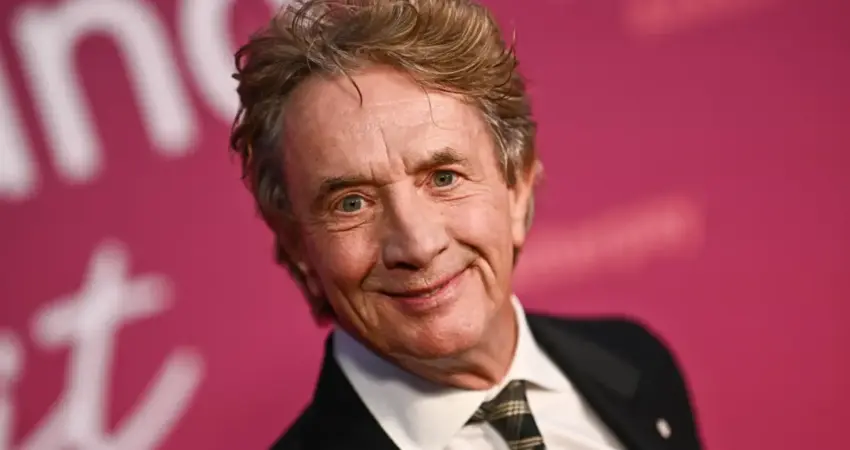
The intersection of celebrity advocacy and personal tragedy took center stage in Los Angeles on Wednesday, October 14, 2026, as legendary actor and comedian Martin Short attended the fourth annual Rare Impact Fund Benefit. The event, hosted by his friend and Only Murders in the Building co-star Selena Gomez, served as a somber but significant milestone for the 76-year-old actor, marking one of his most public appearances since the death of his eldest daughter, Katherine Short. Katherine, a dedicated clinical social worker, passed away by suicide at the age of 42 in February 2026, following a protracted battle with severe mental health challenges. During the gala, Gomez introduced the inaugural Katherine Short Legacy Award, a distinction created to honor individuals who demonstrate exceptional commitment to community-based mental health support, effectively cementing Katherine’s life work into a permanent philanthropic fixture.
The Rare Impact Fund, established by Gomez with the ambitious goal of raising $100 million over a decade to expand mental health services for youth, provided a poignant backdrop for Short’s first major address regarding his family’s recent loss. Addressing a crowd of advocates, philanthropists, and entertainment industry peers, Short offered a raw and intellectually rigorous perspective on the nature of mental illness. His remarks moved beyond the traditional language of mourning, instead challenging the audience to reframe psychological disorders through a clinical and biological lens. By drawing a direct parallel between the mental health struggles that claimed his daughter’s life and the physical disease that claimed his late wife, Nancy Dolman, Short provided a powerful argument for the destigmatization of psychiatric conditions.
A Legacy of Clinical Advocacy and Silent Struggles
Katherine Short was not merely the daughter of a Hollywood icon; she was a professional who dedicated her career to the very cause being championed at the benefit. As a clinical social worker, Katherine spent years in the trenches of the healthcare system, advocating for patients and facilitating the types of difficult conversations that her father would eventually bring to the global stage. Her professional background adds a layer of complexity to the tragedy, highlighting a reality often discussed in medical circles: that those on the front lines of mental health care are not immune to the conditions they treat.
Short noted that Katherine’s struggle was not for lack of effort or access to care. He disclosed that she had been diagnosed with Borderline Personality Disorder (BPD) and had navigated a variety of "extreme mental health issues" for a significant portion of her adult life. BPD is a complex psychiatric condition characterized by pervasive instability in moods, self-image, and interpersonal relationships. According to data from the National Institute of Mental Health (NIMH), BPD affects approximately 1.4% of the adult U.S. population, though some estimates suggest the number may be higher due to frequent misdiagnosis. The disorder is associated with high rates of self-harm and a suicide completion rate significantly higher than that of the general population.
By identifying Katherine’s specific diagnosis, Short contributed to a growing movement of radical transparency in the public eye. His description of her battle was one of resilience rather than defeat. "She did the best she could until she couldn’t," Short told the audience, a statement that underscores the exhaustive nature of managing chronic mental illness.
The Biological Reality: Comparing Mental Illness to Terminal Disease
One of the most impactful segments of Short’s address was his refusal to categorize suicide as a choice or a moral failing. Instead, he utilized his family’s history with physical illness to provide a comparative framework. In 2010, Short lost his wife of 30 years, Nancy Dolman, to ovarian cancer. Drawing from this experience, he argued that the terminal nature of certain physical diseases is mirrored in the most severe cases of mental illness.

"Mental health and cancer… are both diseases," Short stated. "They are diseases, and sometimes diseases are terminal." This comparison aligns with contemporary neurobiological research which increasingly views severe mental health disorders as systemic failures of brain chemistry and circuitry rather than "behavioral" issues. By labeling Katherine’s condition as a terminal illness, Short sought to remove the "shadows" and "family embarrassment" that historically surround suicide. This shift in nomenclature is critical for public health, as it encourages families to seek help with the same urgency and lack of shame they would apply to a cancer diagnosis.
The medical community has long advocated for this parity in treatment and perception. Data from the Centers for Disease Control and Prevention (CDC) indicates that suicide remains a leading cause of death in the United States, with over 49,000 deaths reported in 2022 alone. Despite these figures, mental health funding and insurance parity often lag behind that of physical medicine. Short’s advocacy at the Rare Impact Fund Benefit serves to bridge this gap, leveraging his platform to demand that psychological conditions be treated with the same clinical gravity as oncology.
The Katherine Short Legacy Award and Community Impact
The introduction of the Katherine Short Legacy Award marks a strategic expansion of the Rare Impact Fund’s mission. While the fund has primarily focused on increasing access to resources for young people, this new award recognizes the "tangible impact" of individuals who work within their communities to foster compassion and open dialogue. Selena Gomez, who has been vocal about her own diagnosis of bipolar disorder, described Short as a "brilliant" mentor and friend, emphasizing that the award was a way to ensure that Katherine’s professional mission—and the Short family’s resilience—would continue to inspire systemic change.
The inaugural presentation of the award was described by attendees as a moment of profound solidarity. Gomez’s decision to honor Short’s daughter highlights the deep personal connections that drive many modern philanthropic efforts in the mental health space. The fund has already successfully raised millions of dollars, which are distributed to a global network of grantees focused on suicide prevention, school-based mental health programs, and crisis intervention services.
A Chronology of Resilience: The Short Family’s Path
The Short family’s journey through grief is one that has played out in the public eye over several decades, though usually shielded by Martin Short’s characteristic wit and professional decorum. Short and Nancy Dolman, a fellow Canadian actress, married in 1980 and adopted three children: Katherine, Oliver, and Henry. Following Dolman’s death in 2010, Short became a vocal proponent of moving forward with "joy and curiosity" despite loss, a philosophy he detailed in his 2014 memoir, I Must Say: My Life as a Humble Comedy Legend.
However, the loss of a child presents a different caliber of emotional challenge. The timeline of the past year for the Short family has been one of private mourning punctuated by necessary public advocacy. Katherine’s death in February 2026 sent shockwaves through the entertainment community, particularly among the cast and crew of Only Murders in the Building, who have reportedly served as a close-knit support system for Short during the production of the show’s subsequent seasons.
The actor’s appearance at the benefit suggests a transition from the acute phase of grief into a period of purposeful legacy-building. By channeling his "heartbreak" into a public-facing award, Short is participating in what psychologists call "meaning-making," a process essential for navigating the long-term effects of traumatic loss.

Broader Implications for Mental Health Advocacy
The statements made by Martin Short at the Rare Impact Fund Benefit are likely to resonate far beyond the ballroom in Los Angeles. When a figure of Short’s stature—known primarily for his ability to bring laughter to millions—speaks with such gravity about the "terminal" nature of mental illness, it shifts the cultural needle.
Analysis of celebrity influence on health behaviors, often referred to as the "Angelina Jolie effect" or similar phenomena, suggests that when public figures share specific medical details, it leads to increased public awareness and, in many cases, a rise in preventative screenings or help-seeking behaviors. Short’s transparency regarding Borderline Personality Disorder is particularly significant, as the condition remains one of the most stigmatized and misunderstood diagnoses in the Diagnostic and Statistical Manual of Mental Disorders (DSM-5).
Furthermore, the event highlights the growing importance of private-sector philanthropy in addressing the global mental health crisis. With public health systems in many countries under strain, initiatives like the Rare Impact Fund provide critical "gap funding" for innovative programs that might not receive traditional government grants. The inclusion of the Katherine Short Legacy Award ensures that the focus remains on the "clinical" and "social work" aspects of the crisis—the boots-on-the-ground efforts that Katherine herself valued.
Conclusion: Grief as a Form of Love
In the closing moments of his speech, Martin Short turned to the words of country music icon Dolly Parton to articulate the enduring nature of his sorrow: "Grief is love with no place to go." This sentiment served as a bridge between the clinical arguments he presented earlier and the deeply personal reality of a father mourning his daughter.
Short’s message was ultimately one of integration rather than "getting over" loss. He posited that the pain of losing Katherine would remain a permanent fixture in his heart because it is a direct reflection of the depth of his love for her. By framing grief as a continuation of love, and mental illness as a biological disease, Short provided a blueprint for how society can better support those who are suffering and those who are left behind.
As the Rare Impact Fund enters its next year of operation, the Katherine Short Legacy Award will stand as a reminder that behind every statistic is a human story of service, struggle, and a family’s unwavering commitment to making the world a more compassionate place for those fighting invisible battles. The event concluded with a standing ovation for Short, not for his comedic genius, but for his courage in transforming a private tragedy into a public catalyst for change.

0 Comments