
Marvel Studios has officially announced that British actor David Jonsson will take on the leading role in the upcoming third installment of the Black Panther franchise. The announcement was made by director Ryan Coogler during a high-profile presentation at San Diego Comic-Con, ending months of speculation regarding the future of the series. Scheduled for a global theatrical release in December 2028, Black Panther 3 marks a significant new chapter for the Marvel Cinematic Universe (MCU) as it seeks to continue the legacy of one of its most culturally and commercially successful properties.
The casting of Jonsson follows the immense critical and commercial success of the first two films, which collectively grossed over $2 billion at the global box office. This new appointment is regarded as one of the most pivotal casting decisions in recent Hollywood history, as Jonsson steps into a vacancy left by the late Chadwick Boseman, who portrayed King T’Challa in the original 2018 film and several subsequent MCU entries. Following Boseman’s passing in 2020, the franchise pivoted with 2022’s Black Panther: Wakanda Forever, which focused on the collective grief of the nation and saw Letitia Wright’s character, Shuri, assume the mantle. The introduction of Jonsson as the lead suggests a further evolution of the narrative, though Marvel Studios has yet to release specific plot details or clarify the exact identity of the character Jonsson will portray.
The Evolution of the Black Panther Franchise
The Black Panther series has consistently broken records and set new standards for the superhero genre. The original film, released in 2018, became the first superhero movie to receive an Academy Award nomination for Best Picture and won three Oscars for Best Original Score, Best Costume Design, and Best Production Design. It remains a landmark in cinema for its representation of African culture and its exploration of themes such as isolationism, colonialism, and global responsibility.
Ryan Coogler, who has directed every installment of the franchise to date, returns to helm the third film. Coogler’s involvement is seen as a stabilizing force for the production, ensuring continuity in the vision of Wakanda—the fictional, technologically advanced African nation that serves as the series’ primary setting. Coogler’s reputation has only grown since the first film, recently garnering further acclaim for his work on the thriller Sinners, which has been noted for its technical precision and narrative depth.
The decision to cast Jonsson comes at a time when Marvel Studios is recalibrating its long-term strategy for the "Multiverse Saga." With a release date set for late 2028, Black Panther 3 is expected to play a crucial role in the transition between Phase 6 and Phase 7 of the MCU, potentially serving as a cornerstone for the next generation of Avengers-level events.
A Profile of David Jonsson: From the West End to Wakanda
David Jonsson’s ascent to a leading role in the MCU follows several years of steady, high-caliber work across theater, television, and film. A graduate of the Royal Academy of Dramatic Art (RADA) in London, Jonsson first gained significant attention in the London theater scene, performing in various West End productions.
His breakout television role came in the HBO/BBC series Industry, where he portrayed Gus Sackey, a nuanced and ambitious young professional navigating the high-stakes world of international finance. Jonsson’s performance was praised for its restraint and complexity, earning him a reputation as one of Britain’s most promising young actors. He followed this success with a starring role in the independent romantic comedy Rye Lane (2023), which received widespread critical acclaim at the Sundance Film Festival. His performance in the film demonstrated his ability to carry a feature-length narrative with charisma and relatability.
Jonsson’s filmography also includes the highly anticipated Alien: Romulus and the adaptation of Stephen King’s The Long Walk. In 2023, his contributions to the industry were formally recognized when he won the EE Rising Star BAFTA Award, an accolade previously held by actors such as Tom Holland, Daniel Kaluuya, and Letitia Wright. The BAFTA win is often seen as a precursor to global stardom, and Jonsson’s casting as the new Black Panther confirms that trajectory.
Financial and Cultural Implications of the Casting
The financial stakes for Black Panther 3 are substantial. The first film earned $1.347 billion worldwide, while the sequel, Wakanda Forever, earned $859 million despite the challenges of a post-pandemic market and the absence of its original lead. For Disney and Marvel Studios, the third film represents an opportunity to revitalize the franchise’s box office dominance.
Industry analysts suggest that the choice of David Jonsson reflects a desire to inject fresh energy into the MCU. By selecting an actor with a background in prestige drama and independent film, Marvel appears to be doubling down on the "actor-first" approach that defined the early successes of the franchise. Jonsson’s ability to handle complex emotional beats is likely a key factor in his selection, as the Black Panther films have traditionally leaned more heavily into character development and political allegory than other entries in the superhero genre.
.jpg5.jpg)
Furthermore, the casting of a Black British actor continues a trend of transatlantic talent leading major American franchises. Jonsson joins the ranks of other British stars who have become the faces of Marvel properties, including Tom Holland (Spider-Man), Benedict Cumberbatch (Doctor Strange), and Charlie Cox (Daredevil).
The Intersection of Film and Global Branding
Beyond his acting credentials, Jonsson has emerged as a significant figure in the world of high fashion, a factor that increasingly influences the marketability of modern film stars. During the same week as the Black Panther announcement, the luxury fashion house Loewe named Jonsson as its latest global brand ambassador. This partnership highlights the actor’s growing influence as a style icon and a "leading man" archetype for the luxury market.
Jonsson’s red carpet appearances have been meticulously curated, blending classic menswear with avant-garde elements. Notable examples include:
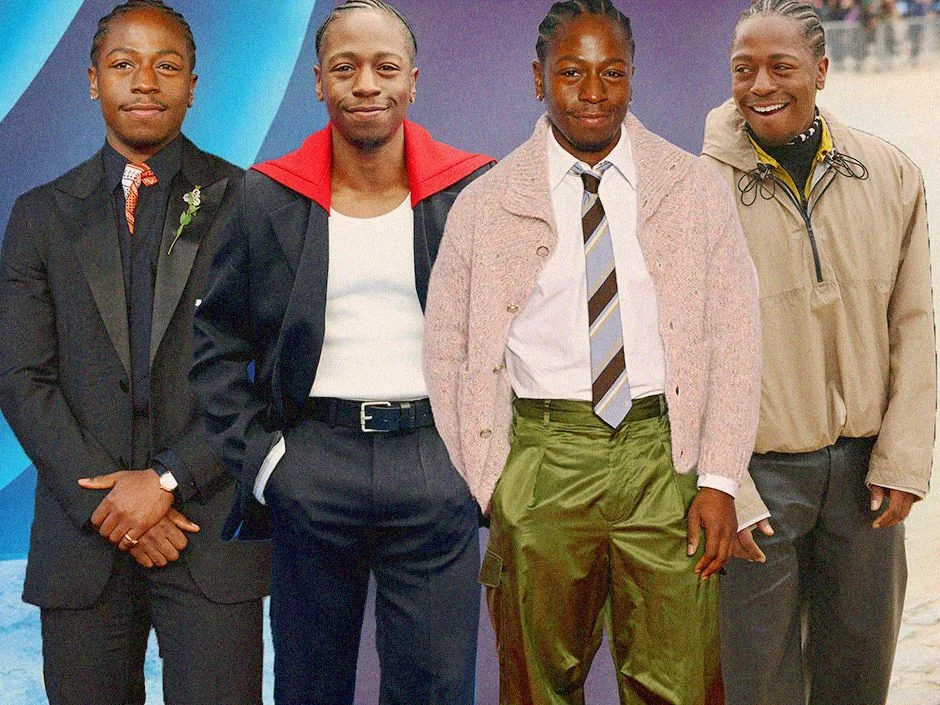
- The 2024 BAFTAs: Jonsson wore a custom black Hermès tuxedo, accessorized with a Cartier three-leaf clover brooch and a bandana-style necktie, a look that was widely praised by fashion critics for its modern sophistication.
- The Independent Spirit Awards: He appeared in a black Loewe suit featuring a contrasting red knit collar, showcasing his affinity for bold, structural tailoring.
- The Critics’ Circle Film Awards: Jonsson opted for a pink Louis Vuitton cardigan paired with a shirt and tie and green satiny cargo pants, demonstrating a willingness to experiment with color and silhouette.
The synergy between his film career and his fashion status is expected to play a major role in the promotional campaign for Black Panther 3. Marvel Studios has historically utilized the "press tour" as a massive marketing engine, and Jonsson’s established relationship with brands like Loewe and Cartier suggests that the film’s publicity cycle will be as much a fashion event as a cinematic one.
Official Responses and Industry Reaction
While official statements from Marvel Studios have been characteristically brief, sources close to the production indicate that the selection process was exhaustive. Ryan Coogler reportedly sought an actor who could command the screen with a "regal yet grounded" presence.
During the Comic-Con panel, Coogler noted that the third film would continue to explore the "vastness of the Wakandan world" and that Jonsson was the "perfect fit for the journey ahead." Jonsson himself expressed humility regarding the role, acknowledging the weight of the legacy he is inheriting. While he did not provide specifics on the plot, he noted that the script offers a "profound look at leadership and identity."
Fan reaction across social media platforms has been largely positive, with many pointing to Jonsson’s performance in Industry as evidence of his readiness for a major franchise lead. Critics have also noted that the long lead time—four years until the 2028 release—provides the production with ample time to refine the script and integrate Jonsson’s character into the broader MCU narrative.
Timeline of Upcoming Milestones
As the production moves toward its 2028 release date, several key milestones are anticipated:
- 2025-2026: Pre-production and script finalization. During this period, additional casting announcements for returning characters (such as Shuri, Okoye, and M’Baku) are expected.
- 2026: Principal photography is rumored to begin in late 2026, with locations expected to include Atlanta, Georgia, and various international sites to depict the diverse landscapes of the Marvel world.
- 2027: Post-production and visual effects integration. Given the high standard of world-building in Wakanda, this phase is expected to be extensive.
- December 2028: Global theatrical release, followed by a debut on the Disney+ streaming platform in early 2029.
Conclusion: A New Era for Wakanda
The appointment of David Jonsson as the lead in Black Panther 3 represents more than just a casting choice; it is a strategic move by Marvel Studios to ensure the longevity of its most culturally significant franchise. By bridging the gap between prestige acting and blockbuster spectacle, Jonsson is positioned to lead the series into a new era.
As the MCU enters its next decade, the success of Black Panther 3 will likely be a barometer for the studio’s ability to evolve while honoring its history. With Ryan Coogler at the helm and a rising star of Jonsson’s caliber in the lead, the film is poised to be one of the most anticipated cinematic events of 2028, carrying forward the message of "Wakanda Forever" to a new generation of viewers.

0 Comments