
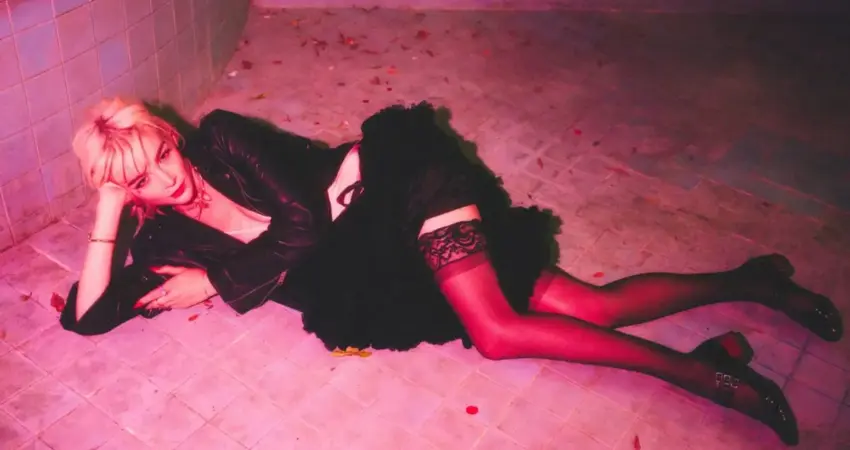
Los Angeles-based DJ, producer, and mother of four, Allie Teilz, has released her highly anticipated debut album, "Come to Mommy," a powerful sonic statement that champions the multifaceted identity of modern motherhood. The album, which dropped on October 23, 2026, serves as a poignant refusal to conform to societal expectations that often demand women shrink their personal and professional aspirations upon becoming mothers. Instead, Teilz asserts that motherhood has profoundly amplified her artistic vision, making her "bigger, not smaller." This release not only marks a significant milestone in her career but also contributes a vital voice to the ongoing dialogue about female artists navigating parenthood within the demanding landscape of the music industry.

From Underground Icon to Maternal Muse: Teilz’s Evolving Artistic Journey
Allie Teilz carved out a formidable reputation in the competitive Los Angeles nightlife scene, known for her eclectic vinyl sets that captivated audiences alongside industry giants like Grace Jones and Daft Punk. Her early career, stretching back through the 2010s, was characterized by a relentless immersion in music culture, a dedication that saw her sharing prestigious booths at exclusive venues and earning acclaim for her discerning taste and electrifying performances. This period was instrumental in shaping her unique electronic sound, a blend of classic influences and forward-thinking innovation, positioning her as a respected figure within the underground dance music community. However, with the arrival of her four children, including a set of three-year-old twins and an almost eight-year-old, Teilz found her life transformed, prompting a profound recalibration of her priorities and artistic focus. She now openly identifies as "a mother first and an artist second," a declaration that, for many women in high-demand creative fields, would signify a retreat from the demanding pace of professional music. Yet, for Teilz, this shift has been anything but a diminishment; it has been a profound source of enrichment, leading her to authentically weave these seemingly disparate versions of herself into a singular, compelling narrative.

The transition from the pulsating energy of late-night clubs to the rhythm of family life might seem stark, but Teilz has deliberately cultivated an environment that fosters creativity and curiosity within her home. Her household, which she playfully dubs a "90s-electronics household," is a vibrant tapestry of vintage media and analog experiences. Instead of relying solely on digital distractions, her children are immersed in a world of projectors, record players, and a cherished wall of VHS tapes featuring classics like "Yellow Submarine" and "The Land Before Time" in heavy rotation. This intentional curation of their environment, coupled with a strict "phones in the ceramic cow" rule during dinnertime, underscores Teilz’s commitment to nurturing imagination and direct engagement, reflecting her own artistic sensibilities. This approach stands in contrast to the pervasive digital-first mentality prevalent in many modern households, highlighting her dedication to creating a rich, tangible experience for her family, mirroring the depth she now seeks in her music. This deliberate choice to step away from constant digital immersion for her children echoes a growing movement among parents to foster analog play and connection in an increasingly screen-dominated world.

"Come to Mommy": A Sonorous Declaration of Selfhood
The album’s provocative title, "Come to Mommy," is a deliberate subversion of the patriarchal phrase "come to daddy," flipping traditional power dynamics on their head. It challenges listeners, particularly women, to consider what "Mommy" truly desires, offering a bold response to a culture that often overlooks mothers’ personal needs and ambitions. Teilz’s answer is unequivocal and delivered without hesitation: "Mommy wants joy. She wants to have fun and dance. She wants pleasure and joy." This declaration is not merely a personal wish but a rallying cry for mothers everywhere to reclaim their innate desires and find liberation in their multifaceted identities. The title itself serves as an immediate feminist statement, setting the tone for an album that is both deeply personal and universally resonant for women navigating the complexities of modern motherhood.

Musically, "Come to Mommy" delivers on this promise. It is an atmospheric journey through electronic soundscapes, simultaneously drawing on nostalgic "throwback" elements and pushing into "futuristic" sonic territories. The album is described by industry commentators as "irresistibly dance-able," a testament to Teilz’s roots in the club scene, but infused with a newfound depth and emotional resonance born from her experiences as a mother. Early critical reception has highlighted the album’s intricate production, which blends sophisticated synth lines with rhythmic complexity, creating a rich tapestry of sound that invites both introspection and movement. The tracks explore themes of resilience, self-discovery, and the profound, often challenging, beauty of parental love, all encapsulated within a vibrant electronic framework that resonates with both long-time fans of Teilz’s DJ sets and new listeners discovering her as a recording artist. Its genre-bending approach positions it as a significant release in contemporary electronic music, lauded for its innovative sound and powerful lyrical themes.

Motherhood as the Ultimate Creative Wellspring
Contrary to the prevailing narrative that parenthood often necessitates sacrificing artistic pursuits, Teilz passionately argues that motherhood has been her greatest creative stimulant. "Becoming their mom," she states, "only made everything bigger, not smaller." This perspective redefines the conventional understanding of creative constraints, suggesting that the demands of parenting—the limited time, the heightened sense of purpose—can paradoxically unlock profound artistic insights. She found that "the deepest creativity can come from having very little time and knowing exactly what matters," a realization that stripped away extraneous distractions and focused her creative energy with laser precision. This echoes sentiments expressed by other female artists who have found renewed purpose and depth in their work post-childbirth, challenging the long-standing industry bias that often sees motherhood as a career impediment.

Teilz views the act of becoming a parent as a "surrender… a soul handing itself over to lead someone else through life," a transformative experience that "cracked the work open instead of closing it down." This profound shift "liberated me in creation," she explains, providing her with "a deeper well to pull from." She goes as far as to characterize motherhood itself as "the highest form of art I’ve ever experienced," a testament to its complex, demanding, and ultimately fulfilling nature. This perspective challenges artists, particularly women, to see motherhood not as a pause or impediment to their craft, but as an essential, enriching chapter that can infuse their work with unparalleled authenticity and depth. This reframing is particularly potent in a music industry where the demands of touring and recording can often seem incompatible with raising a family, leading many women to either delay motherhood or step back from their careers.

The influence of her children extends beyond her creative process to the very essence of what she aims to produce. Teilz now evaluates her work through their eyes, guided by a singular "north star": "What do I want to see more of in the world?" Her answer is a rejection of what she terms "AI art and lobotomy chic," a critique of soulless, machine-driven work she perceives as increasingly prevalent in the digital age. Instead, she yearns to imbue the world with the liberating sense of "play" she experienced upon first hearing bands like Talking Heads, where one felt "free" to "flail around in an imaginary version of David Byrne’s giant suit" and stay in "that beautiful state of play." "Come to Mommy" is her deliberate effort to reintroduce that spirit of unadulterated joy and creative freedom, directly crediting her children as her ultimate inspiration and "greatest teachers." This artistic mission to foster genuine, imaginative engagement stands as a powerful counter-narrative to the increasingly commodified and algorithm-driven cultural landscape, emphasizing human connection and authentic expression.

Dismantling the Myth of Maternal Self-Erasure
Teilz’s journey also serves as a critical commentary on the pervasive cultural pressure for mothers to diminish their own identities. Many women experience a profound "shift that happens when you become a mother," where "the self gets smaller to make room for everyone else." For a period, Teilz admits she felt herself "sliding toward the motherhood she’d watched other women vanish into," observing "mom groups where everyone gave and gave without ever taking their own needs into consideration" and "careers set down and never picked back up." This phenomenon is often subtle, woven into the very fabric of popular culture from childhood. Teilz acutely identifies "insidious culprits that get woven into culture," specifically citing children’s books like "The Giving Tree" and "The Rainbow Fish." These stories, she argues, "sell self-erasure as generosity," conveying a dangerous message: "Make yourself a stump and you’ll be loved. Give away your sparkles and you’ll be accepted." Such narratives, Teilz observes, are "such a dangerous thing," indoctrinating women from an early age into a pattern of self-sacrifice. This cultural conditioning contributes significantly to the emotional labor disproportionately borne by mothers, often leading to burnout and a loss of personal identity.

Her path back from this potential self-submergence was rooted in a deceptively simple yet profoundly effective strategy: boundaries. Teilz implemented practical measures like using a flip phone for specific hours, deliberately making herself unreachable to protect her time and mental space. She recalls a stark realization, encapsulated in a line she encountered online: "have boundaries or get an autoimmune disorder." This resonated deeply, as her own health struggles ultimately compelled her to prioritize her well-being. "My kids don’t need a mom who disappears into anything," she asserts, "even motherhood." This bold statement challenges the long-held ideal of the self-sacrificing mother, advocating instead for a model of maternal wholeness and self-preservation as beneficial for the entire family. Data from various studies consistently highlight the mental and physical health toll of maternal burnout, with a 2024 report by the American Psychological Association indicating that mothers report higher levels of stress and burnout than fathers, underscoring the critical importance of Teilz’s message regarding boundaries and self-care.

Cultivating a Childhood of Wonder and Intent
Teilz approaches the crafting of her children’s upbringing with the same meticulous attention she dedicates to her music, building a childhood rich in "specific, deliberate, slightly magical details." This intentionality is evident in whimsical traditions, such as when her daughter, after earning a leader award at school, chose to celebrate by making "ice cream mountains"—scoops stacked into a castle on parchment paper, a playful echo of a beloved shop from Teilz’s own youth. These are not grand, expensive gestures but "ridiculous for the sake of being ridiculous," fostering joy and unique memories that are deeply personal and meaningful.

She consciously prioritizes these smaller, more "impactful kind of memories" over lavish experiences. Recalling her own childhood, Teilz notes that her most cherished recollections are not of "the cruise or the big trip" but of simpler moments: "the one-bedroom apartment and her mom letting the kids pick a favorite ice cream before the first day of school." This philosophy guides her parenting, leading her to create similar, deeply personal rituals for her own family. This approach aligns with developmental psychology research suggesting that consistent, emotionally resonant micro-moments contribute more to a child’s long-term well-being and sense of security than infrequent, extravagant events.

A significant component of this cultivated childhood is instilling a sense of wonder and connection to the natural world. Her children are regularly dispatched to the garden to harvest parsley or tomatoes, ensuring their hands are actively involved in the preparation of meals. For years, Teilz has taught them "to grow things from seed to fruition," believing that witnessing "a baby artichoke push up from a seed you watered is the kind of small miracle she wants them to appreciate." Similarly, books hold a sacred place in her home. Teilz vividly remembers observing a woman reading beside her small daughter on a subway, the two engrossed despite the surrounding bustle—an image that stayed with her. Now, one of her proudest moments is watching her own daughter lost in the pages of "Harry Potter." Her advice to other mothers is simple yet profound: "Stay curious about the world. Keep reading. Stay interested in what matters to you." These practices highlight a deliberate effort to create an enriching, engaged, and imaginative upbringing for her children, grounded in tangible experiences and intellectual exploration, thereby fostering resilience and a lifelong love of learning.

Art as Alchemy: Turning Trauma into Beauty
The creation of "Come to Mommy" was not merely a creative endeavor but a profound act of healing, born from a period Teilz describes as a "brutal stretch." This challenging time, which occurred during the early years of her twins’ lives, included a traumatic birth experience that "nearly cost Teilz and one of her sons their lives." The album, therefore, stands as a testament to her resilience and her arduous journey back from the brink of physical and emotional devastation. The final track, "Back From the Dead," is a deeply personal dedication, specifically written for the twin she almost lost. Through this track, Teilz communicates a powerful message to all her children: the capacity to "come back from the worst thing." It transforms a private moment of profound vulnerability into a public declaration of strength and hope.

The act of making art out of this intensely personal trauma became a vital processing mechanism for Teilz. It was her way of demonstrating to her children that even the most shattering experiences can be transformed. She articulates this transformative process as taking "something that breaks you" and making "something beautiful out of the ashes." This artistic alchemy not only provided her with a means of coping but also forged a tangible legacy of strength and hope for her family, illustrating the power of creative expression in navigating adversity. The album, in this context, transcends mere entertainment; it becomes a narrative of survival, an intimate chronicle of pain transmuted into powerful, resonant art, offering a blueprint for emotional processing through creative output.

A Clarion Call for Maternal Empowerment
As the interview concluded, Teilz was asked to envision a mother pulling into her driveway, sitting in her car, listening to "Come to Mommy." What message would she want that woman to carry inside? Her response was immediate and impassioned: she wants her to "steal the fire" of her own passion, to recall "the song she danced hardest to at her best friend’s 13th birthday," to "feel held," and to "have a reason to dance." Above all, Teilz hopes the album empowers women to "feel more like herself." This vision encapsulates the core mission of the album: to serve as an anthem for self-reclamation.

In an era where the pressures on mothers are immense and the expectation to prioritize others above oneself remains deeply ingrained, Allie Teilz’s "Come to Mommy" stands as a vital and refreshing counter-narrative. It is more than just a debut album; it is a meticulously crafted artistic statement that affirms the inherent worth and persistent passions of mothers. Through her music and her transparent sharing of her personal journey, Teilz spends an entire album articulating a profound truth that few dare to voice: the self does not have to shrink to make room for mothering. Instead, it can expand, deepen, and flourish, enriched by the very experiences that society often perceives as limiting. This message, delivered with both vulnerability and strength, is poised to resonate deeply with mothers and artists alike, inspiring a generation to embrace their full, uncompromised selves and redefine what it means to be a woman, an artist, and a mother in the 21st century.

0 Comments