
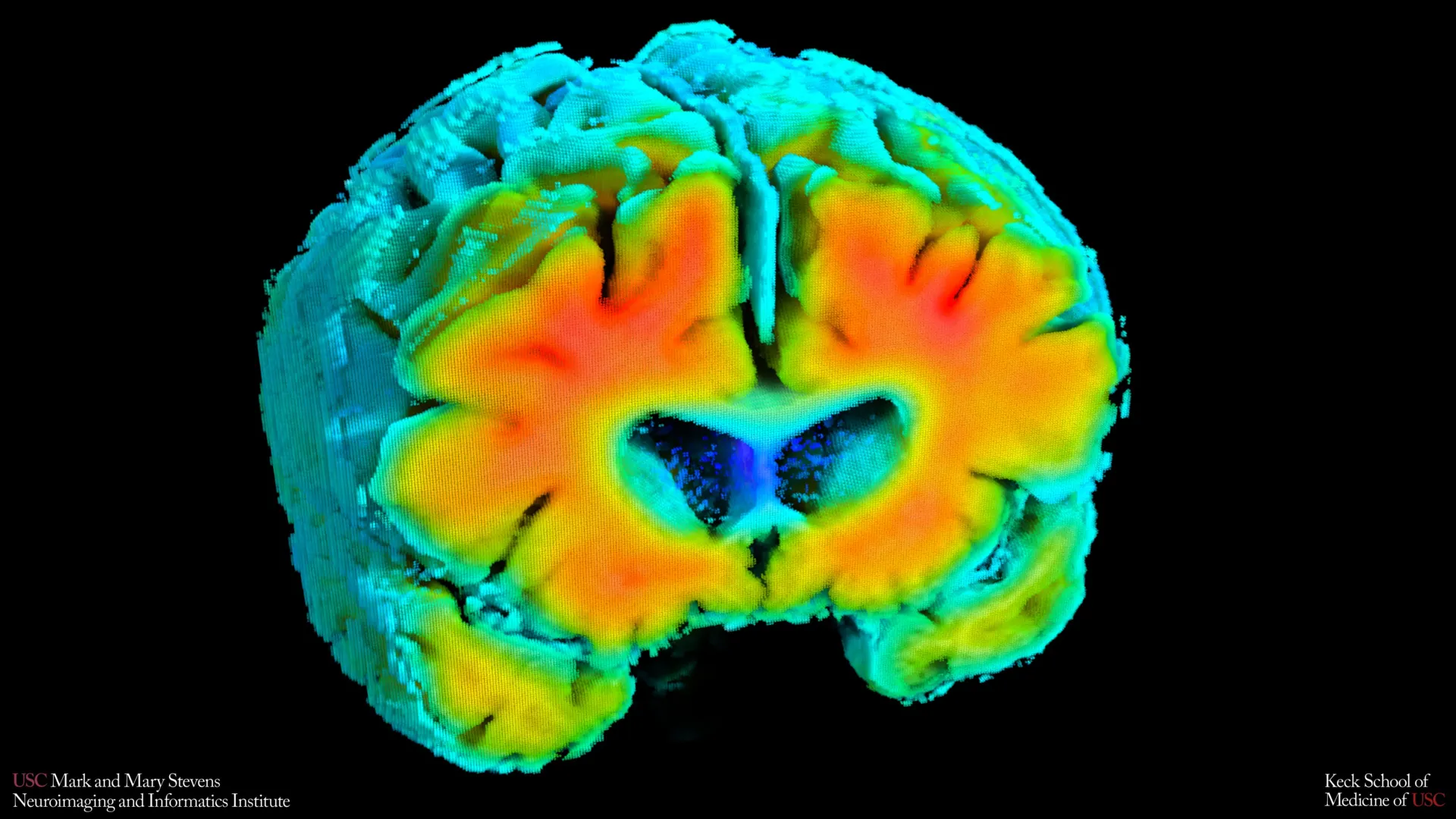
Los Angeles, CA – Subtle alterations in the way blood circulates through the brain and how brain cells receive oxygen may be intimately connected to an individual’s risk of developing Alzheimer’s disease, according to groundbreaking new research from the Mark and Mary Stevens Neuroimaging and Informatics Institute (Stevens INI) at the Keck School of Medicine of USC. This pioneering study, published in the esteemed journal Alzheimer’s and Dementia: The Journal of the Alzheimer’s Association, introduces a novel perspective, suggesting that the health of the brain’s vascular system could serve as an early indicator of disease progression, potentially flagging individuals at risk long before the onset of noticeable cognitive symptoms.
The research meticulously examined a cohort of older adults, encompassing both those with and without diagnosed cognitive impairment. Utilizing simple, noninvasive measurement techniques, the scientists were able to correlate specific patterns of brain blood flow and oxygen levels with well-established hallmarks of Alzheimer’s disease. These hallmarks include the accumulation of amyloid plaques, a sticky protein fragment that forms in the spaces between nerve cells, and the shrinkage of the hippocampus, a crucial brain region responsible for memory formation and retrieval.
Unveiling the Vascular Connection to Alzheimer’s
"For a long time, the scientific community has primarily focused on amyloid and tau proteins as the central culprits in Alzheimer’s disease," stated Amaryllis A. Tsiknia, the lead author of the study and a USC PhD candidate. "However, our findings underscore the critical role of blood flow and oxygen delivery to the brain. They demonstrate that when the brain’s vascular system operates with the efficiency characteristic of healthy aging, we observe corresponding brain structures and functions associated with superior cognitive health."
This research challenges the traditional narrative by emphasizing the proactive role of the cerebrovascular system. It suggests that compromised blood vessel function might not be merely a consequence of Alzheimer’s but a significant contributing factor in its early stages, potentially initiating or exacerbating neurodegenerative processes. The implications are profound, pointing towards a paradigm shift in how Alzheimer’s disease is understood, diagnosed, and potentially managed.
Noninvasive Tools for Comprehensive Brain Circulation Assessment
The scientific team employed two innovative yet straightforward, noninvasive techniques to meticulously assess brain circulation during periods of quiet rest. The first method, transcranial Doppler ultrasound, provided a precise measurement of blood velocity within the brain’s major arteries. This allowed researchers to gauge the speed and efficiency of blood flow to different brain regions.
Complementing this, near-infrared spectroscopy (NIRS) was utilized to evaluate the effectiveness with which oxygen is delivered to the brain tissue, particularly in the superficial layers of the cerebral cortex. NIRS works by emitting near-infrared light into the scalp and measuring how much of that light is absorbed or reflected by blood, thereby indicating oxygen saturation levels.
"These techniques are valuable because they are painless, require no injections or radiation, and can be easily integrated into routine medical evaluations," explained Dr. Meredith N. Braskie, the study’s senior author and an assistant professor of neurology at the Keck School of Medicine. "Their noninvasive nature makes them ideal for widespread application and for individuals who might be unable to tolerate more complex or invasive imaging procedures."
Advanced Analysis of Cerebrovascular Function
The raw data generated by these two methods were then subjected to sophisticated mathematical modeling. This advanced analytical approach allowed researchers to synthesize the individual readings into comprehensive indicators of cerebrovascular function. These integrated metrics provide a nuanced understanding of how well the brain’s vascular system can adapt to physiological changes, specifically its ability to modulate blood flow and oxygen supply in response to natural fluctuations in blood pressure and carbon dioxide levels – key regulators of brain perfusion.
This sophisticated analysis moves beyond simple flow measurements, capturing the dynamic and adaptive capabilities of the brain’s circulatory network. A healthy vascular system exhibits robust autoregulation, ensuring consistent oxygen and nutrient delivery even under varying physiological conditions. The study’s indicators were designed to reflect this adaptive capacity, offering a more holistic assessment of vascular health.
Vascular Health as a Predictor of Alzheimer’s Biomarkers
The findings revealed a striking correlation: participants whose vascular indicators more closely mirrored those of cognitively healthy individuals exhibited significantly lower levels of amyloid plaque accumulation. Furthermore, these individuals also possessed larger hippocampal volumes. Both reduced amyloid burden and a larger hippocampus are recognized as protective factors associated with a lower risk of developing Alzheimer’s disease.
"These vascular measures are not just reflecting superficial changes; they are capturing something profoundly meaningful about overall brain health," emphasized Dr. Braskie. "It appears they are closely aligned with the information we glean from established diagnostic tools like MRI and PET scans, which are standard for Alzheimer’s research. This suggests a crucial link between vascular health and the more traditional neurological markers of Alzheimer’s risk."
The study also observed a discernible pattern among participants diagnosed with mild cognitive impairment (MCI) or dementia. These individuals consistently demonstrated weaker cerebrovascular function compared to their cognitively normal counterparts. This observation lends strong support to the hypothesis that a decline in brain blood vessel health is an integral component of the broader Alzheimer’s disease continuum, potentially preceding or accompanying the more recognized neurodegenerative changes.
A Paradigm Shift in Understanding Alzheimer’s Disease
The implications of this research extend beyond early detection. "These findings contribute significantly to the growing body of evidence that Alzheimer’s disease is a multifaceted condition, involving substantial vascular contributions alongside the classic neurodegenerative pathways," commented Dr. Arthur W. Toga, director of the Stevens INI. "By unraveling the intricate interplay between blood flow, oxygen regulation, amyloid pathology, and brain structure, we are opening up new avenues for earlier diagnosis and, perhaps more importantly, for potential preventative strategies."
The traditional focus on amyloid and tau has been instrumental in advancing our understanding, but it has sometimes overshadowed the equally vital role of the brain’s circulatory system. This new research highlights the interconnectedness of these systems, suggesting that interventions aimed at improving vascular health could have a direct impact on mitigating Alzheimer’s pathology.
The Promise of Accessible and Broad-Scale Screening
A significant advantage of the noninvasive methods employed in this study lies in their accessibility and cost-effectiveness. Compared to the substantial expense and complexity associated with MRI and PET imaging, transcranial Doppler ultrasound and NIRS are considerably more affordable and easier to administer. They eliminate the need for injections, exposure to radiation, and demanding cognitive tasks, making them ideal for large-scale screening initiatives.
This simplicity could be particularly beneficial for identifying individuals at risk within broader populations, including those who might be unable to undergo more intensive imaging due to physical limitations, claustrophobia, or other contraindications. The potential for earlier, wider, and less burdensome screening could revolutionize how Alzheimer’s risk is assessed and managed.
Future Directions and Long-Term Impact
While the current findings are compelling, the researchers acknowledge the limitations of a cross-sectional study. The observed associations represent a snapshot in time and do not definitively establish a cause-and-effect relationship. To address this, the research team is actively engaged in ongoing long-term studies. These longitudinal investigations are meticulously tracking the same participants to determine whether changes in these vascular measures can reliably predict future cognitive decline or the efficacy of potential treatments.
"The ultimate goal is to leverage these vascular signals over time," explained Tsiknia. "If we can accurately monitor these indicators, we may be able to identify individuals at higher risk much earlier in the disease process. This would then allow us to test whether targeted interventions aimed at improving vascular health can indeed slow down or even reverse the brain changes associated with Alzheimer’s disease."
The potential to intervene proactively, based on objective and accessible vascular markers, offers a beacon of hope in the fight against Alzheimer’s. This research not only deepens our understanding of the disease’s complex etiology but also paves the way for practical, patient-friendly diagnostic tools and therapeutic targets.
About the Research Team and Funding
The comprehensive study involved a dedicated team of researchers. In addition to Amaryllis A. Tsiknia and Meredith N. Braskie, the contributing authors include Peter S. Conti, Rebecca J. Lepping, Brendan J. Kelley, Rong Zhang, Sandra A. Billinger, Helena C. Chui, and Vasilis Z. Marmarelis.
This vital research was made possible through the generous support of the Office of The Director, National Institutes of Health, under Award Number S10OD032285, and the National Institute on Aging, with grant R01AG058162. These grants underscore the national commitment to advancing Alzheimer’s research and developing innovative solutions for this devastating disease. The collaborative efforts and robust funding have been crucial in bringing this important work to fruition.

0 Comments