
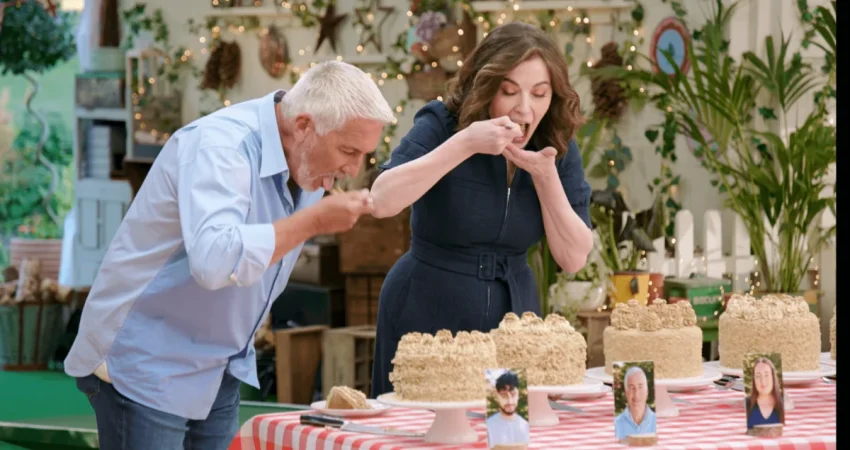
The iconic white tent of The Great British Bake Off has once again become the crucible of culinary creation, but in its latest season, the focus has unexpectedly shifted from soaring cakes to a more fundamental act: the way one consumes a baked good. The debut of television personality and food writer Nigella Lawson as a guest judge has ignited a fervent online discussion, not about her baking acumen, but about her distinctive method of tasting. Viewers have observed and commented on her "huge and awkward" bites, a characteristic that has drawn both amusement and criticism, prompting a deeper examination of Lawson’s long-standing approach to food and its enjoyment.
The Genesis of the Debate: A Judge’s Unconventional Taste
As the new season of The Great British Bake Off (GBBO) unfurled, with the tent at full capacity and only a few early missteps, the presence of Nigella Lawson alongside seasoned judges Paul Hollywood and Prue Leith quickly became a focal point. While her culinary credentials are well-established, it is her on-screen comportment while tasting the contestants’ creations that has captured the public’s attention. Social media platforms, particularly Reddit, have been abuzz with observations about Lawson’s generous and uninhibited bites. Comments ranged from descriptions of her eating style as "huge and awkward" to suggestions that it might be attributed to "poor table manners" or even recent dental work. These reactions, amplified across various online forums and news aggregators, highlight a cultural fascination with the performative aspects of eating, especially in the context of a televised competition.
The intensity of this reaction underscores a broader cultural phenomenon: the often contradictory expectations placed upon women, particularly those in the public eye, regarding their presentation and behavior. Lawson, a figure who has navigated decades of intense media scrutiny, finds herself once again at the center of a debate that seems to question not just her eating habits, but her very embodiment of food appreciation.
A Philosophy of Unashamed Indulgence: The Lawson Legacy
For those familiar with Nigella Lawson’s extensive career, her approach to food is not a new phenomenon but a consistent expression of her deeply held philosophy. Her debut on television in the late 1990s with the program Nigella Bites marked her transition from a respected food critic to a beloved home-cooking guru. The show, as its title suggested, was characterized by Lawson’s unapologetic embrace of pleasure and her candid, often intimate, engagement with food. It was during this period that she established her signature style: eating with an infectious joy, without pretense, and with a complete lack of self-consciousness.
This philosophy, deeply rooted in the belief that food is a source of profound pleasure and should be savored without guilt, has been a recurring theme throughout her work. In an era where online discourse often dissects and critiques every aspect of public figures’ lives, Lawson’s "unburdened" consumption stands in stark contrast to the meticulously curated performances often expected on digital platforms.
Historical Context: From Nigella Bites to The Great British Bake Off
The origins of Lawson’s distinctive eating style can be traced back to her earliest television appearances. In episodes such as the Nigella Bites segment titled "TV Dinners," Lawson demonstrated her uninhibited approach. A notable example involved her preparing a quick mozzarella in carrozza, a fried cheese sandwich. Holding the warm, golden creation above her head, she took substantial bites, eliciting impressive cheese pulls, and humorously remarking, "Look at that, cheese-flavored chewing gum." This moment, and countless others like it, showcased her genuine delight in food, a stark departure from the often-sanitized portrayal of eating in media.
While such displays were met with admiration and affection by many of her long-time followers, they have, at times, been misinterpreted or sensationalized. Critics have often labeled her as overly sensual or even "pornographic" in her depiction of food, a characterization that Lawson has consistently refuted. This perception, however, has persisted, fueled by her evocative language and her unapologetic embrace of rich, indulgent food. The current debate on GBBO, therefore, is not an isolated incident but a continuation of a long-standing cultural dialogue surrounding her public persona and her relationship with food.
The Cultural Paradox: Self-Indulgence and Curated Consumption
The current public reaction to Lawson’s eating style occurs within a broader cultural context that exhibits a peculiar paradox. On one hand, there is a growing acceptance and even celebration of uninhibited self-indulgence. Trends like "goblin mode," characterized by a deliberate embrace of comfort and a rejection of societal pressures for constant self-improvement, and the viral phenomenon of "mukbangs," where individuals consume large quantities of food on camera, exemplify this shift. Similarly, the rise of extravagant and visually arresting desserts, often designed for maximum social media impact, points to a culture that embraces overt displays of culinary pleasure.
However, this embrace of indulgence coexists with an increasingly codified and self-conscious approach to how food is presented and consumed, particularly in the digital age. Influencer culture has popularized a set of visual cues designed to convey enjoyment: exaggerated chewing, specific hand gestures, and a general emphasis on making the act of eating appear aesthetically pleasing and universally understandable as "yummy." This curated consumption prioritizes cleanliness, visual appeal, and a polished performance, often stripping away the messier, more visceral aspects of genuine enjoyment.
Nigella Lawson’s eating style stands in direct opposition to this trend. Her unselfconscious, substantial bites are a rejection of the performative, the overly refined, and the anxiety-driven need for constant self-presentation. In this sense, her behavior on The Great British Bake Off can be seen not as a lapse in manners, but as an authentic expression of a philosophy that prioritizes genuine pleasure over superficial presentation.
A History of Scrutiny: The "Gastro-Porn" Accusation and Lawson’s Defense
Throughout her career, Nigella Lawson has been subjected to intense scrutiny regarding her body, her sexuality, and her relationship with food. Critics have often characterized her as a seductive figure, a "domestic goddess" whose very presentation of food was inherently sexualized. This perception, often fueled by sensationalist headlines and a tendency to misinterpret her evocative language, has led to accusations of "gastro-porn" and an over-sexualization of cooking. Lawson herself has expressed frustration with this ongoing mischaracterization, emphasizing that her use of language and her passionate embrace of food are about sensuousness and the joy of eating, not overt sexuality.
In her own words, articulated in her book Cook, Eat, Repeat, Lawson advocates for a guilt-free approach to food: "No one should feel guilty about what they eat, or the pleasure they get from eating; the only thing to feel guilty about (and even then I don’t recommend it) is the failure to be grateful for that pleasure." This sentiment encapsulates her belief that food is a fundamental source of comfort and joy, and that appreciating this pleasure is paramount. She meticulously distinguishes between the sensuous, which is about heightened sensory experience and appreciation, and the sensual, which can be misconstrued as overtly sexual.
When Lawson takes a substantial bite of cake on The Great British Bake Off, she is, in essence, embodying this philosophy. She is not performing for the camera in the way many online personalities do; rather, she is engaging with the food in a manner that allows her to fully experience its flavors and textures. As she reportedly told The Telegraph regarding her larger mouthfuls on GBBO, her intention is simply to "taste things properly." This desire for genuine sensory engagement, unburdened by the performative anxieties that plague much of modern media consumption, is a testament to her authentic appreciation for the culinary arts.
The Universality of Unbecoming Eating: A Shared Experience
The author’s personal observation, framed through a "gay guy point of view" that acknowledges a disinclination towards female sexuality while embracing "diva worship," suggests that Lawson’s eating style, when viewed without the lens of sexualization, is not as extraordinary as some critics might suggest. Indeed, many people, when unobserved or in moments of private indulgence, engage in similar eating behaviors. From picking a stray piece of cheese off a baking sheet to devouring a burger over the sink, or even attempting to manage a messy deviled egg, these are all instances of "unbecoming" eating – moments where the focus is solely on the enjoyment of the food, free from the constraints of social propriety.
Lawson’s ability to convey this primal love of eating is a significant aspect of her enduring appeal. In the preface to her first book, How to Eat, she wisely noted, "Such love, of course, is not something which can be taught, but it can be conveyed." Her approach to food, exemplified by her uninhibited tasting on The Great British Bake Off, serves as a powerful conveyance of this passion. It reminds viewers that the act of eating, at its core, is about pleasure, satisfaction, and a deep connection to the sustenance that nourishes us.
Implications and Broader Impact: Redefining Culinary Appreciation
The discourse surrounding Nigella Lawson’s eating habits on The Great British Bake Off extends beyond a simple discussion of manners. It prompts a broader reflection on how we perceive and value food, and how societal expectations, particularly for women, influence our interpretation of culinary enjoyment. Lawson’s unashamed embrace of her own way of tasting challenges the increasingly rigid and performative norms of food consumption in the digital age.
Her presence on the show, and the ensuing conversation, highlights a cultural tension between the desire for authentic, unadulterated pleasure and the pressure to present oneself in a carefully curated and socially acceptable manner. By continuing to eat with her characteristic gusto, Lawson is not just tasting cakes; she is advocating for a more liberated and joyful relationship with food, one that celebrates genuine indulgence and gratitude over superficial presentation. Her enduring legacy lies in her ability to inspire others to embrace their own pleasures, whether it be through a perfectly executed meringue or a substantial, uninhibited bite of cake. The ongoing debate, far from being a trivial matter, serves as a powerful reminder of the deeply ingrained societal expectations that still shape how we view women and their relationship with food and pleasure.

0 Comments