
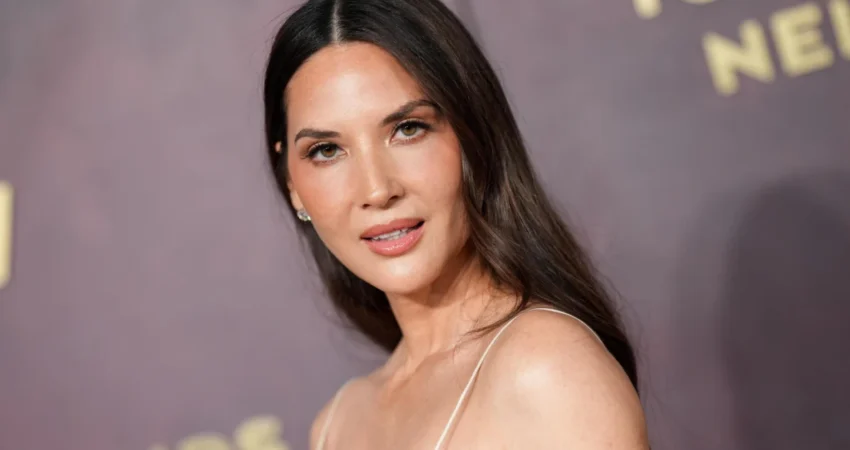
In a comprehensive reflection on her health and personal evolution, actress Olivia Munn has detailed the arduous journey of reclaiming her identity and physical confidence following a series of life-altering medical challenges. Speaking in a recent interview with USA Today on August 27, 2026, the 46-year-old performer and advocate shared the psychological and physical shifts necessitated by her battle with Luminal B breast cancer, a diagnosis that arrived while she was still navigating the complexities of severe postpartum anxiety. Munn’s narrative serves as a poignant examination of the intersection between maternal health, oncology, and the societal pressures placed upon women’s bodies in the public eye.
The timeline of Munn’s health struggles began shortly after the birth of her son, Malcolm, in late 2021. While the transition to motherhood is often portrayed through a lens of "bouncing back," Munn experienced a different reality, characterized by a year of debilitating postpartum anxiety. This period was marked by a profound disconnect between her self-perception and her physical state. By the time she began to find her footing in 2023, a routine screening led to the discovery of an aggressive form of breast cancer, fundamentally altering her life’s trajectory once again.
The Intersection of Postpartum Recovery and Oncology
Munn’s transition from postpartum recovery to cancer treatment represents a rare and grueling "back-to-back" health crisis. Following the birth of her son, she faced the common but rarely discussed pressure of returning to her pre-pregnancy physique. "I was hoping and expecting to bounce back to what I looked like nine months before, and that didn’t happen," Munn noted. The frustration was compounded by weight fluctuations and the physical demands of breastfeeding, which rendered her existing wardrobe obsolete. She described this period as a "fog," a state of "psychosis" where the inability to fit into her clothes became a physical manifestation of her loss of control.
Just as she began to emerge from the depths of postpartum anxiety, Munn was diagnosed with Luminal B breast cancer. This specific subtype is known for being more aggressive and having a higher rate of recurrence than Luminal A. Despite testing negative for the BRCA gene and having a clean mammogram, Munn’s cancer was detected through a Breast Cancer Risk Assessment Score, which calculated her lifetime risk at 37%. This led to a double mastectomy and a total of five surgeries within a ten-month window.
The medical interventions, while life-saving, introduced a new set of physical changes. The double mastectomy and subsequent reconstructive surgeries left Munn with significant scarring and physical indentations where lymph nodes were removed. For an actress whose career is intrinsically tied to her appearance, these changes required a complete overhaul of her relationship with fashion and self-image.
A Strategic Shift in Personal Style and Identity
The necessity of redefining her style became a survival mechanism for Munn. In the aftermath of her surgeries, she found herself at a crossroads where the clothes she once loved no longer served her new reality. Rather than continuing the struggle to fit into her past life, she adopted a philosophy of intentionality. This involved choosing timeless, comfortable pieces that accommodated her post-surgical body without compromising her sense of self.
"I just had this moment where I told myself, ‘I am tired of not dressing the way that I want to dress,’" Munn explained. This decision was more than a fashion choice; it was a psychological reclamation. She expressed a refusal to spend her life waiting for the "perfect" body or the "perfect" outfit, choosing instead to find happiness in her current form. This shift was highlighted during her recent collaboration with Anne Klein, where she emphasized the importance of clothing that provides both grace and ease for women navigating physical transitions.
The Symbolism of ‘Battle Wounds’ and the Skims Turning Point
A significant portion of Munn’s recovery involved coming to terms with her surgical scars. Initially, she went to great lengths to conceal them during public appearances and professional photoshoots. She utilized long hairstyles to drape over her chest and employed tattoo makeup to fill in the indentations on her sides. This period was characterized by a lingering insecurity, as she attempted to maintain the illusion of her pre-cancer physique.

However, her perspective shifted from viewing the scars as imperfections to seeing them as "battle wounds." In a 2024 interview on the Today show, Munn recounted a pivotal moment during a campaign shoot for Skims, which was held in partnership with the Susan G. Komen breast cancer foundation. During the shoot, a makeup artist was attempting to cover her mastectomy scars, a process that proved difficult due to their prominence.
"I was looking in the mirror, and I just thought, ‘I’m done being insecure about my scars,’" Munn told Savannah Guthrie. This moment of public vulnerability became a catalyst for her advocacy. By allowing her scars to be visible, Munn challenged the conventional standards of beauty in the fashion industry and provided a powerful visual representation of cancer survivorship. She noted that she now views the ability to show or hide her scars as a personal choice—a form of agency she reclaimed from the disease.
Clinical Context: Understanding Luminal B Breast Cancer
To understand the severity of Munn’s journey, it is essential to examine the clinical nature of Luminal B breast cancer. According to oncological data, Luminal B tumors are characterized by being estrogen-receptor positive but often have higher levels of Ki-67 (a protein that indicates cell proliferation) and may be HER2-positive or negative. Compared to the more common Luminal A subtype, Luminal B cancers tend to grow faster and have a slightly poorer prognosis, often requiring more aggressive treatment regimens, including chemotherapy and hormone therapy.
Munn’s case is particularly notable because her cancer was not detected by traditional mammography or genetic testing. Her advocacy has since focused on the importance of the "Tyrer-Cuzick" or "Gail" risk assessment models. These tools take into account family history, reproductive history, and breast density to provide a more holistic view of a patient’s risk. Medical professionals have lauded Munn’s transparency, noting that her story has likely encouraged thousands of women to seek more comprehensive screenings beyond standard mammograms.
Broader Implications and Public Reaction
The public response to Munn’s journey has been overwhelmingly supportive, with many praising her for de-stigmatizing the physical aftermath of a mastectomy. Her openness about the "psychosis" of postpartum anxiety and the trauma of cancer treatment has resonated with a demographic of women who feel pressured to maintain a facade of perfection during health crises.
From a journalistic and social perspective, Munn’s evolution reflects a broader cultural shift toward "radical honesty" in celebrity health narratives. By detailing the "back-to-back battles," she dismantles the myth of the effortless recovery. Her narrative suggests that "bouncing back" is an unrealistic and often harmful expectation, replacing it with the concept of "moving forward" into a new, altered, but equally valid version of oneself.
The implications for the fashion and beauty industries are also significant. Munn’s insistence on dressing for her "new shape" and her refusal to hide her scars during high-profile campaigns signal a demand for more inclusive representations of the female form. Brands that partner with survivors like Munn are increasingly being held to a standard of authenticity that goes beyond mere "pink-ribbon" marketing.
Chronology of Events
- November 2021: Olivia Munn welcomes her son, Malcolm, with partner John Mulaney.
- 2022: Munn navigates a year of severe postpartum anxiety and physical changes.
- Early 2023: Munn undergoes a Breast Cancer Risk Assessment, leading to a biopsy and a diagnosis of Luminal B breast cancer.
- 2023-2024: Munn undergoes a double mastectomy and a series of four additional surgeries, totaling five procedures in ten months.
- May 2024: Munn appears in a Skims campaign, choosing to show her mastectomy scars for the first time in a professional setting.
- August 2026: In an interview with USA Today, Munn reflects on her journey, emphasizing her new-found confidence and the "intentionality" of her current lifestyle.
Conclusion: The Legacy of Resilience
As of late 2026, Olivia Munn continues to be a prominent voice in health advocacy, focusing on the nuances of survivorship that are often overlooked. Her journey from the "fog" of postpartum anxiety to the clarity of cancer recovery illustrates a profound resilience. By reframing her scars as "battle wounds" and her fashion choices as a form of self-care, she has provided a blueprint for others navigating similar paths.
The medical community continues to cite her case as a primary example of why individualized risk assessments are crucial in early cancer detection. Meanwhile, in the realm of public discourse, Munn’s story remains a powerful testament to the idea that beauty and strength are not found in the absence of struggle, but in the visible and invisible marks left by the journey. Her transition from hiding her indentations with makeup to embracing them on a global stage marks a definitive chapter in her life—one defined not by the diseases she faced, but by the agency she maintained through them.

0 Comments