
The Evolution of Negotiation Theory: From Zero-Sum to Mutual Gains
The history of modern negotiation theory underwent a seismic shift in 1981 with the publication of Getting to Yes by Roger Fisher and William Ury. Before this period, negotiation was largely viewed through a distributive lens—a "win-lose" scenario where one party’s gain was another’s loss. Fisher, a Harvard Law professor, introduced the concept of interest-based negotiation, which encouraged parties to look past stated positions to discover underlying needs.
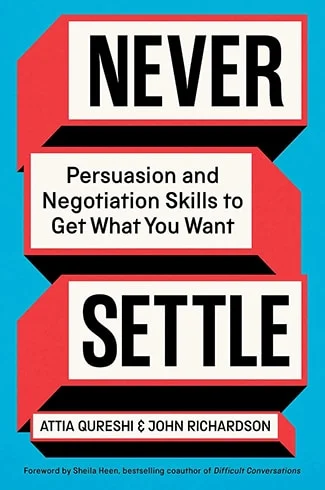
By the early 2010s, the field evolved again as practitioners like Chris Voss introduced the importance of emotional intelligence and psychological "anchoring" in high-pressure situations. Voss’s work suggested that humans are not rational actors, but rather "predictably irrational" beings driven by fear, ego, and the need for security. Richardson’s current framework, as presented in Never Settle, acts as a bridge between these two schools of thought. It acknowledges the logical necessity of finding mutual gains while respecting the biological reality of the "amygdala hijack," a state where stress overrides a negotiator’s ability to think critically.

The Psychological Mechanics of Reciprocity and Influence
At the core of Richardson’s methodology is the principle of reciprocity. Social psychologists have long noted that humans possess an innate drive to return favors. In a negotiation context, this does not necessarily mean giving up ground; rather, it involves the strategic sharing of information. According to Richardson, a master negotiator is often the first to offer a small, low-risk concession or a piece of non-sensitive information. This gesture signals trust, which frequently prompts the opposing party to mirror the behavior, thereby opening a path to more significant disclosures.
Supporting data from the Program on Negotiation (PON) at Harvard suggests that negotiators who focus on building rapport and establishing a baseline of trust are 42% more likely to reach a "win-win" agreement than those who adopt a purely adversarial stance. Richardson argues that the "secret skill" of the master negotiator is the ability to uncover what a counterpart actually wants, which is rarely what they initially ask for. For instance, a salary dispute might not be about the dollar amount but about a desire for status, flexibility, or job security.
The Data of the Deal: Salary and Real Estate Trends
Negotiation remains one of the most significant factors in long-term wealth accumulation. Recent economic data indicates a stark disparity between those who negotiate their starting salaries and those who do not. A study conducted by the Journal of Organizational Behavior found that employees who negotiated their initial salary increased their starting pay by an average of $5,000. When compounded over a 40-year career at a 5% annual growth rate, this single negotiation accounts for an additional $600,000 to $1,000,000 in lifetime earnings.
Despite these figures, surveys indicate that 58% of workers accept their first job offer without attempting to negotiate. Richardson notes that the discomfort associated with "hard numbers" is the primary barrier to entry. In the real estate sector, the stakes are equally high. Data from the National Association of Realtors (NAR) in 2025 showed that sellers who utilized professional negotiation tactics or represented themselves with a firm "anchoring" strategy sold their homes for 3.5% more on average than those who accepted the first competitive bid.
Chronology of a Masterful Negotiation
Richardson outlines a specific timeline for approaching any significant negotiation, whether it is a corporate contract or a domestic arrangement:
- The Preparation Phase: This involves identifying one’s BATNA (Best Alternative to a Negotiated Agreement). Understanding the point at which one should walk away provides the psychological leverage necessary to remain calm.
- The Discovery Phase: This is characterized by "active listening" and the use of open-ended questions. Instead of making demands, the negotiator asks, "How am I supposed to do that?" or "What is the biggest challenge you are facing?"
- The Proposal Phase: Once the underlying interests are identified, the negotiator presents a "multiple equivalent simultaneous offer" (MESO). This allows the other party to choose between several options, providing them with a sense of autonomy while ensuring the negotiator’s needs are met in any scenario.
- The Closing Phase: This involves the "implementation talk," ensuring that both parties are clear on the "who, what, and when" of the agreement to prevent future friction.
Managing the "Amygdala Hijack"
A significant portion of Richardson’s research focuses on the biological response to conflict. When an individual perceives a threat—such as an aggressive counter-offer or a dismissive tone—the brain’s amygdala triggers a fight-or-flight response. This results in decreased cognitive function in the prefrontal cortex, the area responsible for complex decision-making.

Master negotiators utilize "labeling" to counteract this physiological response. By calmly stating, "It seems like you feel this offer is unfair," the negotiator forces the other party’s brain to switch from an emotional state to an analytical one. This technique, popularized by Chris Voss and refined by Richardson, validates the counterpart’s emotions without necessarily agreeing with their perspective, effectively de-escalating the tension.
Broader Implications and Societal Impact
The mastery of negotiation has implications far beyond individual financial gain. In a corporate environment, a culture of effective negotiation leads to higher employee retention and reduced litigation. When managers and subordinates can negotiate chores, roles, and expectations transparently, organizational "drag"—the friction caused by unaddressed grievances—is significantly reduced.
On a societal level, the ability to navigate conflict through dialogue rather than coercion is a cornerstone of democratic stability. Analysts suggest that as global markets become more interconnected and volatile, the "soft skill" of negotiation will become a "hard requirement" for leadership. The World Economic Forum’s Future of Jobs Report consistently ranks negotiation, emotional intelligence, and complex problem-solving among the top ten skills required for the modern workforce.

Official Responses and Expert Analysis
Academic peers of Richardson have praised the integration of hostage negotiation tactics into the business curriculum. "The shift from logic-based models to psychology-based models reflects a more accurate understanding of human nature," says Dr. Elena Aris, a behavioral economist. "Richardson’s work at MIT emphasizes that you cannot separate the person from the problem; the person is the problem, and the solution."
However, some critics argue that an over-reliance on "tactical empathy" can be perceived as manipulative if not grounded in genuine ethical concern. In response, Richardson maintains that the goal of a master negotiator is not to "trick" the other side, but to solve a problem that neither party could solve alone. The objective of Never Settle is to move away from the idea of "splitting the difference," which Richardson characterizes as a lazy solution that leaves both parties dissatisfied. Instead, the focus is on "expanding the pie" before dividing it.
Conclusion: The Path Forward
As the landscape of work and social interaction continues to shift toward remote and digital mediums, the medium of negotiation is also changing. Video conferencing and asynchronous communication (email/Slack) introduce new challenges, such as the loss of non-verbal cues. Richardson suggests that in these environments, the "secret skills" of clarity, patience, and the ability to ask calibrated questions become even more vital.

Ultimately, the insights shared by John Richardson underscore that negotiation is not an act of aggression, but an act of discovery. By mastering the ability to influence others through empathy, data-driven anchoring, and emotional regulation, individuals can navigate the complexities of the 21st century with greater agency and success. The skills of a master negotiator are, in essence, the skills of effective living: understanding others, managing oneself, and finding a path toward a mutually beneficial future.

0 Comments