
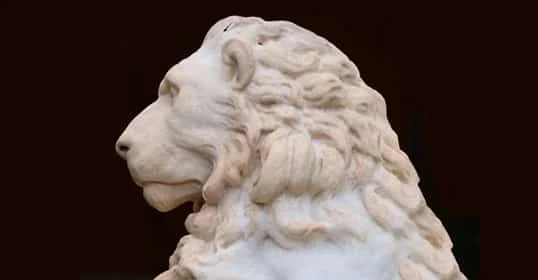
The release of the latest installment of the Art of Manliness podcast, hosted by Brett McKay, marks a significant cultural re-examination of ancient Greek philosophy and its application to modern psychological and professional challenges. Featuring Mike LeBlanc—a decorated Marine veteran, Harvard Business School graduate, and technology entrepreneur—the episode explores the concept of "thumos," a Greek term representing the spirited or "middle" part of the human soul. This discussion arrives at a time when contemporary discourse frequently grapples with the "crisis of masculinity" and the rising rates of passivity and cynicism in the modern workforce. By positioning "noble anger" as a constructive force, LeBlanc and McKay challenge the prevailing therapeutic consensus that often views anger solely as a negative emotion to be suppressed or managed.
The Tripartite Soul: A Philosophical Framework for Modern Development
To understand the arguments presented by LeBlanc, one must first revisit the Platonic origins of the concept. In The Republic, Plato proposed that the human soul is divided into three distinct parts: the logistikon (reason), the epithumetikon (appetite), and the thumoeides (thumos). While reason provides direction and appetite provides the basic drives for survival and pleasure, thumos serves as the seat of spiritedness, indignation, and the desire for recognition.
In the podcast, McKay and LeBlanc argue that modern society has effectively "hollowed out" the middle part of the soul. While reason is emphasized through academic achievement and appetite is catered to through consumerism and digital entertainment, thumos—the drive that allows an individual to stand up for their convictions or push through physical exhaustion—is often neglected. This neglect, according to LeBlanc, results in a state of "men without chests," a term famously popularized by C.S. Lewis to describe individuals who possess intellect and desire but lack the spirited character to bridge the two.
Profile of a Modern Stoic: The Background of Mike LeBlanc
The credibility of the podcast’s central thesis relies heavily on the diverse background of its guest. Mike LeBlanc’s career trajectory offers a rare synthesis of physical discipline, academic rigor, and corporate leadership. Having served as a Marine, LeBlanc experienced the practical application of thumos in high-stakes, life-or-death environments where "spiritedness" is a requirement for survival. Following his military service, his transition to Harvard Business School and subsequently to the tech sector as a founder provided a different laboratory for these virtues.
LeBlanc’s recent publication, What If Anger Is the Answer?, serves as the primary catalyst for the discussion. The book posits that anger, when properly channeled (a process the Greeks called proaeresis), is not a vice but a necessary fuel for personal transformation. LeBlanc argues that the "gap" between an individual’s current reality and their potential can only be closed through the "angry energy" of thumos, which refuses to accept mediocrity.
Chronology of the Concept: From Homeric Warriors to Corporate Leadership
The evolution of thumos provides a timeline for how Western civilization has viewed human drive and ambition:
- The Homeric Era (8th Century BC): Thumos was seen as the "breath of life" and the source of a warrior’s rage (menis). It was raw, volatile, and essential for the battlefield.
- The Platonic/Classical Era (4th Century BC): Philosophers sought to domesticate thumos. It became the "auxiliary" to reason, tasked with policing the appetites.
- The Stoic Pivot (3rd Century BC – 2nd Century AD): Stoics like Marcus Aurelius viewed raw anger as a temporary madness but maintained that the "inner citadel" required a firm, spirited resolve to withstand external pressures.
- The Enlightenment and Industrial Revolution: Thumos was increasingly redirected into economic ambition and "spirited" competition in the marketplace.
- The Modern Era (20th–21st Century): The rise of clinical psychology began to pathologize spiritedness, often conflating it with aggression or lack of emotional regulation.
LeBlanc argues that the current era has overcorrected, leading to a "passivity epidemic" where individuals overthink their problems (excessive reason) or succumb to distractions (excessive appetite) without the thumetic drive to take action.
Supporting Data: The Psychological and Biological Underpinnings
While the podcast focuses on philosophical virtue, modern psychological data supports the necessity of "spiritedness" in human flourishing. Research into "Behavioral Activation," a core component of treating clinical depression, mirrors the Greek concept of thumos. Behavioral activation posits that action must often precede motivation; by engaging in difficult or "spirited" tasks, individuals can break the cycle of passivity.
Furthermore, biological data regarding the "fight or flight" response suggests that the energy associated with anger (increased cortisol and adrenaline) is a physiological resource. A 2023 study published in the Journal of Personality and Social Psychology found that anger can be a more effective motivator for challenging tasks than neutral emotional states or even positive ones. The study indicated that anger increased persistence and improved performance in participants facing difficult obstacles—a modern empirical validation of the Greek belief that thumos is the "engine" of the soul.
The Role of Physicality in Cultivating Virtue
A central theme of the discussion between McKay and LeBlanc is the role of physical training in developing thumos. In ancient Greece, the gymnasion was not merely a place for physical fitness but a site for moral education. LeBlanc asserts that the modern gym serves a similar purpose. By voluntarily subjecting oneself to the "controlled struggle" of weightlifting or endurance training, an individual learns to harness their spiritedness.
"Thumos is a muscle," LeBlanc suggests during the episode. He argues that physical training provides an immediate feedback loop where the individual must use their "noble anger" to overcome the body’s desire to quit. This discipline then translates to non-physical arenas, such as the persistence required to launch a startup or the moral courage needed to lead a team through a corporate crisis.
Implications for Leadership and Social Stability
The podcast concludes with an analysis of how the reclamation of thumos impacts broader social structures. In the context of leadership, LeBlanc distinguishes between the "bully" (who has thumos but no reason) and the "effective leader" (who uses thumos to protect their team and uphold standards).
Official responses to this "reclamation of spirit" vary across the professional landscape. Human Resources departments in the tech and finance sectors have increasingly focused on "Emotional Intelligence" (EQ). However, LeBlanc suggests that a missing component of modern EQ is the ability to use "just indignation" to address injustice or inefficiency.
From a sociological perspective, the "lost virtue of thumos" explains several contemporary phenomena:
- The Rise of Cynicism: Without the drive to change their circumstances, individuals often retreat into ironic detachment.
- The Decline of Civic Participation: Thumos is the drive that moves an individual to care about their community’s honor and status.
- Educational Disparities: Recent data suggests that young men, in particular, are struggling in environments that prioritize sedentary, purely intellectual labor over spirited, competitive engagement.
Analysis of Broader Impacts
The resurgence of interest in concepts like thumos suggests a pivot away from the "safetyism" that has dominated the last two decades of self-help and corporate culture. By reframing anger as a potential "answer" rather than a problem, LeBlanc and McKay are advocating for a more robust, "anti-fragile" model of the human psyche.
The implications for personal development are profound. If thumos is indeed the bridge between knowing what to do (reason) and actually doing it, then the "cure" for many modern malaises—such as procrastination, "doom-scrolling," and career stagnation—may not be more information or better relaxation techniques, but rather the intentional cultivation of a more spirited, indignant response to one’s own limitations.
As the Art of Manliness continues to bridge the gap between ancient wisdom and modern practice, Episode 1130 stands as a provocative call to action. It challenges the listener to stop viewing their inner fire as a flaw to be extinguished and to start seeing it as the essential fuel for a life of virtue and impact. In an age characterized by digital passivity, the "lost virtue" of thumos may be the very thing required to restore a sense of agency to the modern individual.

0 Comments