
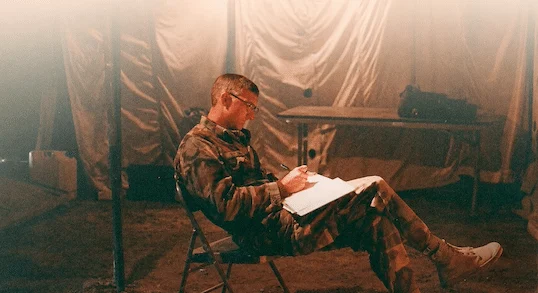
The transition from peace to high-intensity conflict often necessitates a profound reevaluation of personal legacy and the transfer of values across generations. For retired Lieutenant General Mark Hertling, this realization crystallized in 1990 during the lead-up to Operation Desert Storm. Then a U.S. Army major and cavalry officer, Hertling was confronted with intelligence briefings suggesting that his unit, positioned at the vanguard of the coalition force, could face casualty rates as high as 50 percent. This stark projection served as the catalyst for a personal writing project that would eventually span decades of military service and culminate in the publication of his memoir and leadership guide, If I Don’t Return.
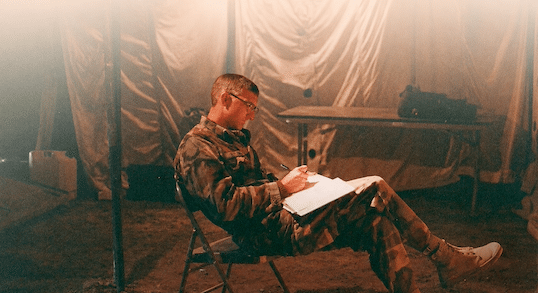
The journal was initially conceived not as a public document, but as a private repository of wisdom intended for his two young sons. Recognizing the tangible possibility that he might not return from the Kuwaiti theater of operations, Hertling sought to codify his perspectives on character, marriage, friendship, and the moral complexities of warfare. This document, preserved through his subsequent rise to the rank of three-star general, provides a rare glimpse into the internal psychological state of a military commander balancing professional duty with the existential concerns of fatherhood.
Historical Context: The Stakes of Operation Desert Storm
To understand the gravity of Hertling’s decision to begin his journal, one must examine the strategic landscape of the early 1990s. Following Iraq’s invasion of Kuwait in August 1990, the United States led a massive international coalition in Operation Desert Shield, which transitioned into the combat phase of Operation Desert Storm in January 1991.
At the time, the Iraqi military was considered the fourth largest in the world, equipped with battle-hardened divisions from the decade-long Iran-Iraq War. U.S. military planners, utilizing the "AirLand Battle" doctrine, anticipated significant losses during the initial breach of Iraqi defenses. Armored cavalry units, such as the one Hertling served in, were tasked with reconnaissance and security missions that required them to operate ahead of the main body of the division. The high casualty estimates provided during intelligence briefings were based on the expected lethality of Soviet-made T-72 tanks and the extensive minefields and trench systems established by Iraqi forces.
While the actual ground war resulted in far fewer coalition casualties than initially feared—totaling approximately 147 battle-related deaths for the U.S.—the psychological burden on officers in the pre-invasion phase was immense. Hertling’s journal was born in this environment of high-stakes uncertainty, where the "fog of war" was an imminent reality rather than a theoretical concept.
Chronology of a Military Career
Mark Hertling’s career serves as a roadmap for the evolution of the U.S. Army from the Cold War era through the Global War on Terrorism. His service history provides the necessary framework for the lessons contained within his writings:
- Early Career and Desert Storm (1975–1991): Commissioned as an armor officer from West Point in 1975, Hertling served in various command and staff positions. His experience as a major during the liberation of Kuwait established his foundational views on tactical leadership and the reality of combat.
- The Inter-War Years and Professional Development (1992–2003): Hertling continued his ascent through the ranks, focusing on training and doctrine. This period allowed him to refine the observations recorded in his early journals, testing them against the challenges of leading larger formations.
- Operation Iraqi Freedom and the Surge (2003–2008): As a general officer, Hertling played a pivotal role in the Iraq War. He served as the assistant division commander for the 1st Armored Division in Baghdad (2003–2004) and later commanded the 1st Armored Division during the "Surge" of 2007–2008. During this time, he oversaw Task Force Iron in Northern Iraq, a region characterized by complex ethnic tensions and a resilient insurgency.
- U.S. Army Europe (2011–2012): Hertling concluded his 38-year career as the Commanding General of U.S. Army Europe (USAREUR). In this role, he was responsible for strengthening alliances with European partners and modernizing the American presence on the continent.
Core Themes: From Tactical Friction to Moral Weight
The reflections contained in If I Don’t Return transcend mere tactical advice, touching upon the philosophical requirements of a life lived in service. A central theme in Hertling’s writing is the concept of "friction," a term famously coined by military theorist Carl von Clausewitz to describe the myriad of unforeseen difficulties that distinguish real war from war on paper.

Hertling argues that leadership requires a proactive stance toward friction. Planning, while essential, is never sufficient; a leader must possess the mental agility to navigate the breakdown of plans without losing sight of the strategic objective. This principle is applied not only to the battlefield but also to the domestic sphere, where Hertling discusses the importance of maintaining a resilient marriage and deep-rooted friendships despite the strain of frequent deployments and high-pressure environments.
Another notable aspect of Hertling’s reflections is his critique of "casual profanity" and the importance of professional decorum. He posits that the language a leader chooses reflects their discipline and respect for the gravity of their position. In an environment where the "moral weight of war" can lead to the dehumanization of both the enemy and one’s own subordinates, maintaining a standard of character becomes a vital safeguard against ethical erosion.
Supporting Data: The Impact of Deployment on Military Families
The motivation behind Hertling’s journal—to ensure his sons knew his values—is underscored by statistical data regarding the impact of military service on family units. During the peak years of the conflicts in Iraq and Afghanistan, the Department of Defense noted significant stressors on military children:
- Deployment Frequency: Between 2001 and 2011, more than 2 million American children experienced the deployment of a parent.
- Psychological Impact: Research published in the Journal of the American Academy of Child & Adolescent Psychiatry indicated that children with a deployed parent scored significantly higher on behavioral and emotional problem scales compared to national norms.
- The "Communication Gap": The transition from the "analog" journaling of the Desert Storm era to the digital communication of the 21st century has changed how soldiers connect with home, yet the fundamental challenge remains: how to transmit a lifetime of parental guidance during brief, often interrupted, intervals of contact.
Hertling’s decision to use a handwritten journal highlights a traditionalist approach to legacy. The physical nature of the document serves as a tangible link between the father in the field and the family at home, a medium that carries more emotional resonance than ephemeral digital correspondence.

Official Responses and Peer Perspectives
While If I Don’t Return is a personal account, it reflects broader institutional values within the U.S. Army. Senior military leaders have frequently emphasized the importance of "Legacy Leadership"—the idea that a commander’s greatest contribution is the development of the next generation of leaders.
Retired officers who served alongside Hertling have noted that his approach to journaling was indicative of a broader trend among the "intellectual" wing of the officer corps. General David Petraeus, who oversaw the 2007 Surge, famously encouraged his commanders to be "students of the game," requiring them to reflect deeply on their experiences and share those insights through writing and discourse. Hertling’s book is seen as a contribution to this body of professional military literature, providing a bridge between the technical aspects of command and the humanistic requirements of the profession of arms.
Analysis of Implications for Contemporary Leadership
The publication of Hertling’s wartime journal arrives at a time when the concept of "manliness" and leadership is under significant public scrutiny. By framing his experiences through the lens of fatherhood and character building, Hertling offers a model of masculinity that is rooted in responsibility, emotional intelligence, and ethical consistency.
The implications of his work extend beyond the military. In the corporate and civic sectors, the "lessons from the front" provided by Hertling—such as making every day count and the moral weight of decision-making—resonate with a modern audience seeking authentic leadership. His focus on "building a man" suggests that leadership is not a set of skills to be acquired, but a state of being that must be cultivated through reflection and the intentional transmission of values.

Furthermore, the transition of these journals from a private insurance policy against death to a public instructional tool highlights the evolving nature of military memoirs. No longer just a record of battles won or lost, modern military writing increasingly focuses on the internal life of the soldier, acknowledging that the most difficult terrain a leader must navigate is often their own conscience and their responsibilities to those they love.
Conclusion: The Endurance of the Written Word
If I Don’t Return stands as a testament to the enduring power of the written word in an age of rapid technological change. General Mark Hertling’s journey from a major fearing for his life in the sands of Kuwait to a retired three-star general reflecting on a career of service illustrates the profound impact of intentionality. By choosing to write for his sons in the face of a 50 percent casualty projection, Hertling did more than provide a safety net for his family; he created a blueprint for leadership that emphasizes the integration of the professional and the personal. As the military continues to adapt to new global challenges, the core lessons of character, friction, and the moral weight of command remain as relevant today as they were in the winter of 1991.

0 Comments