
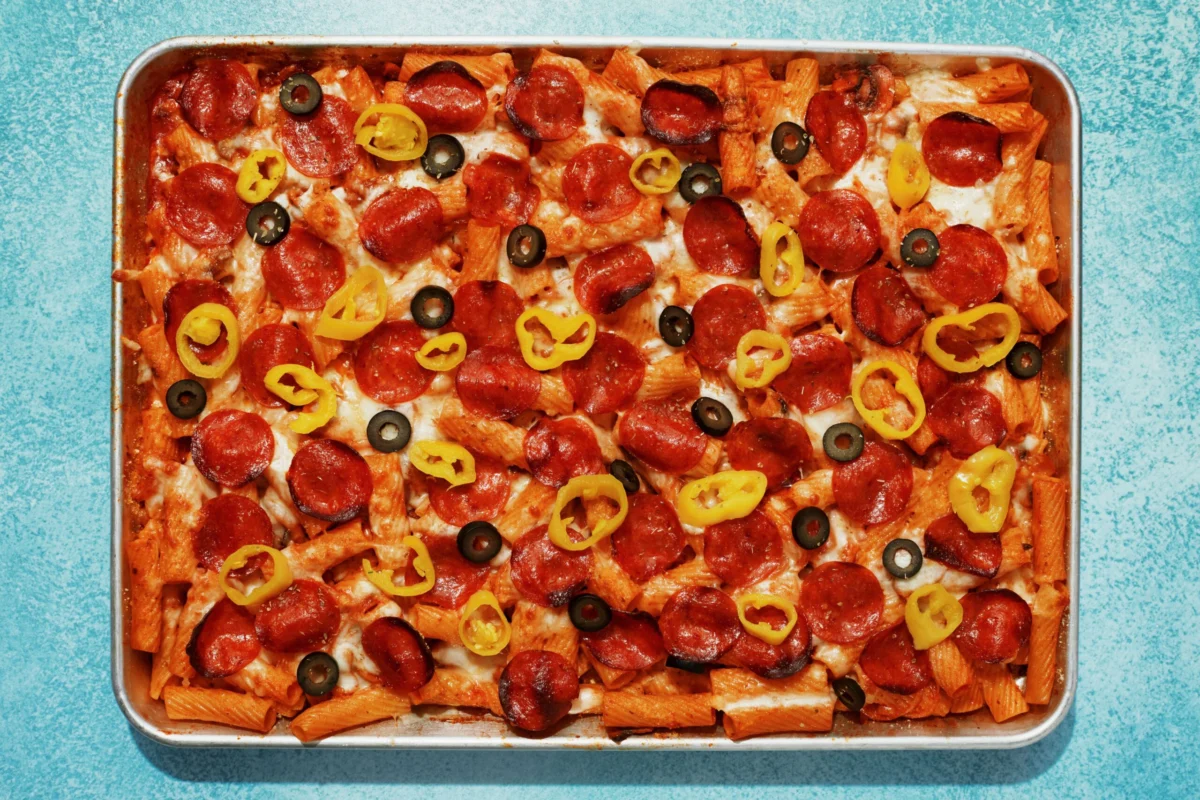
The humble baked pasta, a perennial favorite for feeding groups, is undergoing a culinary transformation, moving from the confines of deep casserole dishes to the expansive, even-heating surface of a sheet pan. This innovative approach, championed by culinary experts, promises to elevate the beloved comfort food, ensuring every bite is a perfect balance of texture and flavor, a stark contrast to the often uneven results of traditional methods. The shift addresses a common lament among home cooks: the disappointment of pasta that steams into mushiness beneath a crisp top layer.
The Limitations of Traditional Baked Pasta
For generations, baked pasta dishes have been synonymous with effortless entertaining. Ingredients are readily available at most supermarkets and are generally budget-friendly, making them an accessible choice for weeknight dinners and casual gatherings alike. However, a significant drawback has persisted: the vessel. Standard baking dishes, with their deep, narrow profiles, often lead to a stratified cooking experience. The edges and top layer are exposed to direct heat, resulting in desirable crispiness and browned cheese. Yet, the interior of the casserole, shielded from the heat, can become overly soft, even watery, as pasta absorbs moisture and steams. This culinary dichotomy means that only a select few servings—typically those at the corners—achieve optimal texture, while the majority remain compromised.
"The average baked pasta, when cooked in a deep dish, offers a limited number of truly exceptional servings," notes a culinary analyst specializing in home cooking trends. "The corners get that delightful crispness, but the bulk of the pasta can turn into a gooey, less appealing mass. This creates an uneven dining experience where guests might strategically seek out the ‘best’ pieces." This inherent flaw has long been a point of contention for home cooks striving for consistent quality.
The Sheet Pan Solution: A Paradigm Shift
The solution, as proposed by proponents of this new method, lies in the humble sheet pan. By spreading ingredients in a single, even layer across a half-sheet pan, a vastly increased surface area is exposed to the oven’s heat. This allows for more uniform cooking, ensuring that every piece of pasta is perfectly coated in sauce and cheese, yet retains its al dente texture. Furthermore, the edges of the pasta achieve a delightful crispness, a characteristic often sought but rarely achieved uniformly in traditional baked pasta dishes.
A prime example of this innovative technique is the "Sheet-Pan Pepperoni Pasta" recipe. In this iteration, rigatoni, pepperoni, and sauce are spread evenly across a sheet pan. The result is a dish where each piece of pasta is enveloped in molten cheese and rich sauce, emerging from the oven with perfectly cooked, slightly crisp edges. This method eliminates the problem of pasta becoming waterlogged and mushy, a common fate for those nestled deep within a casserole dish.
Revolutionizing Sauce Preparation
Beyond the cooking vessel, the sheet pan method also offers an opportunity to rethink sauce preparation. Instead of the conventional approach of simmering a tomato sauce on the stovetop before incorporating vegetables and pasta, this new paradigm embraces oven-roasting for a more intense flavor.
In the Sheet-Pan Pepperoni Pasta recipe, for instance, a highly concentrated tomato and vegetable mixture is prepared directly in the oven. Sliced mushrooms and onions are tossed with tomato paste, garlic, and oregano, then roasted. This process caramelizes the vegetables and the tomato paste, developing a deeply rich, complex flavor profile that forms the foundation of the sauce. This concentrated base is then combined with the pasta and starchy pasta water, and the dish is finished in the oven, allowing the flavors to meld beautifully.
"Roasting the aromatic vegetables and tomato paste in the oven intensifies their natural sugars and creates a depth of flavor that is difficult to replicate with stovetop simmering alone," explains a food scientist. "The Maillard reaction, which occurs at higher temperatures, is crucial here for developing those savory, caramelized notes."

Versatility Across a Spectrum of Baked Pasta Dishes
The sheet pan approach is not limited to a single recipe; its adaptability extends to a wide array of popular baked pasta dishes. Macaroni and cheese, a quintessential comfort food, has been a notable beneficiary of this method. The increased surface area allows for a more even distribution of the creamy cheese sauce and ensures that the macaroni retains its structural integrity, avoiding the dreaded "mushy mac."
Other cheesy and flavorful baked pasta recipes also translate exceptionally well to the sheet pan. Dishes featuring ingredients like spicy broccoli rabe, or a combination of cauliflower and provolone, benefit from the enhanced crisping and even cooking that the sheet pan provides.
Even long-standing favorites such as baked ziti and tuna noodle casserole can be reimagined on a sheet pan, offering a fresh take on familiar flavors. Furthermore, newer pasta sensations, like the popular creamy feta pasta, also lend themselves to this method, promising a delightful texture and flavor distribution.
"The beauty of the sheet pan method is its inherent flexibility," comments a culinary instructor. "Many recipes that were originally designed for baking dishes can be successfully adapted with minimal changes. The key is understanding that the increased surface area will likely reduce cooking times."
Adapting and Optimizing for Sheet Pan Success
Transitioning traditional baked pasta recipes to a sheet pan format generally requires few modifications. The primary adjustment involves monitoring the bake time. With more of the dish exposed to the oven’s heat, cooking times are often reduced. This means that dishes that might have taken 30-45 minutes in a deep dish could be ready in 20-30 minutes on a sheet pan, depending on the oven and the specific ingredients.
Lasagna, often considered the pinnacle of deep-dish baked pasta, is perhaps the one dish that truly benefits from its inherent depth. The layering of pasta, sauce, and cheese in a deep dish allows for a characteristic rise and richness. However, even lasagna is not entirely immune to the sheet pan revolution. Innovative recipes, such as a spinach and sausage lasagna loosely inspired by the famously crisp two-sheet lasagna from New York’s Rolo’s, have demonstrated the potential for sheet pan success. These adaptations often involve creating multiple layers across two sheet pans to mimic the height and complexity of traditional lasagna while still benefiting from the even cooking of the sheet pan method.
The Future of Effortless Entertaining
The continued exploration of sheet pan baked pasta recipes suggests a growing trend towards optimizing comfort food for ease of preparation and consistent results. Culinary professionals are actively experimenting with adapting a wide range of dishes to this format. For example, the transition of a pasta alla Norma-inspired spaghetti pie to a sheet pan is currently being explored. The concept involves doubling the recipe to achieve the desired height and then substituting the traditional cast-iron skillet with a sheet pan. The envisioned outcome is a dish that can be easily sliced into individual portions, perhaps topped with seasoned ricotta, offering a visually appealing and texturally diverse meal.
These developments underscore a broader shift in home cooking: the desire for dishes that are both impressive and manageable. The sheet pan method for baked pasta represents a significant leap forward, democratizing the creation of crowd-pleasing meals. It empowers home cooks to deliver consistently delicious results, transforming a beloved comfort food into an even more accessible and satisfying culinary experience. The ease of preparation and cleanup associated with sheet pans further enhances their appeal, making them an indispensable tool for anyone looking to host a successful dinner party without the stress. The invitation to "Come over for dinner" becomes even more enticing when the host knows that a perfectly cooked, uniformly delightful baked pasta awaits.

0 Comments