
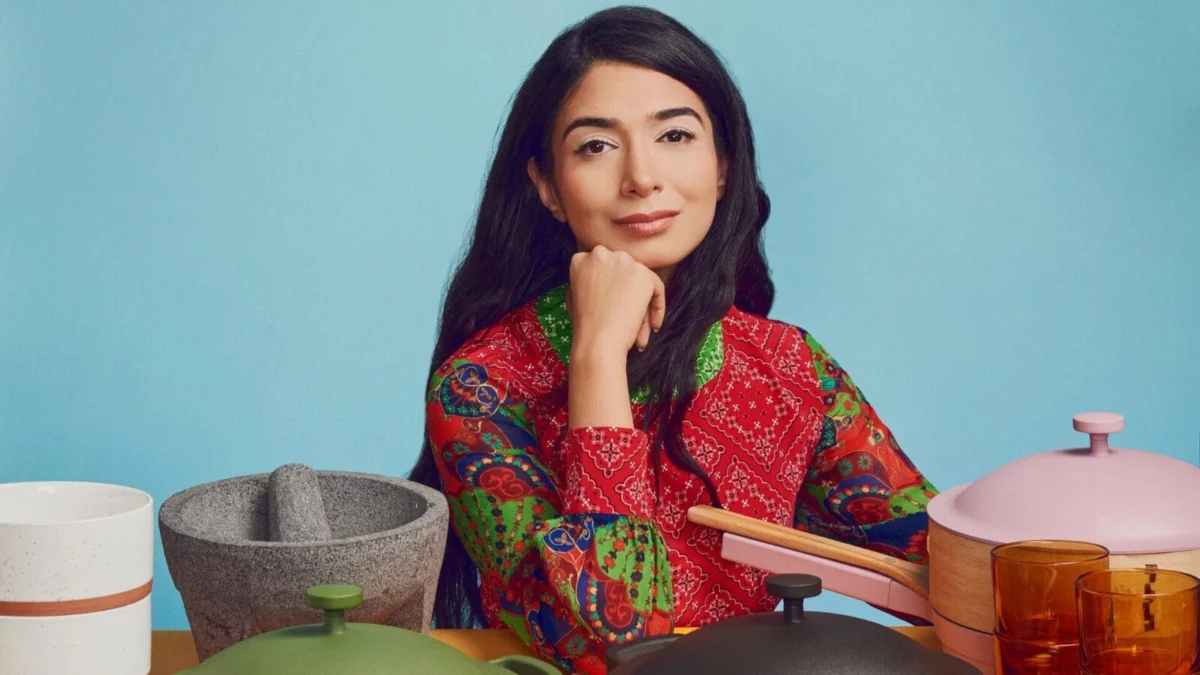
Three months into her journey of motherhood, Shiza Shahid, the influential co-founder and co-CEO of Our Place, reveals a profound transformation in her perception and approach to the very products her company meticulously designs. The brand, celebrated for its aesthetically pleasing and chemically conscious kitchenware like the ubiquitous Always Pan and the innovative Wonder Oven, was built on a foundational promise of beautiful, non-toxic tools for every family’s kitchen. Now, as a new mother, Shahid finds herself testing these standards within the intimate context of her own home, leading to a deeper, more personal understanding of her company’s mission and its impact.

From Global Advocacy to Home Kitchens: Shiza Shahid’s Journey

Before Our Place became a household name, particularly among millennials drawn to its pastel palettes and "drop culture" marketing reminiscent of sneaker releases, Shiza Shahid had already established herself as a formidable force in global advocacy. In 2013, she co-founded the Malala Fund alongside Nobel laureate Malala Yousafzai, serving as its founding CEO. Her work at the fund was dedicated to a critical global mission: ensuring safe access to high-quality education for girls in vulnerable regions, including Pakistan, Nigeria, Kenya, and Sierra Leone. This period demonstrated Shahid’s innate ability to identify systemic issues and build impactful solutions on a global scale, focusing on fundamental human rights and empowerment.

The transition from leading a global education advocacy organization to co-founding a direct-to-consumer kitchenware brand might appear disparate at first glance. However, Shahid’s underlying drive to create positive change and empower individuals through thoughtful, ethical design remained constant. Our Place, launched several years prior to her becoming a mother, entered a competitive market with a clear differentiator: stylish, multi-functional cookware explicitly free from common toxic chemicals like PFAS (per- and polyfluoroalkyl substances), lead, cadmium, and other heavy metals often found in conventional nonstick coatings. The brand quickly resonated with a generation of consumers increasingly conscious about health, sustainability, and home aesthetics. By 2026, Our Place had cemented its status, becoming a significant player in the modern kitchenware landscape.

Motherhood’s Intimate Redefinition of "Non-Toxic"

The arrival of her daughter marked a pivotal moment, shifting Shahid’s understanding of Our Place’s core value: non-toxic design. What was once a principled stand for broader consumer health has now become an intensely personal act of care for her own child. Shahid now uses Our Place’s Tiny Collection for her daughter’s meals, preparing small portions of vegetables, scrambled eggs, and chicken. The Splendor Blender is used for purées, and the steamer basket of the Always Pan, a ubiquitous item on countless wedding registries, is employed for steaming her baby’s vegetables. This direct, daily engagement with her products through the lens of motherhood has fundamentally altered her perspective.

"Honestly, so many," Shahid reflects on product decisions she now views differently. "Every product feels different once you’re using it for the person you love most." She highlights the Tiny Collection as particularly meaningful, noting it reminds her that "good design isn’t just about the big family dinner. It’s also about those quiet, everyday moments that become someone’s first memories of food." The previously held belief in healthier cookware for everyone has intensified into a deep, visceral commitment. "When you become a parent, ‘non-toxic’ stops being a product feature and becomes an act of care," she states, emphasizing the profound emotional weight now attached to every material and design choice. This sentiment reflects a growing trend among conscious consumers who prioritize transparency and safety, especially when it comes to products for children. The global market for non-toxic and organic baby products, for instance, has seen significant growth, projected to reach over $30 billion by the end of the decade, underscoring the widespread demand for such assurances.

Elevating Design for the Realities of Parenthood

Shahid reveals that motherhood has not only deepened her personal connection to Our Place’s mission but has also spurred a re-evaluation of the brand’s rigorous testing standards. While the company has always prided itself on stringent quality control, her experience as a parent has pushed her to consider usability in a much more holistic and empathetic way. The concept of "good enough" for a product no longer suffices; it must now excel under the real-world conditions of parenting.

"What’s changed is that I think much more deeply about the reality of parenting," Shahid explains. "Parents don’t have extra time or energy. Products need to work beautifully, consistently, and intuitively, even when you’re sleep-deprived and holding a baby in one arm. It’s not enough for something to pass a lab test. It has to make someone’s day genuinely easier." This insight speaks to a critical need for products that not only perform their primary function safely but also integrate seamlessly into the often chaotic and demanding rhythm of family life. This includes considerations for ease of cleaning, durability against frequent use and potential mishandling, and intuitive design that minimizes cognitive load for exhausted parents. For example, features like stackability, minimal parts, and dishwasher-safe components, while always valued, now hold even greater significance in her product development philosophy. This reflects a broader shift in consumer product design, where user experience, particularly for time-constrained demographics like parents, is becoming paramount.

Leadership Evolved: Speed, Purpose, and Personal Connection

Counter-intuitively, becoming a mother has made Shahid a faster decision-maker in her role as a leader of a rapidly expanding company. This acceleration stems from a heightened awareness of time’s finite nature. "Having a baby has made me realize how precious time really is," she notes. "I don’t have the luxury of overthinking decisions that don’t deserve it. I try to be thoughtful, make the best decision I can with the information I have, and move forward." This pragmatic approach, born from the intense demands of balancing a thriving business with new motherhood, suggests a refinement of her leadership style, emphasizing efficiency and clarity.

While some aspects of leadership have become easier due to a deeper alignment with Our Place’s mission, others have become inherently more challenging. The most obvious difficulty, she admits, is the increased competition for her attention. Juggling the responsibilities of a co-CEO with the round-the-clock demands of a newborn requires immense discipline and resilience. However, this struggle is mitigated by an amplified sense of purpose. "The easier part is that I feel even more connected to our mission," Shahid asserts. "Every day I’m living the moments we’ve always designed for, cooking meals, gathering around the table, caring for the people I love. It makes the work feel even more meaningful." This synergy between her personal life and professional mission creates an authentic feedback loop, allowing her to embody the very customer she aims to serve.

A New Lens on Consumer Trust and Product Development

Shahid now finds herself in the unique position of being the exact customer Our Place designs for: someone introducing new products into a home with a baby. This dual role of creator and user offers invaluable, immediate feedback. "It feels like a privilege and a responsibility," she says. "Every product I bring into our home, I ask whether I’d recommend it to another parent without hesitation. That perspective is invaluable." This direct immersion into the user experience elevates the product development process beyond market research, instilling a level of authenticity and empathy that resonates deeply with the target audience.

Her evolved perspective also offers crucial insights into how products earn trust, particularly from mothers. Shahid believes trust begins with clear intention. "Who designed this product? Why did they make it? Do they genuinely understand the life you’re living, or are they just marketing to it?" she questions. This focus on authentic understanding rather than mere marketing speaks to a broader consumer demand for brands that reflect shared values and genuinely address their needs.

Motherhood has also altered her personal consumer habits. She now buys "far more bibs, toys, and children’s books than I ever imagined." More significantly, she has become "much more intentional about what I avoid." Chemical sunscreens, unnecessary fragrances, and materials she cannot easily understand are scrutinized with a new level of caution. "Becoming a mother has made me a much more curious consumer," she explains, embodying the informed, health-conscious parent demographic that Our Place seeks to serve. This increased scrutiny reflects a societal trend where parents are increasingly researching product ingredients and manufacturing processes, driven by a desire to provide the safest environment for their children.

Reflections on the Motherhood Journey and Future Outlook

Shahid finds profound personal meaning in the Our Place products she uses daily, from roasting sweet potatoes in the Wonder Oven to steaming vegetables in the Always Pan and serving meals in their small bowls. These items, designed to foster connection around home cooking, now serve a deeply personal purpose: introducing her daughter to the world of food. This personal connection reinforces the brand’s foundational ethos, ensuring future product development remains rooted in genuine family needs.

Drawing on advice from other mothers, Shahid often returns to the wisdom, "Everything is a phase." This perspective helps her navigate the transient nature of both difficult nights and fleeting beautiful moments, encouraging her to savor the good times. Looking back at the beginning of her maternity leave, her advice to her past self would be to remember that "the hard parts really do get easier, and the tiny moments go by much faster than you think. Be present for them." This reflects a universal sentiment among parents, highlighting the importance of mindfulness amidst the relentless pace of early parenthood.

Shiza Shahid’s journey illustrates a powerful convergence of personal experience and professional innovation. Her role as a mother has not diverted her from her entrepreneurial path but rather enriched it, imbuing Our Place with a deeper sense of purpose, a more refined approach to user-centric design, and a heightened commitment to the well-being of families. As the market for home and family products continues to evolve, leaders like Shahid, who authentically integrate their lived experiences into their business strategies, are poised to drive meaningful innovation and build enduring trust with their communities. Her story stands as a testament to the transformative power of motherhood, not just in personal life but also in shaping the very fabric of a successful, values-driven enterprise.

0 Comments