
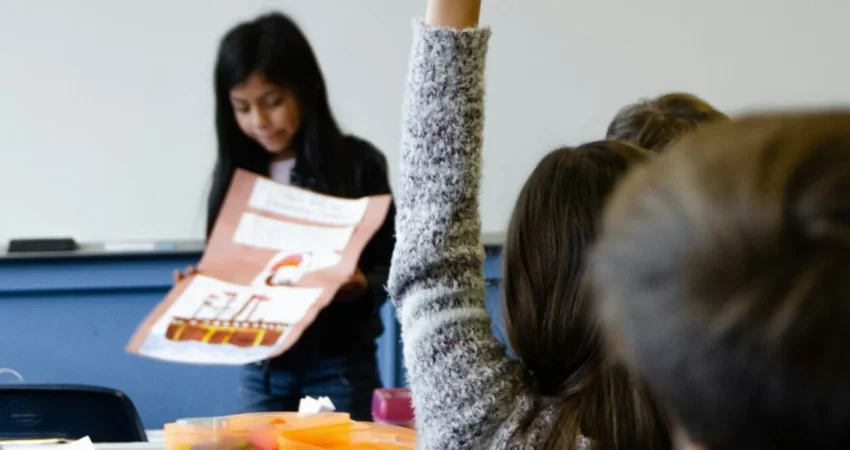
Every academic year, countless children step into classrooms with knowledge to share but find their voices silenced by hesitation. The hand remains unraised, the answer unspoken. For many parents, this behavior is often misconstrued as an inherent shyness, an unchangeable personality trait. However, Sheila Fortson, a distinguished teacher, child development expert, and Executive Director of The FAME Center—a nonprofit dedicated to nurturing children’s potential—offers a compelling counter-narrative. Fortson posits that classroom reticence is rarely a fixed temperament; rather, it often stems from a deficit in low-stakes opportunities for children to be observed and heard. In her view, the human body, particularly in childhood, needs repeated, safe exposures to being seen and heard to internalize the experience as non-threatening and even enjoyable.

Deconstructing Classroom Silence: Beyond Innate Shyness

Fortson’s perspective challenges a long-held societal belief that shyness is an immutable characteristic. She eloquently states, "Confidence isn’t a personality, it’s a rep count." This assertion underscores the idea that verbal confidence, much like any other skill, is cultivated through consistent practice and exposure. Children who frequently experience being seen and heard within the secure confines of their home environment are less likely to perceive public visibility as an alien or intimidating prospect. This insight is particularly salient in an educational landscape that increasingly values active participation, critical thinking, and collaborative learning. According to data from various educational psychology studies, students who actively participate in class discussions often demonstrate higher comprehension, retention of material, and overall academic achievement. Conversely, a lack of participation can lead to missed learning opportunities, reduced self-esteem, and even misinterpretations by educators regarding a student’s understanding or engagement.

Fortson, drawing from her own experience as a shy child, emphasizes that transformative change wasn’t the result of a single, profound conversation, but rather the cumulative effect of small, consistent repetitions over time. This foundational understanding forms the basis for the practical strategies she advocates for parents to implement at home, even before the school year commences. The back-to-school period, often marked by excitement and anxiety, presents an opportune moment to embed these confidence-building rituals into family routines, setting children up for success.

The Foundational Ritual: Family Presentations

At the heart of Fortson’s methodology lies a deceptively simple, yet profoundly effective, family ritual: the "family presentation." This practice involves one child taking a small "stage" — which could be as informal as standing in front of the living room couch — and sharing something for a brief period, typically two to five minutes. The content is flexible and wide-ranging, encompassing anything from a book they’ve read, a joke they’ve learned, a creation they’ve built, or simply a recounting of their day presented as a story. The remainder of the family assumes the role of an attentive audience, listening actively and concluding with applause.

- Setting the Stage for Success: The physical act of standing, even in a familiar home setting, subtly mirrors the posture required for classroom participation. This low-stakes simulation helps children acclimate to the feeling of being the focal point. The brevity of the presentation (two to five minutes) is crucial; it prevents overwhelming the child and ensures the experience remains positive and manageable. The goal is not perfection, but participation and completion.
- The Power of Varied Content: By allowing children to choose their topic, parents empower them and tap into their intrinsic interests. This autonomy significantly reduces anxiety associated with performance. Sharing a book demonstrates comprehension and vocal projection, while a joke hones timing and audience engagement. Recounting their day as a story encourages narrative structure and reflective thinking, all while practicing verbal delivery. The content serves as a vehicle, but the true objective is the "standing up, being seen, and finishing," as Fortson highlights. This repetition builds the neural pathways associated with confident communication.
- The Non-Negotiable Element: Audience and Affirmation: The family’s role as a supportive and appreciative audience is paramount. Active listening conveys respect and validates the child’s effort. The concluding applause, a "non-negotiable" according to Fortson, is a powerful form of immediate, unconditional positive reinforcement. It signifies completion, acknowledges bravery, and fosters a sense of accomplishment, regardless of the presentation’s perceived quality. This consistent positive feedback mechanism is vital for children to associate speaking up with positive outcomes, rather than fear of judgment.
Reading Aloud: A Stealthy Confidence Builder

Fortson champions reading aloud as one of the most underestimated tools for cultivating confidence. She aptly describes it as "confidence training in a literacy costume." When a child reads aloud, they engage their voice, modulate their volume, and practice expression, all in front of an audience, but without the added pressure of formulating their own thoughts or words spontaneously. This distinction is critical; it allows children to develop vocal presence and delivery skills in a structured, less intimidating context.

- Beyond Literacy: Vocal Command and Expression: While the literacy benefits of reading aloud are well-documented (vocabulary expansion, improved comprehension, phonological awareness), its impact on confidence often goes unnoticed. It helps children learn to project their voice, articulate clearly, and use inflection to convey meaning – all essential components of effective public speaking. This regular practice makes using their voice in a public setting feel less daunting.
- Integrating into Daily Life: Reading aloud can be seamlessly incorporated into nightly routines, perhaps with a parent or a sibling, for short, manageable durations. It can extend beyond storybooks to reading aloud recipes, game instructions, or even segments of age-appropriate news articles, diversifying the practice and making it less formal. Once a child becomes comfortable filling a room with their voice through borrowed words, the transition to using their own words in front of others becomes significantly less challenging. This gradual desensitization to being heard is a cornerstone of building robust communication confidence.
Adapting to Different Family Dynamics

Recognizing that not all families are structured the same way, Fortson emphasizes that the "audience" for these rituals doesn’t need to be large or complex.

- Solo Acts: When Siblings Aren’t an Option: For single-child households or when siblings are unavailable, a parent, a grandparent via video call, or even a lineup of stuffed animals can serve as an effective audience. The critical element is the deliberate "okay, now it’s your turn" moment, clearly delineating the performance space and expectation. The presence of even one supportive, engaged listener is sufficient to provide the "rep counts" necessary for building confidence. The psychological impact of having an attentive audience, regardless of size, is what matters most.
Navigating Resistance: The Art of Gentle Encouragement

It is inevitable that some children will resist these activities, especially those who are already prone to shyness or anxiety. Fortson advises parents to be mindful of their language and approach.

- Rephrasing "Performance" as "Sharing": The word "perform" can trigger anxiety, implying a need for flawless execution or external judgment. Fortson suggests dropping this term entirely. Instead, frame the activity as "sharing." This reframing shifts the focus from evaluation to connection and generosity. Most children’s refusal, she notes, stems from feeling "put on the spot" or the pressure of a grand event, rather than a fundamental dislike of attention.
- Creative Prompts to Lower Pressure: Rather than announcing a formal "presentation," ease in sideways with playful prompts. Asking them to "tell me about your day like you’re a news reporter" or "explain the rules of your game to Grandma" injects an element of imaginative play and familiarity. These frames provide a comfortable script or role, reducing the cognitive load and emotional stakes.
- The Importance of Autonomy and Safety: Crucially, children should be given as much control as possible over the activity. This includes choosing the topic, deciding how long it runs, and even having the option to decline on a particular day. For an anxious child, the feeling of optionality and safety is paramount before the activity can evolve into something genuinely enjoyable. Forcing participation can backfire, reinforcing negative associations with speaking up.
The Science of Constructive Feedback

The way parents respond to a child’s presentation is just as important as the act itself. This feedback loop shapes the child’s future willingness to engage.

- The Immediate Affirmation: Why Applause Comes First: Fortson unequivocally states that applause should be the first response, every single time. This immediate celebration reinforces the bravery of stepping up, regardless of how the child perceives their own performance. It communicates that the effort and participation are valued above all else. The goal is to build the confidence that comes from doing something courageous, not from delivering a flawless presentation.
- Timing and Nature of Feedback: With older or more confident children, a small amount of constructive feedback can be offered, but only after the initial applause and positive reinforcement. This feedback should be specific, encouraging, and focused on growth, not critique. For example, "I loved how you looked at us; want to try once more and slow down at the end?" This type of feedback highlights a positive aspect ("looked at us") and offers a gentle suggestion for improvement, framing it as an opportunity to "try once more."
- Avoiding the "Critique Session" Trap: The most common mistake parents make, according to Fortson, is to immediately launch into a critique. The well-intentioned urge to "help" by leading with "next time, try this" can inadvertently dismantle the sense of safety and accomplishment just built. This can lead children to associate speaking up with immediate judgment. Save any coaching for a later, separate conversation. In the immediate aftermath, the parent’s sole responsibility is to celebrate the child’s act of engagement. This creates a positive emotional anchor for future attempts.
Starting Small, Building Big: The "Character Retell" Method

For parents looking for an immediate and effective starting point, Fortson recommends the "character retell." This involves asking the child to invent a character – the sillier and more imaginative, the better – and then narrate their day as if it happened to that character. For instance, "Once upon a time there was a boy named Zippy, and Zippy went to school, and…"

- De-personalizing the Narrative: The brilliance of the "character retell" lies in the made-up distance it creates. By speaking through an alter ego, the child can tell their story more freely, without the self-consciousness or pressure of recounting every detail perfectly as themselves. This indirect approach lowers inhibitions and encourages a more relaxed, creative delivery.
- Fostering Imagination and Verbal Fluency: This exercise simultaneously taps into a child’s imagination, strengthening creative thinking alongside verbal fluency. It’s an engaging, playful way to practice storytelling, sequencing events, and using descriptive language. Crucially, the child should be encouraged to stand while doing this, reinforcing the physical aspect of presentation.
Long-Term Impact and Broader Implications

The cumulative effect of these simple, consistent family rituals is profound. Without props, elaborate preparation, or high pressure, just ten minutes a day of a child using their voice, imagination, and body in front of an adoring audience can ignite a slow but steady unfolding of confidence.
- Academic and Social Growth: Teachers often observe the transformation within a few months into the school year. It manifests not as a dramatic overnight change, but as subtle shifts: a hand raised more frequently, a volunteer eager to read aloud, a slight increase in vocal projection, and a reduction in hedging or shrinking away. These small victories translate into increased academic engagement, improved social interactions in group settings, and a greater sense of belonging within the classroom community. Research in educational psychology consistently links verbal participation to stronger academic outcomes and enhanced social-emotional development.
- Beyond the Classroom: Lifelong Benefits: The confidence cultivated through these home rituals extends far beyond school walls. It lays the groundwork for critical life skills: effective communication in personal relationships, articulate expression in professional settings, and the courage to advocate for oneself. These "rep counts" are not merely about speaking up in class; they are about fostering a resilient, self-assured individual capable of navigating the complexities of the world with their voice intact. By embracing these simple, consistent practices, parents equip their children with an invaluable asset: the unwavering confidence to be seen and heard, not just in school, but throughout their lives.

0 Comments