
Long space missions, a cornerstone of humanity’s burgeoning ambitions to explore the Moon and Mars, present a formidable challenge: the human psyche. Confined to cramped quarters for months, even years, small crews face relentless isolation, the psychological strain of constant proximity to the same individuals, and the immense pressure of operating in an unforgiving, alien environment. Understanding how these extreme conditions shape interpersonal relationships and team cohesion is paramount for the success of future endeavors. A groundbreaking international research initiative, conducted during a ten-month overwintering mission at Concordia Station in Antarctica, has shed crucial light on these complex social dynamics, revealing counterintuitive findings that could profoundly influence the planning and support for future astronaut crews.
Concordia Station: A Real-World Analogue for Extraterrestrial Life
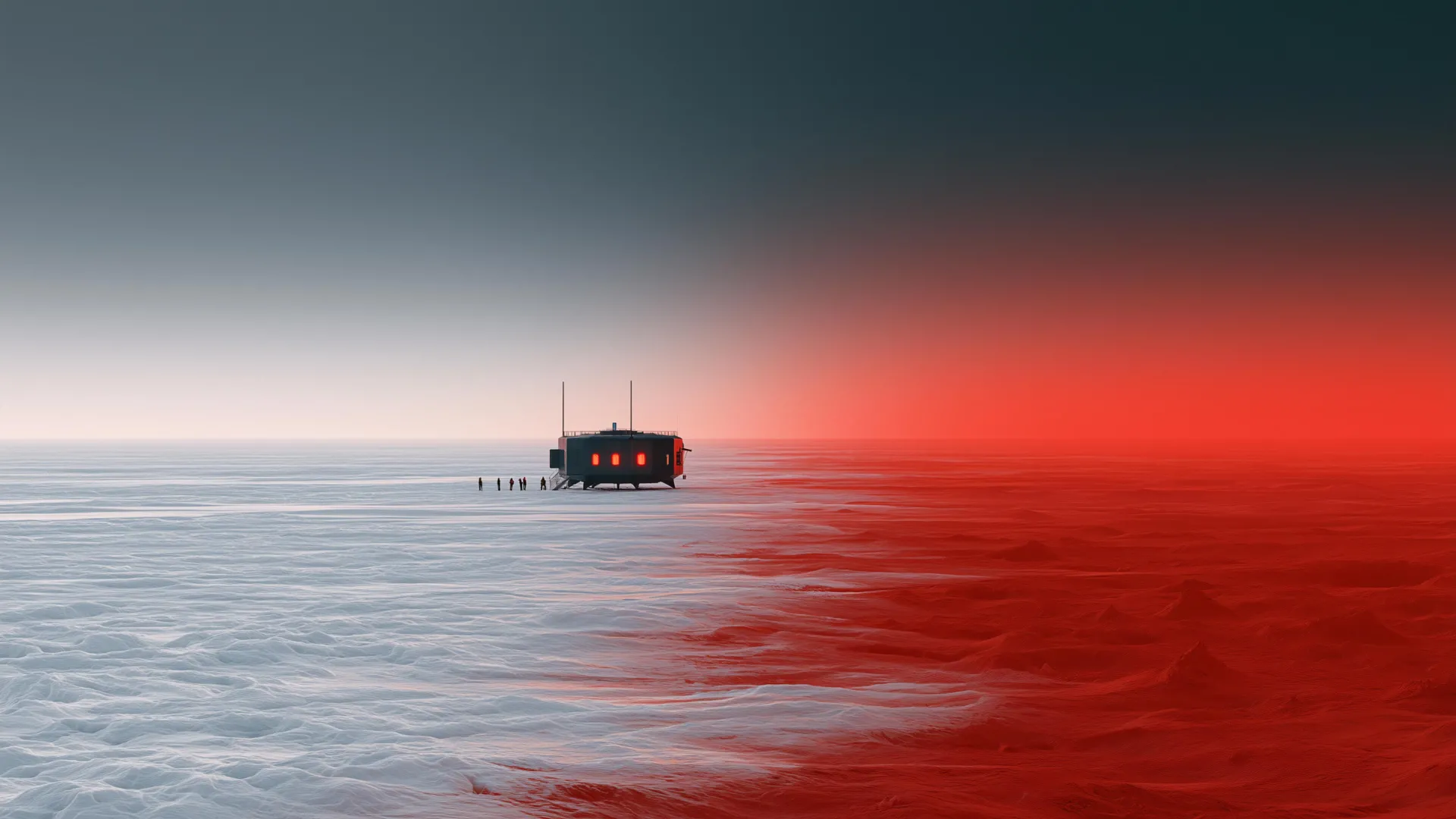
Concordia Station, a joint French-Italian research base perched atop Dome C on the Antarctic plateau, is a location of unparalleled remoteness. During the austral winter, it becomes one of the most isolated human outposts on Earth. Temperatures plummet to as low as minus 80 degrees Celsius (-112 degrees Fahrenheit), and the station is completely cut off from the outside world for approximately eight months of the year. This profound isolation, coupled with the extreme environmental conditions, makes Concordia an exceptional terrestrial analogue for the challenges astronauts will face on extended missions to celestial bodies like the Moon or Mars, where similar levels of isolation and environmental hostility are expected.
The research, spearheaded by Jan Schmutz, a professor in the Department of Psychology at the University of Zurich, and Andrea Cantisani, a psychiatrist and research associate at the University of Bern, sought to meticulously map the evolution of social interactions and psychological states within a small, isolated group over an extended period. The study’s timing was deliberate, aiming to capture the full arc of the overwintering period, from the initial adjustment to the deepening effects of prolonged confinement.
Tracking the Unseen Currents: Methodology and Data Collection
The study involved a crew of 12 individuals who voluntarily participated in the overwintering mission. To gain a comprehensive understanding of their social landscape, researchers employed a dual-pronged approach. Firstly, the crew members completed a series of questionnaires at four distinct intervals throughout the ten-month mission. These surveys were designed to gauge subjective experiences related to loneliness, levels of trust among crewmates, the prevalence and nature of conflicts, the quality of social relationships, overall team cohesion, and their perception of their collective performance.
Secondly, and perhaps most innovatively, the participants were equipped with wearable sensors. These discreet devices were programmed to automatically detect proximity to other crew members and record the duration of these physical encounters. This objective data provided an invaluable layer of insight, moving beyond self-reported experiences to quantify actual patterns of social interaction. By integrating the rich qualitative data from the questionnaires with the precise, quantitative measurements from the sensors, the research team was able to construct a dynamic and nuanced picture of how social and psychological states evolved in response to the extreme environment and the evolving patterns of interaction.
The Paradox of Proximity: More Contact, More Conflict?
One of the most striking and perhaps counterintuitive findings of the study was the observation that increased physical proximity to other crew members did not consistently translate into improved social well-being or enhanced team dynamics. In fact, the data revealed a surprising correlation: participants who reported more frequent contact with their colleagues were also more likely to report heightened feelings of loneliness, increased mistrust, and a perceived decline in their team’s performance.
This finding challenges a common assumption that greater social interaction is always beneficial, particularly in isolated environments where opportunities for external contact are severely limited. The research suggests that in highly confined and pressurized settings, constant closeness can, paradoxically, become a source of additional stress. While isolation itself is undoubtedly difficult, the lack of personal space and privacy, coupled with the inability to escape from interpersonal friction, can create significant strain.
"In small teams under extreme conditions, more contact doesn’t automatically equate to social support, but can actually increase tensions," explained Jan Schmutz in a statement following the study’s initial release. This observation underscores the delicate balance required in managing small, isolated crews. The psychological burden of being perpetually in close quarters with the same individuals, even those with whom one has a good rapport, can be considerable. When conflicts arise, the inability to retreat or find personal space can exacerbate these tensions, leading to a downward spiral of negative social interactions.
The researchers are careful to emphasize that these observed relationships are correlational and do not establish definitive cause and effect. It is possible, for instance, that individuals experiencing heightened loneliness might actively seek out more interaction, even if those encounters do not ultimately provide the solace or support they are seeking. This could lead to a cycle where the pursuit of connection inadvertently amplifies negative feelings.
The Emergence of Subgroups: Navigating Cultural Divides
Beyond the general observation about proximity, the sensor data also revealed a significant trend in the formation of social subgroups. As the ten-month mission progressed, the crew members naturally began to gravitate towards smaller, more intimate circles. A prominent pattern observed was the increasing tendency for individuals to spend time with colleagues who shared their linguistic or national background.
These emergent subgroups, while potentially offering a sense of familiarity, comfort, and shared understanding – crucial for emotional grounding during stressful periods – also carry potential implications for team unity. In culturally diverse crews, such as those anticipated for future space missions, the formation of distinct national or linguistic enclaves could inadvertently foster social divisions. This could lead to a weakening of overall team cohesion and create barriers to effective communication and collaboration among all members.
The dynamic observed at Concordia highlights a critical challenge for mission planners: how to foster a sense of shared identity and purpose that transcends national or cultural differences, while simultaneously acknowledging and accommodating the natural human inclination to seek comfort in familiar social connections.
Implications for the Final Frontier and Beyond
The findings from the Concordia Station study hold profound implications for the planning and execution of future long-duration space missions. Astronauts embarking on journeys to the Moon or Mars will face even more extreme versions of the conditions experienced by the Antarctic researchers. They will have virtually no privacy, limited opportunities for communication with Earth, and an unwavering reliance on their small crew for all aspects of their physical and psychological well-being.
The research provides a stark reminder that technical prowess and robust life support systems are only part of the equation for successful space exploration. The human element, particularly the intricate web of social relationships and psychological resilience, is equally, if not more, critical. Understanding and proactively addressing potential sources of interpersonal stress, such as the paradox of proximity and the formation of divisive subgroups, will be essential for maintaining crew morale, optimizing performance, and ensuring mission success.
The lessons learned at Concordia are not confined to the realm of space exploration. The study’s insights are directly applicable to other demanding and isolated environments on Earth, including submarines, offshore oil platforms, and remote scientific outposts. In all these settings, where crews are confined for extended periods and rely heavily on one another, the principles of managing social dynamics, fostering effective communication, and providing targeted psychological support will be paramount.
"The results show how important it is to identify social dynamics early on and provide teams with targeted support," emphasized Schmutz. This proactive approach suggests a need for pre-mission training that goes beyond technical skills to include robust modules on interpersonal communication, conflict resolution, and cross-cultural understanding. Post-mission debriefings and ongoing psychological support for returning crews will also be vital.
Technological Prowess in Extreme Environments
A secondary, yet significant, outcome of the study was the validation of wearable proximity sensors as reliable tools for monitoring social dynamics in extreme environments. The fact that these devices could operate effectively in the harsh conditions of Antarctica, without substantially disrupting the crew’s daily routines, opens up new avenues for research. These sensors offer a non-intrusive method for collecting objective data on social interaction patterns, allowing researchers to gain deeper insights into the complex interplay between environment, behavior, and psychological well-being.
Future research building upon this study will aim to delve deeper into the nuances of social interaction. Specifically, scientists will seek to identify which types of social engagements are genuinely stress-relieving and contribute to positive team dynamics, and conversely, which interactions, despite their frequency, may inadvertently exacerbate stress and tension within a confined group. This ongoing investigation promises to refine our understanding of human resilience and cooperation in the face of extreme challenges, paving the way for safer and more successful long-duration missions into the cosmos and beyond.

0 Comments