
The humble baked potato, often relegated to the side dish category, is a canvas for culinary creativity and a surprisingly nuanced subject for achieving peak deliciousness. While seemingly straightforward, the journey from a raw tuber to a perfectly fluffy, crisply-skinned masterpiece involves a confluence of precise techniques, ingredient choices, and even a touch of theatrical flair. This exploration delves into the science behind achieving an exceptional baked potato, examining the methods that elevate it beyond the ordinary and the innovative ways it can be transformed into a star dish.
Unlocking the Secrets to Superior Skin and Fluffy Interior
The fundamental difference between a merely good baked potato and a truly great one lies in the execution of its core components: the skin and the interior. Many home cooks opt for the convenience of wrapping potatoes in aluminum foil, a practice that effectively steams the potato, resulting in a tender flesh but invariably yielding a disappointingly soft, almost rubbery skin. This method, while efficient for achieving internal tenderness, sacrifices the desirable textural contrast of a crisp exterior.
For those seeking that coveted potato chip-like crunch, the key lies in direct heat exposure. Baking potatoes directly on the oven rack, rather than on a baking sheet, allows for optimal air circulation, facilitating an even and intense crisping of the skin. This technique, often employed by professional kitchens and seasoned home cooks alike, necessitates a higher oven temperature, typically in the range of 400-450°F (200-230°C). The surface of the potato should be meticulously scrubbed to remove any dirt or debris, and then generously rubbed with a high-smoke-point vegetable oil, such as canola or grapeseed oil. This oil acts as a conductor of heat, promoting browning and crisping, while a liberal application of coarse kosher salt not only enhances flavor but also draws out moisture from the skin, contributing to its brittle texture.
The surprising revelation is that this high-heat, direct-contact method does not preclude a wonderfully fluffy interior. The secret to a light and airy potato flesh, regardless of the cooking method, is achieving an internal temperature of at least 212°F (100°C). This is the boiling point of water, and when the potato’s internal temperature reaches this mark, the starch molecules within begin to gelatinize and swell, creating that characteristic fluffy texture. While it may seem unorthodox to some, utilizing an instant-read thermometer to monitor the potato’s core temperature is a fail-safe strategy for ensuring perfect doneness, preventing both undercooked interiors and the dreaded dry, chalky texture that can result from overcooking. This scientific approach guarantees a consistently enjoyable result, transforming a simple side into a comforting and texturally satisfying experience.
The Art of the Opening: From Karate Chops to Gentle Pokes
Beyond the cooking process itself, the method by which a baked potato is opened is a subject of surprisingly spirited debate among culinary enthusiasts and experts. The Idaho Potato Commission, a prominent advocate for potato consumption and quality, champions a gentle approach, advocating for the use of a fork to create a simple, single incision. This method, they argue, allows steam to escape gradually, preserving the interior’s moisture and preventing the potato from collapsing.
Conversely, some renowned culinary figures embrace a more dramatic and, dare we say, athletic opening technique. Celebrated food writer Nigel Slater, in a piece for The Guardian, famously describes a method that evokes the precision and power of martial arts. He advises striking the potato with a swift, sharp motion, akin to a karate chop, with just enough force to crack the skin. This approach, while certainly attention-grabbing, requires a delicate balance of aggression and control to avoid pulverizing the potato. The rationale behind such a forceful opening is to create a significant, immediate release of steam, which can contribute to a more open and airy interior texture.
In an effort to reconcile these differing philosophies and find the most effective and practical method, extensive testing has been conducted. The consensus, particularly within professional culinary circles and among discerning home cooks, leans towards a nuanced approach. While the karate chop might be entertaining, it carries a higher risk of error. The gentle fork poke, while safe, can sometimes result in a less dramatic steam release. The most consistently successful method identified is a single, decisive fork-pricked line down the length of the potato. This technique offers a balanced approach, allowing for a controlled release of steam while minimizing the risk of structural compromise. It effectively opens the potato, creating a ready-made vessel for fillings without the potential for the extreme outcomes associated with the more flamboyant methods. This highlights how even seemingly minor culinary decisions can have a tangible impact on the final outcome.
Beyond the Basics: Transforming the Baked Potato into a Culinary Centerpiece
Once the perfect baked potato has been achieved – with its crisp skin and fluffy interior – its potential as a culinary creation truly unfolds. The traditional accompaniments, such as butter, sour cream, and chives, are merely starting points. The baked potato’s versatility allows it to serve as a robust base for an astonishing array of fillings, ranging from classic tuna salad to hearty, cheesy baked beans.
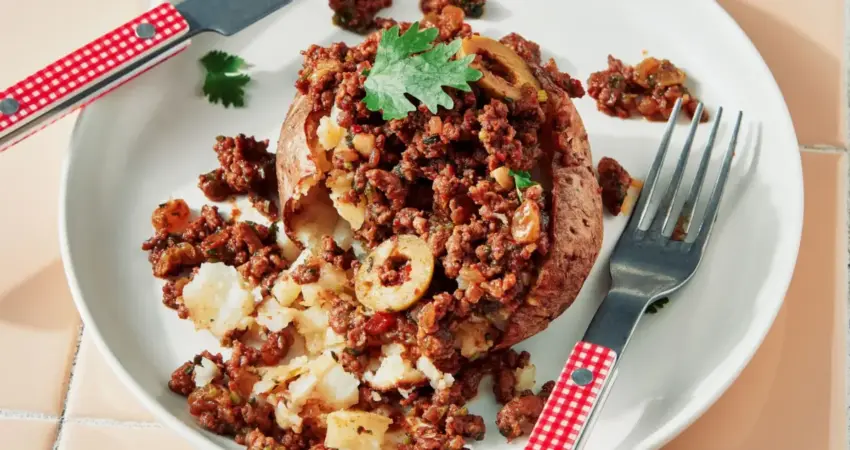
This article’s focus, however, centers on a particularly inspired iteration: a picadillo-inspired filling. This flavorful mixture draws inspiration from the classic Latin American hash, infusing the humble potato with a complex and satisfying profile. The core of this filling is lean ground beef, a powerhouse of protein, iron, and creatine, essential nutrients for energy and muscle function. For those seeking lighter alternatives, ground turkey or chicken offer equally delicious and nutritious options, adapting the dish to various dietary preferences and nutritional goals.
The picadillo-inspired filling is further elevated by the inclusion of golden raisins, which provide pockets of sweetness and a delightful chew, and stuffed green olives, contributing a briny, savory counterpoint that cuts through the richness of the meat. The entire mixture is then simmered in a vibrant, spicy tomato sauce. This sauce is not merely an accompaniment; it is an integral component that slowly permeates the potato’s fluffy interior, infusing it with flavor over time. The key to a truly exceptional spicy tomato sauce lies in the chili powder. Opting for a blend that includes a variety of spices such as dried chiles, cumin, oregano, and garlic, rather than solely ground chiles, provides a more nuanced and layered flavor profile. This comprehensive approach to seasoning ensures that every bite is a harmonious blend of savory, sweet, spicy, and briny notes, transforming the baked potato from a simple starch into a complete and deeply satisfying meal.
The Nutritional Significance of the Versatile Potato
The baked potato, often mistakenly categorized as an "empty calorie" food, is in fact a nutritional powerhouse. Contrary to popular belief, white potatoes, when prepared with minimal added fats and sodium, offer a significant contribution to a healthy diet. A medium-sized baked potato (approximately 6 ounces or 170 grams) provides a substantial amount of potassium, an essential mineral for maintaining healthy blood pressure and fluid balance. It is also a good source of Vitamin C, an antioxidant crucial for immune function and collagen production, and Vitamin B6, which plays a vital role in brain development and function.
Furthermore, the fiber content in the skin of a baked potato is particularly noteworthy. This dietary fiber aids in digestion, promotes satiety, and can contribute to better blood sugar control. When considering the picadillo-inspired filling, the nutritional profile is further enhanced. Lean ground beef is a rich source of heme iron, which is more readily absorbed by the body than non-heme iron found in plant-based sources. This is particularly important for individuals at risk of iron deficiency anemia. The inclusion of vegetables within the filling, such as onions and tomatoes, adds further vitamins, minerals, and antioxidants to the dish.
The versatility of the baked potato also allows for the incorporation of a wide range of healthy ingredients. For instance, substituting lean protein sources like chicken or turkey breast for ground beef can reduce saturated fat content. Incorporating a variety of colorful vegetables, such as bell peppers, corn, and black beans, can further boost the vitamin, mineral, and fiber content of the meal. Even the simple act of topping a baked potato with plain Greek yogurt instead of sour cream can significantly increase its protein content while reducing fat.
Broader Implications: The Evolution of Comfort Food and Culinary Innovation
The ongoing exploration and refinement of techniques for preparing seemingly simple dishes like the baked potato reflect a broader trend in contemporary cuisine: the elevation of comfort food and the embrace of culinary innovation within familiar frameworks. As consumers become more sophisticated and discerning, there is a growing appreciation for the nuances that differentiate a well-executed dish from a merely adequate one.
The rise of food media, including online platforms and television programs, has played a significant role in democratizing culinary knowledge. Recipes and techniques that were once exclusive to professional kitchens are now accessible to home cooks worldwide, fostering a culture of experimentation and improvement. The detailed examination of baked potato preparation, from oven temperature and cooking surface to the method of opening, exemplifies this increased focus on detail and precision.
Furthermore, the trend towards healthier eating does not necessitate a sacrifice of flavor or satisfaction. The picadillo-inspired baked potato demonstrates how nutritious ingredients can be combined to create a deeply flavorful and comforting meal. This approach aligns with the growing demand for recipes that are both wholesome and enjoyable, catering to individuals who seek to nourish their bodies without compromising on taste.
The humble baked potato, therefore, serves as a microcosm for broader shifts in the culinary landscape. It highlights the enduring appeal of familiar dishes, the power of precise technique, and the potential for innovation to transform everyday meals into extraordinary experiences. As culinary exploration continues, we can expect to see even more creative and sophisticated interpretations of classic comfort foods, pushing the boundaries of flavor, texture, and nutritional value. The journey of the baked potato, from a simple staple to a celebrated culinary canvas, underscores the dynamic and ever-evolving nature of food.

0 Comments