
The humble baked potato, often relegated to the realm of simple comfort food, is a dish that belies a surprising depth of culinary technique. Achieving the ideal balance between a crisp, flavorful skin and a fluffy, yielding interior is a pursuit that has captivated home cooks and professional chefs alike. While seemingly straightforward, the journey from a raw tuber to a sublime baked potato involves a series of critical decisions, from preparation to the final presentation, each contributing to its ultimate deliciousness. Recent discussions and culinary explorations highlight that understanding the science behind this seemingly simple dish can elevate it from merely good to truly exceptional.
The Foundation of Crispness: Mastering the Bake
The quest for the perfect baked potato begins with its skin. Many home cooks resort to wrapping potatoes in aluminum foil, a method that ensures a tender interior but often results in a regrettably soft, steamed skin. This approach, while convenient, sacrifices the textural contrast that can make a baked potato truly stand out. For a skin that achieves a delightful crispness, akin to a potato chip, a different methodology is employed.
Baking the potatoes directly on the oven rack, rather than on a baking sheet, allows for optimal air circulation around the entire surface of the potato. This direct exposure to heat is crucial for developing a dry, crisp exterior. Furthermore, the temperature of the oven plays a significant role. A high heat, typically ranging from 400°F to 450°F (200°C to 230°C), is recommended. This high temperature helps to rapidly evaporate moisture from the skin, leading to that desirable crunch.
To further enhance crispness and flavor, a technique often employed is to rub the scrubbed russet potatoes with a moderate amount of vegetable oil before seasoning. This oil helps to conduct heat more efficiently and promotes browning and crisping of the skin. The seasoning itself is not to be overlooked; a generous application of salt is paramount. This not only enhances the potato’s natural flavor but also draws out moisture, contributing to a crisper skin.
The Secret to a Fluffy Interior: Internal Temperature Matters
Counterintuitively, the pursuit of a crisp skin does not preclude a fluffy interior. The key to achieving this desirable texture lies in reaching a specific internal temperature. A baked potato is considered fully cooked and at its fluffiest when its internal temperature reaches at least 212°F (100°C), the boiling point of water. At this temperature, the starches within the potato have gelatinized, breaking down into a soft, airy consistency.
The notion of taking a potato’s temperature might seem unusual to some, but it is a precise and reliable method for ensuring optimal doneness. Using an instant-read thermometer inserted into the thickest part of the potato, away from any exposed skin, provides an objective measure of its readiness. This scientific approach removes the guesswork, guaranteeing a consistently fluffy result, far superior to simply judging by external appearance or squeezing the potato. This internal temperature threshold is a critical piece of data for any serious baker of this ubiquitous dish.
The Art of the Opening: A Culinary Debate
Beyond the cooking method, the way a baked potato is opened presents another area of culinary debate, highlighting the diverse approaches to enjoying this versatile food. The Idaho Potato Commission, a leading authority on potato cultivation and consumption, advocates for a specific technique: gently poking a plus sign (+) into the surface of the hot potato with a fork. This method is believed to release steam effectively, preventing the interior from becoming gummy and contributing to a lighter texture.
In contrast, renowned food writer Nigel Slater offers a more dramatic approach, described in his writings for The Guardian. Slater suggests striking the potato with the palm of the hand, using a swift, sharp motion akin to a karate chop, but with just enough force to crack the skin. This method, he contends, allows for a more natural opening and a less compressed interior. While the visual of this technique might be more theatrical, it underscores the idea that the act of opening the potato can influence its final texture.
Ultimately, the most effective method often comes down to personal preference and the desired outcome. However, based on empirical observation and common culinary wisdom, a single, well-placed fork-pricked line down the length of the potato has been found to be a highly effective and reliable way to achieve both an aesthetically pleasing opening and a fluffy interior. This method allows steam to escape without compromising the potato’s structural integrity.
Beyond the Basics: Creative Fillings and Flavor Profiles
Once the perfect baked potato has been achieved, the possibilities for toppings and fillings are virtually endless. The baked potato serves as a blank canvas, ready to be transformed into a complete meal with a diverse array of ingredients. From classic tuna salad and hearty baked beans to more adventurous and globally inspired creations, the baked potato can accommodate a vast spectrum of flavors.
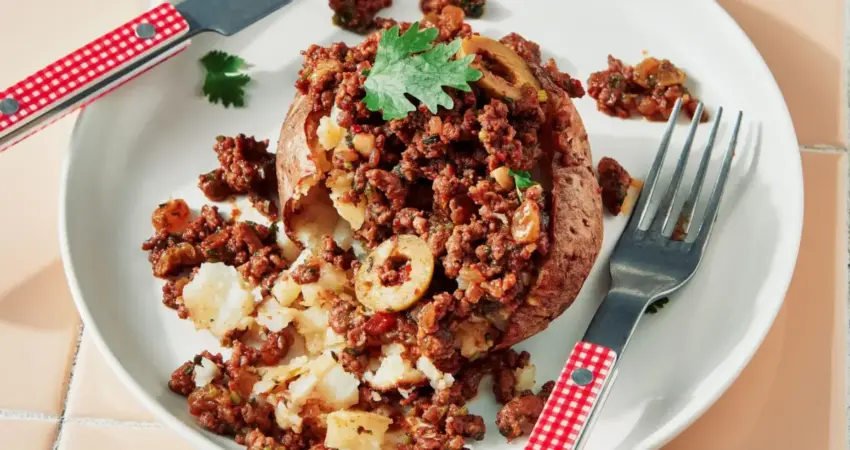
One particularly compelling preparation involves a picadillo-inspired filling. This savory mixture, typically featuring ground beef, is rich in protein, iron, and creatine, essential nutrients for energy and muscle function. For those seeking lighter options, ground turkey or chicken can be substituted, offering a similar nutritional profile with reduced fat content.
The picadillo filling is often enhanced with the addition of golden raisins, providing a touch of sweetness, and stuffed olives, lending a briny counterpoint. A spicy tomato sauce forms the base of this filling, slowly seeping into the fluffy potato and infusing it with flavor. The choice of chili powder is crucial for this application. A blend that includes various chiles, cumin, oregano, and garlic, rather than simply ground dried chiles, provides a more complex and nuanced spicy profile. This layered approach to flavor ensures that the baked potato becomes a cohesive and satisfying dish.
Nutritional Considerations and Broader Impact
The baked potato, far from being an empty calorie food, is a nutrient-dense staple with significant health benefits. Contrary to some misconceptions, white potatoes are an excellent source of essential nutrients. They are a good source of potassium, crucial for maintaining healthy blood pressure, and vitamin C, an important antioxidant. The skin, when eaten, provides dietary fiber, which aids digestion and promotes satiety.
The versatility of the baked potato also lends itself to healthy eating initiatives. As highlighted in the "Good for You" series, which focuses on accessible and nutritious recipes, the simplicity of preparing a baked potato makes it an ideal choice for everyday healthy cooking. The ability to customize fillings with lean proteins, vegetables, and whole grains allows for the creation of balanced and satisfying meals.
The economic impact of the potato industry is also substantial. Globally, potatoes are one of the most important food crops, providing sustenance to millions. In the United States, states like Idaho are synonymous with potato production, contributing significantly to the agricultural economy. Understanding and appreciating the nuances of preparing this staple food can therefore extend beyond the kitchen, fostering a greater appreciation for the agricultural sector and the importance of healthy, accessible food options.
The continued exploration of culinary techniques for preparing the baked potato demonstrates that even the most familiar dishes can offer avenues for innovation and improvement. By embracing both the scientific principles of cooking and the art of flavor combination, the humble baked potato can be elevated to a truly remarkable dining experience, proving that mastery can be found in the simplest of ingredients. The ongoing discussions and shared knowledge surrounding this dish underscore its enduring appeal and its potential to be a cornerstone of both healthy and delicious eating.

0 Comments