
The digital publication Art of Manliness (AoM), a cornerstone of the independent men’s lifestyle media landscape since 2008, has officially unveiled a comprehensive platform redesign to coincide with its 18th year of operation. Founded by Brett and Kate McKay, the platform has transitioned from a niche blog into a multi-faceted media ecosystem now operating under the corporate umbrella of McKay Inc. This latest iteration of the website represents a strategic synthesis of the brand’s historical aesthetics and its future-facing goals, aiming to provide a stabilized digital "oasis" amidst an increasingly fragmented and algorithm-driven internet.
The redesign comes at a pivotal moment for digital publishing. As social media platforms move toward short-form video and artificial intelligence begins to automate content generation, Art of Manliness has chosen to double down on the traditional website format. This move is characterized by the founders as a "philosophically contrarian" investment in an era where many legacy blogs have migrated entirely to newsletters or social platforms. The new site serves as a central hub for the three primary pillars of the McKay Inc portfolio: The Art of Manliness (the "Word"), The Strenuous Life (the "Deed"), and Dying Breed (the "Thought").
A Chronological Evolution of Digital Identity
The history of the Art of Manliness design reflects broader shifts in the digital zeitgeist and the evolution of the "heritage brand" movement. Since its inception, the site has undergone four major aesthetic transformations, each corresponding to a different phase of the founders’ vision for the brand’s mission.

In 2008, the site launched with a DIY aesthetic rooted in the early "blogosphere" era. Utilizing rudimentary HTML and Photoshop, Brett McKay designed a site that featured parchment-colored backgrounds and images of 19th-century bare-knuckle boxer John L. Sullivan. This "vintage" vibe was a direct response to a cultural perception that traditional masculine skills were no longer being passed down through generations. The initial design was intended to evoke a sense of historical continuity and the "lost art" of manliness.
By 2013, as the site’s revenue grew and its audience expanded into the millions, the branding was professionalized. This second era introduced wood-paneled backgrounds and a more refined "gentleman" icon. This design coincided with the height of the "artisanal" and "heritage" trend in menswear and lifestyle branding. The goal was to balance "rugged" and "refined" attributes, reflecting a modern interpretation of classical virtues.
The third major shift occurred in 2019. The founders noted that the "mustache-everything" heritage trend had begun to feel "cartoonish and stale." In response, they stripped the site of its ornamental features in favor of a minimalist, 1970s-inspired look. This era was defined by the tagline "Get Action," a phrase borrowed from a Theodore Roosevelt journal entry. The design shift mirrored a strategic move away from theoretical "navel-gazing" toward practical implementation and action-oriented content.
The 2026 Redesign: Synthesis and Maturity
The current 2026 redesign marks the brand’s entry into what the McKays describe as "adulthood." Developed in collaboration with the design studio Mythic Proportions and coded by developer Costel Tudose, the new interface seeks to harmonize the elements of all previous eras.

Key features of the new design include:
- The Return of Historical Elements: The parchment background and wood-paneled textures (optimized for desktop viewing) have been reintroduced to provide a sense of warmth and permanence.
- Animated Iconography: The iconic John L. Sullivan figure has been brought back but is now animated across different site categories to maintain the "Get Action" energy of the previous era.
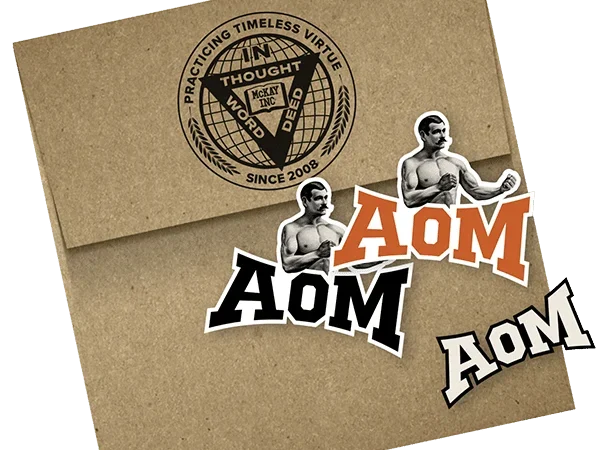
- Logo Modernization: The updated AoM logo draws inspiration from vintage boxing equipment, signaling a return to the brand’s roots in physical culture and discipline.
- Ecosystem Integration: The site now provides clear entry points to The Strenuous Life, an offline/online scouting program for men, and Dying Breed, a Substack-hosted newsletter focused on philosophical and personal essays.
The technical execution of the site was handled by Costel Tudose, who focused on ensuring that the "personality" of the site did not compromise its performance. The redesign aims to be "classic" enough to endure for longer than the typical five-year redesign cycle common in the tech industry.
The McKay Inc Ecosystem: Thought, Word, and Deed
The rebranding formalizes the transition of Art of Manliness into a component of a larger philosophical framework. The McKays have organized their various projects into a cohesive "ecosystem" designed to address the intellectual, educational, and practical needs of their audience.
- Dying Breed (The Thought): Launched in 2025, this Substack newsletter serves as the venue for long-form, personal, and more abstract philosophical inquiries. It represents the "internal" work of the brand’s mission.
- Art of Manliness (The Word): The flagship website remains the primary source of instructional content, history, and "how-to" guides. It serves as the educational bridge between thought and action.
- The Strenuous Life (The Deed): This program acts as the practical application of the brand’s philosophy. It provides a structured environment for men to earn badges and complete challenges, moving beyond digital consumption into physical and social mastery.
By tying these three prongs together under the McKay Inc umbrella, the redesign seeks to provide a comprehensive path for individuals looking to practice "timeless virtues" in the modern world.

Analysis of the Digital Landscape in 2026
The decision to invest heavily in a traditional website in 2026 is a notable departure from current media trends. Industry data suggests that "surfing the web" via a browser has declined as users spend more time within closed-loop apps like TikTok, Instagram, and YouTube. Furthermore, the rise of Large Language Models (LLMs) like ChatGPT has changed how consumers seek information, often bypassing websites entirely to receive direct, AI-generated answers.
However, the McKays argue that the website format offers several distinct advantages that are being lost in the age of AI and infinite feeds. They highlight the "finitude" of a website—the ability to read an article and be "done," rather than being pulled into an endless stream of content.
Furthermore, the founders emphasize the "serendipity" of the web. While AI requires a user to know exactly what they are looking for to generate a prompt, a well-designed website allows for discovery. Users may visit for a specific piece of advice but stumble upon a historical biography or a skill-based guide they didn’t know they needed. This "oasis" model positions the website as a destination similar to a physical bookstore or coffee shop—a place of quiet exploration rather than chaotic consumption.
Broader Implications and Community Engagement
The 18th-anniversary redesign is more than a visual update; it is a statement of intent regarding the future of independent media. By maintaining a contrarian stance against the "cacophony of the infinite feed," Art of Manliness is betting on a "high-trust, high-loyalty" audience model rather than a "high-volume, algorithmic" model.

Official statements from the founders emphasize that the site will continue to operate as long as there is "something to write about," prioritizing "word of mouth" over viral trends. This approach has fostered a community where many readers have followed the site from high school into fatherhood, creating a multi-generational demographic that is rare in the digital space.
To celebrate the launch and encourage community growth, the platform has initiated a promotional campaign offering free physical stickers featuring the new logo to newsletter subscribers. This move toward physical collateral—processed and shipped by the McKay family themselves—further reinforces the brand’s emphasis on tangible, "offline" connections.
Conclusion
The new Art of Manliness website represents a sophisticated attempt to bridge the gap between 19th-century virtues and 21st-century technology. By synthesizing eighteen years of design history and philosophical evolution, the McKays have created a platform that resists the transient nature of the modern internet. As the digital world becomes increasingly dominated by ephemeral content and automated responses, the persistence of a "classic" website dedicated to the "lost art" of manliness serves as a significant case study in brand longevity and the enduring value of human-curated, action-oriented media.

0 Comments