
The Art of Manliness (AoM), a cornerstone of the independent digital publishing landscape since 2008, has officially launched its 2026 redesign, marking a significant transition into what founders Brett and Kate McKay describe as the brand’s "adulthood." This latest iteration of the website represents more than a visual overhaul; it is a strategic consolidation of the various "prongs" of the McKay media ecosystem, which has expanded over nearly two decades to include The Strenuous Life and the Substack newsletter Dying Breed. By integrating these disparate elements under a unified design language, the organization seeks to provide a cohesive experience that balances its vintage aesthetic roots with a forward-looking digital strategy. The redesign, executed in collaboration with the design firm Mythic Proportions and developer Costel Tudose, arrives at a time when the broader digital media industry is grappling with the rise of artificial intelligence and the perceived decline of traditional "blogging" in favor of algorithmic social media feeds.
A Chronology of Digital Evolution: 2008–2026
The history of The Art of Manliness is a microcosm of the evolution of the independent web. When the site was launched in 2008, it emerged during a period of cultural introspection regarding the transmission of traditional life skills. The initial design was a product of necessity, built by Brett McKay using self-taught coding and design skills. This "crude" but effective aesthetic featured a parchment-colored background and the iconic image of 19th-century bare-knuckle boxer John L. Sullivan. The primary mission at the time was the "revival of the lost art of manliness," focusing on practical skills and character development that many felt were no longer being passed down through traditional familial structures.
By 2013, the site’s growth necessitated a professional upgrade. This era saw the introduction of wood-paneled backgrounds and a refined "gentleman" masthead, aligning with the "heritage brand" trend that permeated the mid-2010s. This period solidified AoM’s reputation as a leader in the "gentleman’s lifestyle" niche, capitalizing on a cultural interest in artisanal crafts and historical masculinity. However, as the "mustache-everything" aesthetic began to reach a saturation point in the late 2010s, the founders recognized a need for a more action-oriented philosophy.

In 2019, the site underwent a radical shift toward minimalism. Drawing inspiration from a journal entry by Theodore Roosevelt, the tagline "Get Action" became the central theme. The design adopted a 1970s-inspired look, moving away from "navel-gazing" and toward a more streamlined, functional approach to content delivery. This phase coincided with the launch of The Strenuous Life, a membership program designed to move readers from digital consumption to physical and practical implementation of the site’s teachings.
The 2026 redesign serves as a synthesis of these previous eras. It restores the wood-paneling and parchment backgrounds of the early years while retaining the "Get Action" energy through modern animation and a new logo inspired by vintage boxing equipment. This "mature adulthood" phase aims to create a "classic" design intended to endure longer than the typical five-year redesign cycle of the past.
Strategic Integration: The McKay Inc Ecosystem
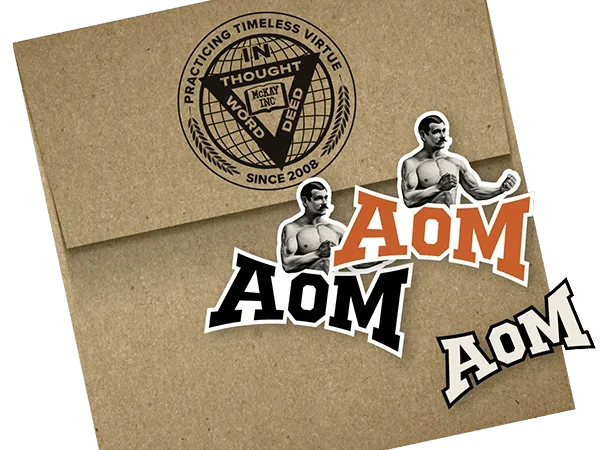
A primary driver for the 2026 redesign is the formalization of "McKay Inc," a tripartite organizational structure that categorizes the brand’s output into Thought, Word, and Deed.
- Dying Breed (Thought): This Substack newsletter, launched in 2025, serves as the repository for personal and philosophical inquiries that fall outside the traditional scope of the main website. It represents the intellectual foundation of the brand.
- The Art of Manliness (Word): The flagship website remains the central hub for articles, podcasts, and instructional content. It functions as the primary vehicle for communication and information dissemination.
- The Strenuous Life (Deed): This scouting-style program for men provides the structure for taking action. It is the practical application of the virtues and skills discussed in the articles and newsletters.
By providing clear entry points for each of these branches on the new homepage, the redesign aims to guide users through a "virtuous cycle" of learning, reflecting, and doing. This integrated approach reflects a broader trend in digital publishing toward "owned media" and multi-channel ecosystems, where creators seek to insulate their audience from the volatility of third-party platforms like Facebook or X (formerly Twitter).

Technical Execution and Design Philosophy
The 2026 redesign was spearheaded by Mythic Proportions, a studio tasked with distilling eighteen years of brand history into a modern interface. The design process involved a deep dive into the historical figures and philosophical ideas that have underpinned AoM since its inception. The result is a website that utilizes "serendipity and surprise" as design principles.
Key features of the new site include:
- Animated Iconography: The original Currier and Ives illustration of John L. Sullivan has been brought back and animated, appearing in various configurations across different site categories.
- New Logo: A revamped logo that references old-school boxing gear, intended to symbolize the "rugged and refined" balance the brand advocates.
- Desktop Optimization: While the site is responsive to mobile devices, the full aesthetic experience—including the return of the wood-paneling—is optimized for desktop and laptop users, encouraging a slower, more intentional browsing experience.
Developer Costel Tudose was credited with the technical execution, focusing on a balance between aesthetic complexity and site performance. This is particularly relevant as modern web standards increasingly prioritize speed and accessibility, even when employing "retro" design elements.
The Macro Environment: Why Invest in a Website in 2026?
The decision to heavily invest in a traditional website architecture in 2026 is a calculated, contrarian move against prevailing digital trends. According to recent data on digital consumption, the "infinite feed" model used by TikTok and Instagram has dominated the market, leading many analysts to declare the "death of the blog." Furthermore, the proliferation of Large Language Models (LLMs) like ChatGPT has changed how users seek information, often bypassing traditional websites entirely for quick, AI-generated answers.

However, the McKays argue that this shift has created a market vacuum for "finite" and "human-curated" content. The 2026 redesign is positioned as a "digital oasis" from the "cacophony of the infinite feed." From a journalistic and business perspective, this strategy aligns with the "Slow Media" movement, which emphasizes quality, depth, and intentionality over the rapid-fire consumption of viral content.
Industry analysis suggests that as AI-generated content becomes more pervasive, the value of a "trusted brand" with a distinct personality increases. By doubling down on a website that feels like a "favorite coffee shop or a used bookstore," AoM is betting on the long-term viability of direct-to-consumer relationships. The reliance on word-of-mouth and community support—rather than purely algorithmic virality—is a core component of this sustainability model.
Broader Impact and Implications
The relaunch of The Art of Manliness website has broader implications for the independent publishing industry. It demonstrates a viable path for "legacy" digital brands to evolve without losing their core identity. By acknowledging their past designs rather than erasing them, the McKays have created a sense of "digital continuity" that rewards long-term readers while remaining accessible to new audiences.
The use of a newsletter-driven incentive—the distribution of free physical stickers to celebrate the launch—highlights the continued importance of the email list as the most resilient asset in a creator’s portfolio. In an era where platform policies can change overnight, the direct connection to an audience via email and a dedicated website remains the gold standard for editorial independence.

As the site enters its nineteenth year, the focus remains on "preserving what is good across time." The 2026 redesign is not a call for a return to the past, but a commitment to reviving enduring principles through modern technology. Whether this contrarian approach to the "death of blogging" will influence other independent publishers remains to be seen, but the initial reception suggests a strong appetite for digital spaces that prioritize personality and finitude over algorithmic optimization.
Conclusion and Future Outlook
The Art of Manliness’s 2026 redesign marks a milestone for one of the internet’s most enduring independent publications. By synthesizing eighteen years of design history and integrating the various branches of "McKay Inc," the site has positioned itself as a mature, multi-faceted institution. The focus on human-centric design, serendipitous discovery, and a "thought-word-deed" philosophy provides a template for how digital brands can survive and thrive in an increasingly AI-dominated landscape. As long as there remains a desire for content that "makes the brain feel good instead of gross," the McKays intend to keep the lights on at their "little hangout off the world wide web’s beaten path."

0 Comments