
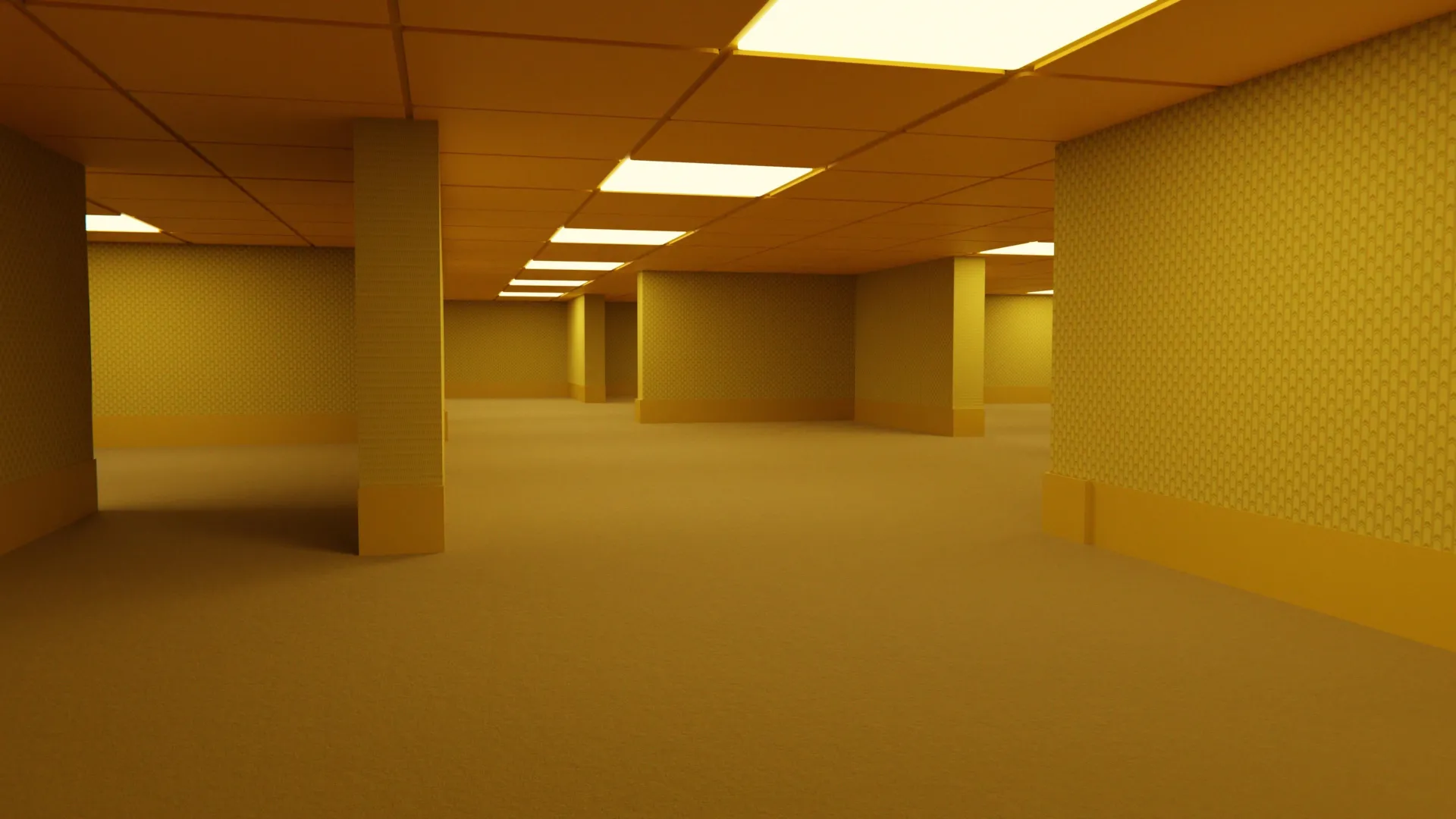
What if you could visit a place that does not exist on any map? A place whispered about online as though it sits just beyond the edges of our known world. A place known quite simply as, the Backrooms. This internet-born phenomenon, a sprawling, infinitely repeating labyrinth of eerily lit, empty rooms, has transcended its origins as a niche creepypasta to become a significant cultural touchstone, prompting a re-evaluation of how we engage with horror, liminality, and digitally constructed realities.
Born from a single, unsettling image posted on the anonymous online bulletin board 4chan in 2019, the concept of the Backrooms centers on the terrifying notion of accidentally "noclipping" out of normal reality and becoming irrevocably trapped within a monotonous, disorienting, and seemingly endless series of yellow-wallpapered corridors, vacant office spaces, and damp, stained carpets. The initial post, a low-resolution photograph evoking a profound sense of dread and familiarity, sparked a collective imagination that has since blossomed into a vast, user-generated mythology.
The Genesis of a Digital Labyrinth
The spark for the Backrooms can be traced back to a 4chan thread dated May 12, 2019, within the /x/ (paranormal) board. A user, under the anonymity afforded by the platform, posted a photograph of what appeared to be an abandoned, eerily lit interior space, characterized by sickly yellow wallpaper, a stained carpet, and harsh fluorescent lighting. Accompanying this image was a brief, chilling caption: "If you’re not careful and you noclip out of reality in the wrong areas, you’ll end up in the Backrooms, where it’s nothing but the stink of old moist carpet, the madness of mono-yellow, the endless background noise of fluorescent lights at maximum hum-buzz, and approximately six hundred million square miles of randomly segmented empty rooms to be trapped in. God save you if you hear something wandering around nearby, because it sure as hell has heard you."
This seemingly simple post tapped into a primal fear of the unknown, the mundane made monstrous, and the existential dread of being utterly alone and lost. The concept of "noclipping," a term borrowed from video game glitches where characters pass through solid objects, provided a plausible, albeit fictional, mechanism for entering this alternate dimension. The immediate response from the 4chan community was one of fascination and elaboration. Users began contributing their own interpretations, adding details about the environment, potential inhabitants (often referred to as "entities"), and survival strategies.
From Niche Phenomenon to Global Sensation
What began as a fleeting internet curiosity rapidly metastasized. The Backrooms phenomenon demonstrated remarkable virality, permeating platforms beyond its 4chan origins. Subreddits dedicated to the lore, such as r/backrooms, now boast hundreds of thousands of active members, serving as hubs for fan theories, original content creation, and collaborative world-building. On TikTok, the #backrooms hashtag has amassed over half a million posts, showcasing a diverse range of content from short horror skits to elaborate visual interpretations. Instagram fan pages, like @xbackroom, command hundreds of thousands of followers, further extending the narrative through curated images, fan edits, and speculative storytelling.
This widespread engagement is not merely passive consumption. Users are actively participating in the construction and expansion of the Backrooms universe. They create detailed maps of imagined levels, write fictional diary entries from the perspective of those trapped within, craft survival guides, and produce "found-footage" style videos that simulate firsthand experiences of the environment. This collaborative storytelling model, where audiences become contributors and co-creators, is a key factor in the Backrooms’ enduring appeal.
A pivotal moment in the Backrooms’ journey into the mainstream was the emergence of filmmaker Kane Parsons. His series of low-resolution, "found-footage" style YouTube videos, beginning in 2022, transformed the static imagery of the Backrooms into immersive, cinematic explorations. Parsons’ work, characterized by its unsettling atmosphere, creative entity designs, and compelling narrative arcs, established the Backrooms as one of social media’s most recognizable horror environments. His success has culminated in the announcement of a feature-length Backrooms horror thriller, produced by A24, signaling the definitive entry of this digital folklore into mainstream cinematic discourse. This adaptation is slated for release in late 2024, with anticipation building among fans and the broader horror community.
The Allure of the Unfamiliar Familiar
The enduring appeal of the Backrooms lies in its paradoxical nature: it is both profoundly alien and eerily familiar. Unlike traditional horror narratives or established creepypastas such as Slenderman or The Russian Sleep Experiment, the Backrooms do not rely on a singular iconic figure or a fixed historical event. Instead, its horror is rooted in the unsettling transformation of the mundane. The dated decor, the resemblance to neglected hotel hallways, the ubiquitous drop-ceiling tiles, and the sense of abandoned office spaces all tap into what philosopher Marc Augé termed "non-places" – transitional, anonymous spaces of modern life that are recognizable but rarely noticed or imbued with significant meaning.
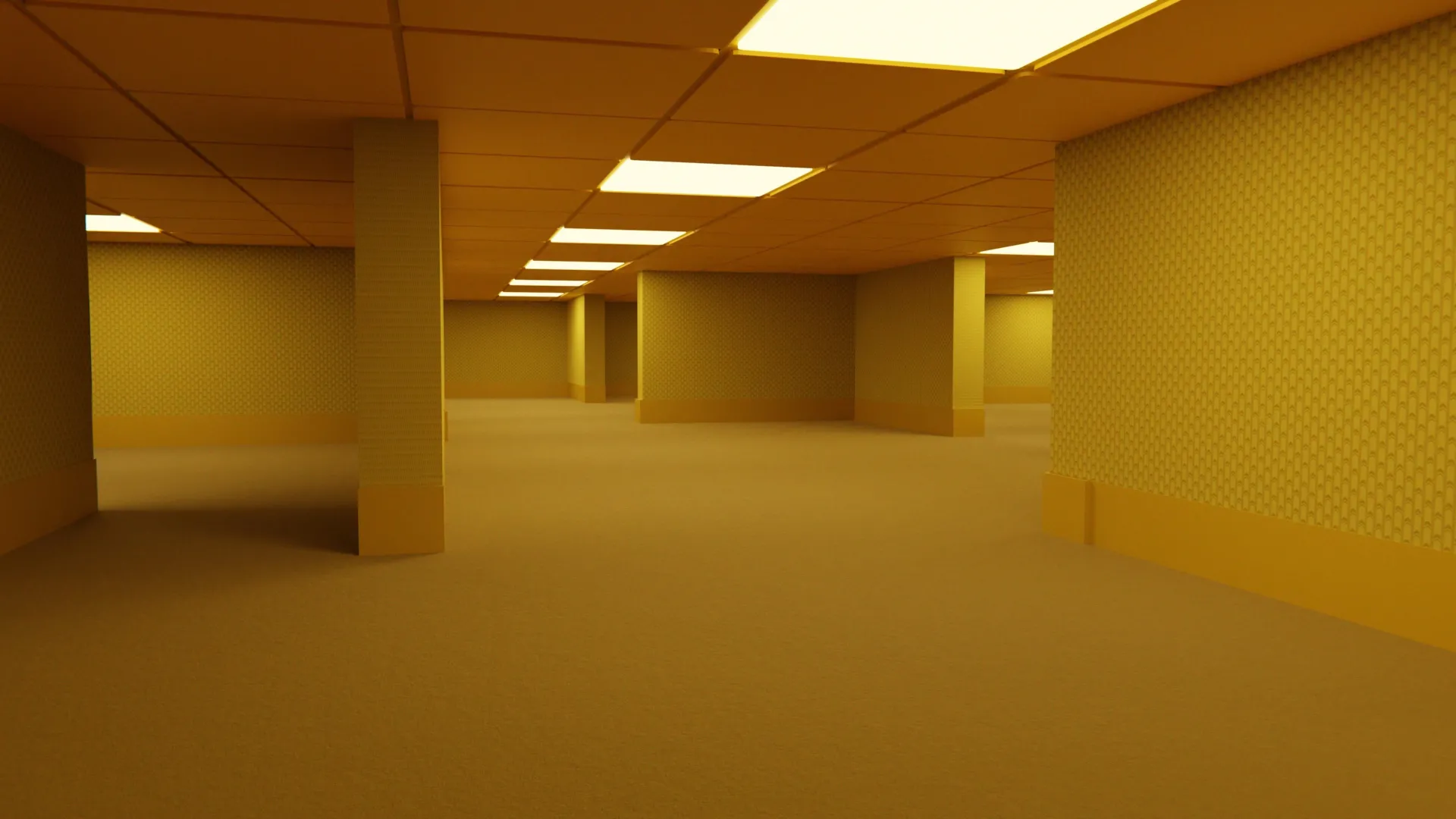
Research into "dark tourism" reveals a human fascination with sites associated with death, disaster, tragedy, and the uncanny. These can range from former prisons and abandoned industrial sites to locations linked to unsettling historical events. Such places often possess an atmosphere that is emotionally, symbolically, or existentially charged. The Backrooms, however, represent a novel extension of this logic. While virtual dark tourism allows for "armchair travel" to real-world sites, the Backrooms offer a purely imagined, collectively constructed environment of unease, abandonment, and liminality. There is no physical location to visit, no historical tragedy to commemorate, and no tangible artifact to observe.
This lack of a fixed mythology or geographical reality is precisely what allows users to imbue the Backrooms with personal meaning. The terror stems not from a predetermined narrative, but from the psychological resonance of encountering universally recognized, yet overlooked, elements of contemporary existence twisted into a source of dread. The sterile, impersonal nature of these spaces, designed for transient occupancy or functional necessity, becomes a metaphor for feelings of alienation, purposelessness, and the fear of being lost in a vast, indifferent system.
"Online Legend-Tripping" and Participatory Horror
The Backrooms phenomenon is a prime example of what folklore scholar Michael Kinsella describes as "online legend-tripping." This form of digital folklore engagement transforms audiences from passive spectators into active contributors, collaborators, and world-builders. Instead of merely consuming a finished narrative, users are invited to step inside the environment, blurring the lines between storytelling, role-playing, tourism, and digital participation.
This active engagement is facilitated by the multi-platform nature of the Backrooms. YouTube videos offer immersive first-person perspectives, video games allow for interactive exploration, and VR experiences provide a palpable sense of presence within the labyrinth. TikTok edits and Instagram stories offer bite-sized, visually striking glimpses into the lore, further fueling engagement and inspiring new interpretations. This constant feedback loop between content creators and audience fosters a dynamic and evolving mythology, ensuring the Backrooms remain fresh and compelling.
The act of creating and sharing Backrooms content can be seen as a form of digital catharsis. By collectively exploring and mapping these unsettling digital spaces, users can process anxieties about modern life, the overwhelming nature of information, and the increasing commodification of experience. The internet, once primarily a conduit for information, is evolving into a landscape that individuals emotionally navigate and inhabit. The Backrooms exemplify this shift, offering a collectively imagined digital world that functions as a meaningful cultural environment in its own right – a place people can "travel" to, explore, emotionally invest in, and repeatedly return to, despite its non-physical existence.
Implications for Digital Culture and Horror
The rise of the Backrooms has significant implications for our understanding of digital culture and the future of horror. It highlights how the internet is no longer solely a medium for disseminating pre-existing narratives, but a fertile ground for the spontaneous generation of new mythologies and shared imaginative spaces. The collaborative nature of its development underscores the power of collective creativity and the potential for decentralized storytelling to gain significant cultural traction.
From a horror perspective, the Backrooms signals a departure from traditional tropes. While jump scares and overt monsters remain effective, there is a growing appetite for more existential and atmospheric horror that preys on psychological unease and the uncanny. The success of the Backrooms suggests that the fear of the familiar made strange, the dread of endless monotony, and the anxiety of losing oneself in an incomprehensible system are potent sources of terror in the digital age.
The transition of the Backrooms from an internet meme to a potential blockbuster film franchise also signifies a shift in how new media phenomena are recognized and commercialized. What begins as organic, user-generated content can now rapidly ascend to mainstream cultural relevance, influencing the entertainment industry and demonstrating the potent influence of online communities.
In conclusion, the Backrooms represent more than just an elaborate creepypasta. They are a testament to the evolving landscape of digital folklore, the power of collective imagination, and the enduring human fascination with the unsettling uncanny. As the Backrooms continue to expand and evolve across various digital platforms, they offer a compelling glimpse into a future where collectively imagined digital worlds can become as real and as resonant as any physical space, shaping our anxieties, our entertainment, and our very understanding of reality.

0 Comments