
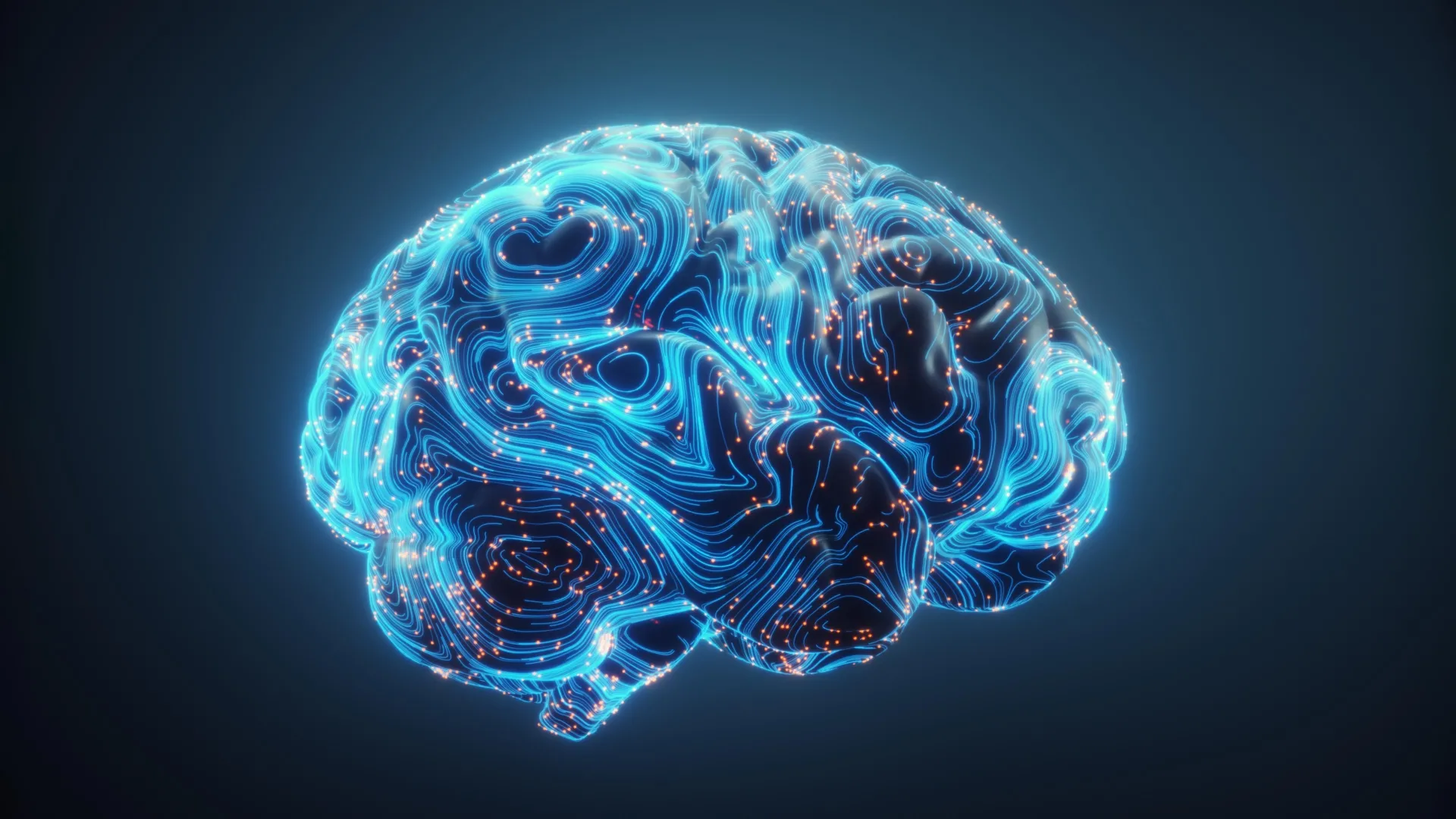
Researchers at Georgetown University have unveiled compelling new evidence that challenges deeply ingrained beliefs about human cognitive limits, suggesting that the brain can physically reorganize itself to achieve true multitasking through dedicated practice. This groundbreaking discovery, published in the Journal of Cognitive Neuroscience, offers a nuanced understanding of how well-practiced skills become automatic and opens new avenues for understanding habit formation, behavioral change, and the future development of artificial intelligence.
For decades, the prevailing scientific consensus has held that humans are incapable of genuine multitasking, instead attributing the perceived ability to perform multiple tasks simultaneously to rapid attentional switching. However, the Georgetown study, led by Professor Maximilian Riesenhuber and his former graduate student Patrick Cox, provides a sophisticated look at the neural underpinnings of skill acquisition, demonstrating that extensive training can lead to a fundamental restructuring of brain circuitry, allowing for the parallel processing of tasks.
The Neuroscience of Automaticity: From Conscious Effort to Effortless Execution
The journey of learning a new skill is a dynamic process. Initially, tasks that are unfamiliar or complex demand significant cognitive resources, engaging the brain’s executive functions. The prefrontal cortex, a region of the brain crucial for planning, decision-making, and conscious thought, plays a central role in this early stage. This area is inherently limited in its capacity for parallel processing, meaning it generally handles one demanding task at a time. This inherent limitation has long been the cornerstone of the argument against true multitasking.
However, as individuals dedicate time and effort to mastering a skill, a remarkable transformation occurs. The brain, a remarkably adaptable organ, begins to optimize its neural pathways. The Georgetown study specifically investigated this phenomenon by examining the brain activity of volunteers engaged in a rigorous visual categorization task. Participants were presented with morphed images of cars and tasked with sorting them into two distinct categories by identifying subtle visual differences. This exercise, designed to mimic the complexity of real-world perceptual tasks, involved an astounding accumulation of practice: over 30,000 sorting trials completed within a concentrated period of five to ten weeks.
The researchers employed a dual approach to neuroimaging, utilizing both functional magnetic resonance imaging (fMRI) and electroencephalography (EEG) to capture detailed snapshots of brain activity. These scans were conducted both before the intensive training regimen commenced and again after its completion, allowing for a direct comparison of neural function and organization.
Unveiling the Neural Shift: From Prefrontal Cortex to Temporal Lobe Dominance
The findings from these brain scans revealed a profound shift in how the categorization task was processed. In the initial stages of learning, as anticipated, the prefrontal cortex was the primary hub of activity. This indicated that participants were actively engaging their executive functions to analyze the visual stimuli and make deliberate decisions.
Crucially, after weeks of sustained practice and the completion of thousands of trials, the neural landscape altered dramatically. The same visual categorization task, now deeply ingrained through repetition, was no longer predominantly handled by the prefrontal cortex. Instead, activity shifted significantly to the temporal cortex, a brain region more typically associated with memory, object recognition, and the processing of complex sensory information.
This relocation of cognitive processing from the executive control center to more specialized perceptual areas is the key to understanding how automaticity develops. Patrick Cox, the study’s lead author, explained the significance of this longitudinal observation. "Previous studies have shown that parts of the temporal cortex can be activated by particular object categories in experienced observers, birds, cars, even Pokémon," he noted, "but a limitation of all of those studies is that they only looked after people became experts. The strength of this study is that it is longitudinal; we measure before and after training, so we can see that extensive training essentially put a category-selective area in the temporal lobe that was not there before." This suggests that the brain doesn’t just become more efficient at using existing pathways; it actively builds and dedicates new neural real estate for well-learned tasks.
The "Frontal Bottleneck" Bypassed: Paving the Way for True Multitasking
The implications of this neural reorganization are far-reaching, particularly in relation to the concept of multitasking. The researchers observed that once the car categorization task became largely automated and localized within the temporal cortex, the neural pathways involved could effectively bypass the prefrontal cortex. Information could then travel more directly to brain regions responsible for generating a response, such as motor control areas.
This bypass of the prefrontal cortex, often referred to as the "frontal bottleneck," is what liberates cognitive capacity. "Experience remodels the brain to bypass that frontal bottleneck," explained Professor Riesenhuber. "The prefrontal cortex then stays free for whatever else you want to do, increasing your capacity." This means that while the brain is efficiently handling a practiced task, the prefrontal cortex remains available to attend to a second, unrelated task, a hallmark of genuine multitasking.
Further bolstering this conclusion, the study found a direct correlation between the degree to which the car sorting task was "offloaded" from the prefrontal cortex and the participants’ ability to perform a second, concurrent task. The more automated the primary task became, the better participants performed a simultaneous, novel activity, a finding that directly contradicts the long-held notion that multitasking is merely an illusion of rapid switching. "What we show is that the circuitry actually changes so the brain can do two things at once," Riesenhuber affirmed. "This really is true multitasking."
Broader Implications: Habits, Behavior Change, and the Future of AI
The insights gleaned from this research extend far beyond the laboratory, offering significant implications for understanding fundamental aspects of human behavior and the development of sophisticated artificial intelligence.
Understanding and Modifying Habits
The study sheds light on why ingrained habits can be so difficult to break. Because well-learned behaviors become established in neural circuits that operate with reduced conscious oversight, simply willing oneself to stop a behavior may prove insufficient. "The first step to unlearning something is understanding where it is actually happening in the brain," Riesenhuber stated. "This shows why strategies like telling someone to think of something else don’t really help, because they don’t really have the behavior under conscious control." This suggests that interventions aimed at habit change may need to focus on actively rerouting or reconfiguring these specialized neural pathways, rather than solely relying on conscious willpower.
Advancing Artificial Intelligence
The findings also provide a compelling framework for understanding the limitations of current artificial intelligence systems and charting a course for future advancements. While AI has made remarkable strides in performing specific tasks, its ability to learn continuously and integrate new knowledge without disrupting previously acquired skills remains a significant challenge. Humans, in contrast, excel at building upon existing knowledge throughout their lives.
According to Riesenhuber, the brain’s capacity to transfer well-learned skills to specialized areas like the temporal cortex frees up the prefrontal cortex to tackle new learning challenges. This flexible architecture allows existing knowledge to serve as a robust foundation for future development. Today’s AI systems often lack this adaptable architecture, leading to a phenomenon known as "catastrophic forgetting," where learning a new task can erase or degrade performance on previously learned tasks. The Georgetown study suggests that developing AI with similar neural reorganization capabilities could lead to more robust, continuously learning systems.
Future Directions and Unanswered Questions
The research team is not resting on their laurels and has outlined several promising avenues for future investigation. A key focus will be to precisely identify the signaling mechanisms that facilitate the transfer of learning from one brain region to another. Furthermore, they aim to determine the specific types of tasks that are amenable to becoming truly parallelizable through extensive training.
Patrick Cox highlighted the nuances of this question: "Another really interesting question is what kinds of tasks can be learned well enough to do in parallel," he remarked. "We can walk and chew gum at the same time, but looking at our phones to text while driving will never be safe, because we take our eyes away from the road. It comes down to being able to train fully separate neural circuits for two tasks to become compatible." This implies that while cognitive tasks might be more readily integrated for parallel processing, tasks requiring shared sensory input or motor output might still present inherent limitations, even with extensive practice.
The study, "Extensive Experience Remodels Neural Task Circuitry to Escape the Frontal Bottleneck and Increase Automaticity of Categorization," was supported by grants from the National Science Foundation, the ARCS Foundation, and the Army Research Laboratory. The authors declared no personal financial interests related to the study, underscoring the purely scientific pursuit of understanding the human brain’s remarkable capacity for adaptation and learning.
This pioneering work from Georgetown University represents a significant leap forward in our understanding of how the brain learns and adapts. It not only provides a scientific basis for the intuitive feeling that practice makes perfect but also suggests that practice can fundamentally alter our cognitive architecture, enabling capabilities previously thought to be beyond our reach.

0 Comments