
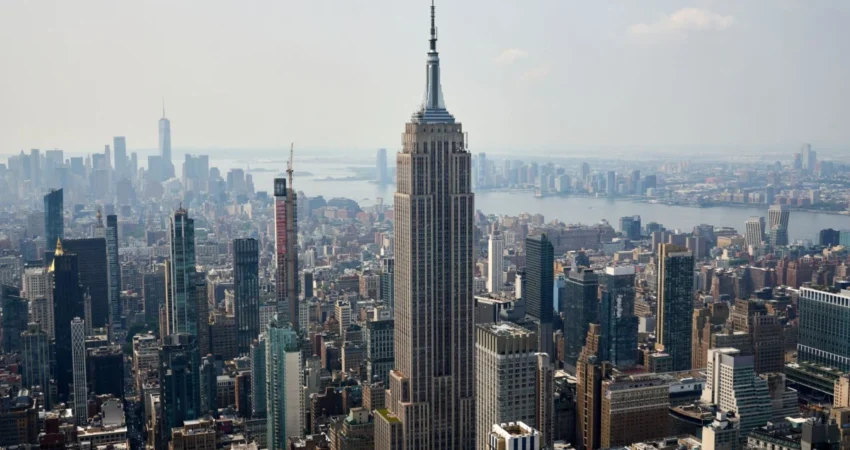
The Empire State Building remains one of the most recognizable structures in the global skyline, serving as a testament to early 20th-century engineering and a primary destination for international tourism. Located at 350 Fifth Avenue in Midtown Manhattan, this 102-story Art Deco masterpiece has transitioned from a symbol of Depression-era ambition to a modern multi-use facility housing premier corporate offices and world-class observation decks. With over 2.5 million annual visitors, the building continues to anchor New York City’s tourism economy while maintaining its status as a National Historic Landmark.
Historical Context and the Race to the Sky
The construction of the Empire State Building took place during the "Race to the Sky," a period of intense competition among New York developers to claim the title of the world’s tallest building. Designed by the architectural firm Shreve, Lamb & Harmon, the project was commissioned by John J. Raskob and Al Smith, the former Governor of New York. Ground was broken on March 17, 1930, on the site of the former Waldorf-Astoria Hotel.
The speed of construction remains unparalleled in the history of large-scale architecture. The building rose at a rate of approximately 4.5 stories per week, with the entire structural frame completed in just 11 months. The total construction time, including the interior finishing, lasted only 13 months and 45 days. At its peak, the project employed roughly 3,400 workers, many of whom were Mohawk ironworkers celebrated for their ability to work at extreme heights without harnesses. The building was officially opened by President Herbert Hoover on May 1, 1931, when he turned on the building’s lights via a remote signal from Washington, D.C.
Upon completion, the Empire State Building stood at 1,454 feet (including its lightning rod and antenna), making it the tallest building in the world. It held this title for 40 years until the completion of the World Trade Center’s North Tower in 1970. Today, while surpassed in height by newer skyscrapers such as One World Trade Center and Central Park Tower, it remains the eighth-tallest building in New York City and a sentimental favorite for residents and tourists alike.
Architectural Significance and the Art Deco Legacy
The Empire State Building is widely considered the pinnacle of Art Deco architecture. Its exterior is composed of Indiana limestone and granite, accented with aluminum and chrome-nickel steel. The design is characterized by its stepped-back "setback" profile, a requirement of the 1916 Zoning Resolution intended to allow sunlight to reach the streets below.
In 2019, the building completed a four-year, $165 million top-to-bottom renovation of its visitor experience. This project was not merely a cosmetic update but a reimagining of the building’s historical legacy. The renovation included a new dedicated visitor entrance on 20 West 34th Street, designed to streamline the flow of millions of guests. Furthermore, the 2nd and 80th floors were transformed into immersive museum spaces. These exhibits offer a chronological narrative of the building’s life, from the site’s history in the late 18th century to the modern-day cinematic and cultural impact of the tower.
One of the most significant architectural features preserved during this renovation was the original Art Deco lobby on Fifth Avenue. Designated a historic landmark by the Landmarks Preservation Commission, the lobby features gold leaf and marble finishes, as well as a celebrated celestial ceiling mural. While the lobby is primarily reserved for the building’s corporate tenants—which include major firms like LinkedIn, Workday, and Expedia—observatory guests typically pass through this historic space upon their exit.
The Modern Visitor Experience: Observatories and Exhibits
The Empire State Building offers two distinct observation experiences: the 86th-floor open-air observatory and the 102nd-floor indoor observatory.
The 86th Floor Observatory
The 86th floor is the building’s most famous viewing platform. It is an outdoor deck that provides 360-degree views of New York, New Jersey, Pennsylvania, Connecticut, Massachusetts, and Delaware on clear days. The deck is equipped with high-powered binoculars and, during colder months, overhead heaters to ensure visitor comfort. This floor has been the backdrop for countless cinematic moments, most notably in the 1957 film An Affair to Remember and the 1993 classic Sleepless in Seattle.
The 102nd Floor Observatory
The 102nd-floor experience was completely reimagined during the 2019 renovation. Guests reach this level via a glass elevator that offers views of the inside of the building’s spire as it ascends. The observatory itself features floor-to-ceiling windows, providing an unobstructed, climate-controlled view from the highest accessible point of the building. This level offers a more intimate experience and a superior view of Central Park to the north.

Museum Exhibits
Before reaching the observatories, visitors navigate a series of interactive exhibits on the 2nd and 80th floors. Key highlights include:
- The Construction Exhibit: Life-sized bronze sculptures and surround-sound audio that transport visitors to the 1930s construction site.
- The King Kong Exhibit: A tribute to the 1933 film, featuring a large-scale animatronic of the famous ape peering through the windows.
- NYC: Above and Beyond: An expansive mural by artist Stephen Wiltshire, who drew the entire New York City skyline from memory after a single 45-minute helicopter ride.
Operational Logistics and Accessibility
The Empire State Building operates 365 days a year, regardless of weather conditions. Following the COVID-19 pandemic, the building transitioned to a timed-entry ticketing system to manage crowd density and enhance the guest experience.
Dan Rogoski, Senior Vice President and Observatory General Manager, emphasizes the importance of planning: “We strongly recommend that guests purchase tickets in advance on our website to secure their preferred date and time, particularly during holidays and other peak periods, such as sunset.”
Ticket Options and Pricing
Standard admission for the 86th-floor observatory starts at approximately $44 for adults, while a combined ticket for both the 86th and 102nd floors is priced around $79. For those seeking a more exclusive experience, the building offers several premium options:
- The Sunrise Experience: A limited-capacity ticket allowing visitors to watch the sunrise over Manhattan, complete with a Starbucks Reserve breakfast.
- The Premium Experience: A guided tour for small groups (up to seven people) that includes skip-the-line access.
- The All-Access Tour: A VIP package that includes entry through a private entrance, access to the celebrity green room, and a personalized tour.
The building is centrally located in Midtown Manhattan and is highly accessible via public transportation. It is within walking distance of Penn Station, Port Authority Bus Terminal, and Grand Central Terminal. Major subway lines serving the area include the 1, 2, 3, A, C, E, N, Q, R, W, B, D, F, M, 4, 5, 6, and 7.
Economic and Cultural Impact
Beyond its role as a tourist magnet, the Empire State Building is a cornerstone of New York real estate. The building houses over 150 corporate tenants across its 2.8 million square feet of leasable space. In recent years, the Empire State Realty Trust (ESRT), which owns and operates the building, has invested heavily in sustainability.
In 2009, a massive energy efficiency retrofit was launched in partnership with the Clinton Climate Initiative. This project included the refurbishing of all 6,514 windows and the installation of a new digital building management system. These efforts resulted in a 38% reduction in energy consumption and have served as a blueprint for retrofitting aging skyscrapers globally.
The building also maintains a deep cultural connection to the city through its world-famous lighting system. The tradition of lighting the spire began in 1976 to honor the United States Bicentennial. In 2012, the building upgraded to a state-of-the-art LED system capable of displaying 16 million colors. The lights are changed nightly to recognize various holidays, charitable causes, and global events.
Environmental Sustainability and Future Outlook
As New York City moves toward stricter environmental regulations, such as Local Law 97, the Empire State Building has positioned itself as a leader in urban sustainability. The building is powered by 100% renewable wind energy and has achieved the WELL Health-Safety Rating, emphasizing its commitment to tenant and visitor wellness.
The enduring appeal of the Empire State Building lies in its ability to balance historical preservation with modern innovation. While newer observation decks like The Edge at Hudson Yards or Summit One Vanderbilt offer high-tech thrills and glass floors, the Empire State Building offers a sense of historical continuity. It remains a "must-see" for those who wish to understand the trajectory of the 20th-century city.
For the traveler, the building provides more than just a view; it provides orientation. By observing the grid of Manhattan from its most famous spire, visitors can track their journeys across the city’s diverse neighborhoods. As the building enters its tenth decade, it continues to serve as an aspirational symbol of what can be achieved through rapid innovation and architectural vision. Whether visited at the break of dawn or under the glow of its evening LEDs, the Empire State Building remains the definitive heart of the New York City skyline.

0 Comments