
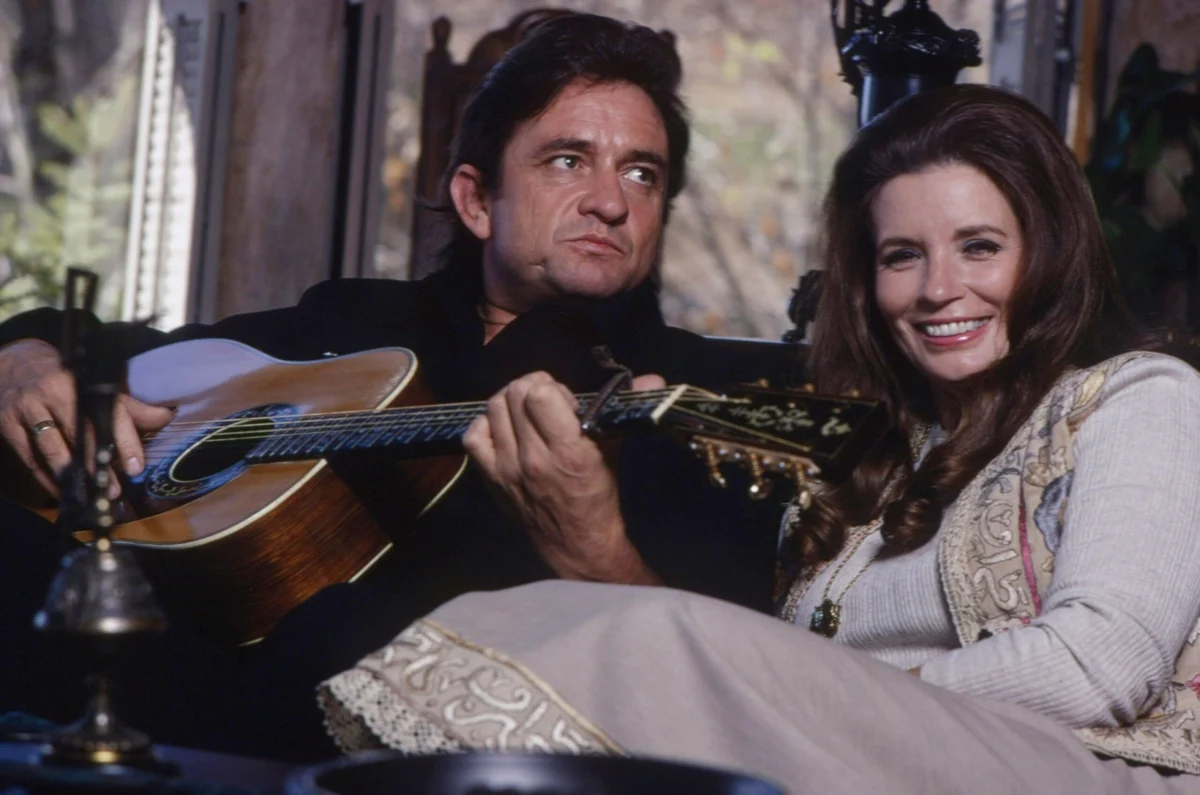
Born J.R. Cash on February 26, 1932, in Kingsland, Arkansas, the man who would become known as the "Man in Black" endured a childhood shaped by the Great Depression and the resilient spirit of a New Deal community. His parents, Ray and Carrie Rivers Cash, named him John R. Cash, a decision reflecting the economic uncertainties of the era that had them contemplating both "John" and "Ray." Their early years were spent in Dyess, Arkansas, a government-sponsored agricultural project where families were provided with land and resources to cultivate their farms. This era of hardship was punctuated by profound personal tragedy when, at the tender age of 12, young Johnny witnessed the death of his elder brother, Jack, in a tragic workplace accident. Despite these profound challenges, music became a solace and a passion. His mother, recognizing his burgeoning talent, took on extra laundry work to fund his singing lessons, a testament to her unwavering support.
Following his formative years in Arkansas, Cash enlisted in the United States Air Force in 1950, serving as a radio operator in Germany. It was during this period that he purchased his first guitar and began honing his songwriting craft. Upon his honorable discharge in 1954, he married Vivian Liberto, whom he had met in San Antonio, Texas, before his deployment. The couple relocated to Memphis, Tennessee, a burgeoning hub of musical innovation. It was in Memphis that Cash’s legendary career truly began to take shape. He secured a recording contract with Sun Records, the iconic label founded by Sam Phillips, placing him in the company of musical titans like Elvis Presley, Jerry Lee Lewis, and Carl Perkins. His early recordings at Sun, including the seminal "Folsom Prison Blues," laid the groundwork for his distinctive sound and catapulted him to national recognition. During his three-year residency in Memphis, from 1954 to 1957, the Cash family grew with the birth of their daughters, Rosanne and Kathy. This period, though brief, was a critical turning point, marking his transition from a promising young artist to a recording star.

Memphis: The Crucible of a Musical Icon
Johnny Cash’s time in Memphis was a concentrated period of intense creative output and personal growth. Arriving in the city with his new bride, Vivian, and a burning ambition, Cash found himself at the epicenter of rock and roll’s genesis. His early days were not solely dedicated to music; he also worked as a home appliance salesman. His daughter, Rosanne Cash, recounted in a 2013 interview with The Oxford American that her father was initially a "lackluster" salesman, even managing to dissuade a customer from purchasing a refrigerator. However, this seemingly unremarkable encounter led to an unexpected opportunity: the potential buyer offered Cash housing in his duplex on Tutwiler Street, a crucial step in establishing their new life in Memphis.
At Sun Records, under the guidance of Sam Phillips, Cash developed his signature "boom-chicka-boom" rhythm and his resonant baritone voice. His early hits, such as "I Walk the Line," recorded in 1956, became anthems of a generation and solidified his place in the country music pantheon. The raw, authentic sound of his Sun recordings, often captured with minimal overdubs, resonated with audiences and distinguished him from his contemporaries. The birth of Rosanne and Kathy in Memphis further underscored the significance of this period, as it was not only the birthplace of his career but also of his initial family.

California Sojourn: Seeking New Horizons
By 1957, the burgeoning success of Johnny Cash’s music necessitated a move to a larger market. The Cash family left Memphis and embarked on a journey westward, first settling in Encino, California. This move marked a significant shift in their lifestyle, trading the bustling Southern music scene for the burgeoning entertainment industry of Southern California. They later acquired Johnny Carson’s former residence at 4259 Hayvenhurst Avenue in Encino, a notable address situated on the same street as the famed Jackson family. This period in Encino, though temporary, placed Cash within a creative milieu that included other prominent figures in the entertainment world.
The family’s California chapter continued with a move to the more rural setting of Casitas Springs, California. This period saw the birth of two more daughters, Cindy and Tara, expanding the Cash household. It was in California that Cash also began to explore his personal life beyond his musical endeavors. His marriage to Vivian Liberto, which had begun with such promise in Memphis, eventually faced significant challenges, culminating in their divorce in 1967. This marked the end of an era and opened the door for new relationships and chapters in Cash’s life.

Hendersonville, Tennessee: The Eternal Home
The search for a permanent sanctuary led Johnny Cash to Hendersonville, Tennessee, a picturesque setting on the outskirts of Nashville that would become his enduring home. It was here that he found not only a place to live but also a profound partnership with June Carter Cash, a fellow musician and member of the legendary Carter Family. Their paths first crossed in 1956 at the Grand Ole Opry, though their romantic entanglement wouldn’t fully blossom until years later.
The story of their union is woven into the fabric of their musical journeys. June Carter had been married and divorced twice before finding lasting love with Cash. Their relationship, marked by shared passion for music and a deep spiritual connection, culminated in their marriage on March 25, 1968, a ceremony that followed a surprise proposal onstage during a performance in London. The couple purchased a sprawling 14,000-square-foot lakefront mansion in Hendersonville, a magnificent stone-and-wood structure originally built by architect-builder Braxton Dixon. Cash famously declared, "Name your price," to Dixon, demonstrating his immediate desire for the property. He secured the $150,000 needed by borrowing from Columbia Records, an investment that proved to be incredibly worthwhile, as the couple would reside there for 35 years.

The Hendersonville estate became more than just a home; it was a sanctuary, a creative hub, and a place of profound family life. The contemporary mansion, designed with four distinctive round rooms offering breathtaking views of Old Hickory Lake, became the backdrop for countless memories. Rosanne Cash fondly recalled summers spent on the lake, where her father patiently taught his children to water ski. These idyllic scenes were often punctuated by Cash’s unpretentious generosity, as illustrated by an anecdote where he let loose a substantial sum of money that blew out of a boat’s glove compartment, demonstrating his philosophical approach to material possessions.
A Creative Haven and Family Hub
The Hendersonville property also housed Cash Cabin Studio, a private recording space meticulously built by Johnny Cash in the late 1970s. This rustic log cabin, constructed from hand-hewn logs, evolved into a legendary recording studio that attracted an array of musical talent. Artists like Elvis Costello, Taylor Swift, and Snoop Dogg have left their mark, literally, by signing the fireplace mantel, a testament to the creative energy that permeated the space. The studio itself is a repository of family history, adorned with memorabilia, including Cash’s hymn book and his favored rocking chair.

The presence of his mother-in-law, Maybelle Carter, was also a significant aspect of life at Hendersonville. Maybelle, a legendary figure in American folk music, lived nearby but frequently visited and stayed at the lake house. Her presence provided solace and support, particularly during Cash’s struggles with addiction. He recounted in a 1983 interview with Glenn Jorgensen how the comfort of his family’s presence in the house helped him endure his withdrawal from drugs, stating, "Knowing June, her mother and daddy, and all my friends were downstairs in sleeping bags in this big house that I had bought on the lake—it kept me going." Cash also shared a deep bond with Maybelle, describing her as his "fishing buddy" and his "old buddy," a testament to their close relationship.
A Diverse Menagerie and a Brush with Danger
Johnny Cash’s connection to nature extended beyond the tranquil waters of Old Hickory Lake. He established a remarkable private zoo on his Hendersonville property, enclosing 40 acres to house a diverse collection of exotic animals. This menagerie included buffalo, antelopes, deer, and ostriches. This passion for wildlife, however, was not without its risks. In 1981, Cash had a near-fatal encounter with an ostrich named Waldo, who inflicted a serious abdominal injury. This incident highlighted the wild and untamed spirit that characterized many aspects of Cash’s life.

A Dual Residence: Jamaica’s Cinnamon Hill
While Hendersonville served as his primary residence, Johnny Cash also harbored a deep affection for the Caribbean island of Jamaica. In the early 1970s, he acquired Cinnamon Hill, an 18th-century Georgian estate in Montego Bay. This historic property, once the home of the renowned poet Elizabeth Barrett Browning, offered a stark contrast to the rustic charm of his Tennessee home. The Cash family, including June Carter Cash and their son John Carter Cash, spent considerable time at Cinnamon Hill, establishing it as a cherished vacation retreat.
The Jamaican estate became a place of both relaxation and creative inspiration. It was here, in 2002, that June Carter Cash was photographed with her son, a poignant image captured at their beloved island home. The property, now a tourist attraction, continues to be filled with Cash family photographs and memorabilia, including artifacts from Cash’s infamous crocodile hunt. The estate is also steeped in local legend, most notably the tale of the "White Witch of Rose Hall," a story that inspired Cash’s song "The Ballad of Annie Palmer."

A Shared Legacy and a Final Farewell
Johnny Cash and June Carter Cash’s lives were inextricably linked, both personally and professionally. They shared a profound love and a deep respect for each other’s artistry. In a final interview given shortly after June’s passing, Cash shared a piece of marital wisdom that blended practicality with his characteristic wit: "We were together for forty years; we worked on the road together since 1963, and we got married in ’68. And, uh, the secret for a happy marriage? Separate bathrooms." This lighthearted remark offered a glimpse into the enduring strength of their bond.
June Carter Cash passed away on May 15, 2003, due to complications from heart surgery. Johnny Cash, heartbroken, followed her just four months later, on September 12, 2003. Their home in Hendersonville, a place that had witnessed so much joy, creativity, and love, was subsequently purchased by Barry Gibb of the Bee Gees. Tragically, the iconic mansion was destroyed by fire in 2007.

The enduring power of Johnny Cash’s music and his life story continues to resonate. The music video for his poignant cover of Nine Inch Nails’ "Hurt," filmed in the Hendersonville house and featuring June Carter Cash, stands as a powerful testament to their life together and his profound introspection. The video, widely hailed as one of the greatest and saddest music videos of all time, interweaves footage of the aging Cash in his home with cherished home movies, offering a deeply personal and moving reflection on a life lived fully. In his last interview with MTV VJ Kurt Loder, Cash spoke of June’s love for the "Hurt" video, expressing gratitude that she lived long enough to witness its impact. The legacy of Johnny Cash, marked by his resilience, his artistry, and his deep connection to home and family, continues to inspire and captivate audiences worldwide.

0 Comments