
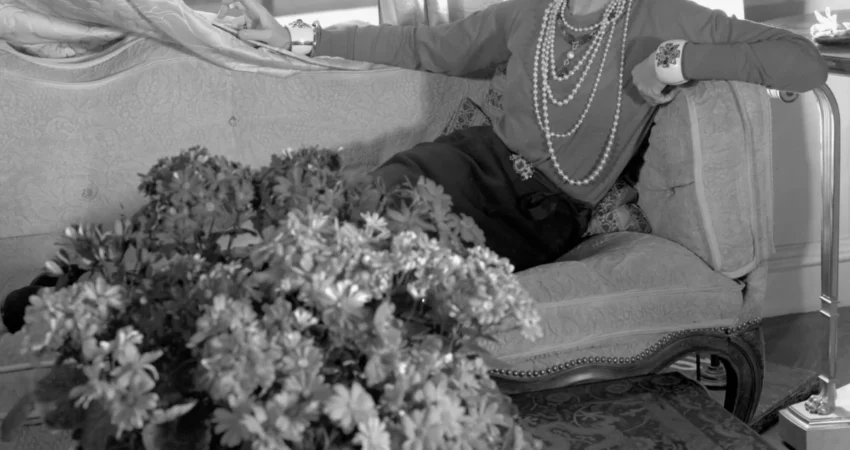
Gabrielle "Coco" Chanel, a name that has become indelibly linked with the pinnacle of haute couture, the allure of fine perfume, and the enduring power of luxury branding, was born in 1883. Her origins were far from the gilded world she would later define; she entered the world in a charity hospital. The profound loss of her mother in her pre-teen years cast a long shadow, leading to Chanel and her two sisters being abandoned by their father at a convent orphanage in the rural French commune of Aubazine. It was within these austere walls, however, that the seeds of her groundbreaking style were sown. The young Chanel learned the intricate art of sewing, an acquired skill that would become the bedrock of her future empire. Her early designs, notably her iconic black-and-white garments, are widely believed to have drawn inspiration from the somber palette of the nuns’ habits. Further testament to this formative period, it is said that her signature interlocking Cs logo is a visual echo of the overlapping circles found in the convent’s windows, a subtle yet potent nod to her past.

Chanel’s revolutionary aesthetic was characterized by its spare, chic elegance and a daring embrace of jersey fabrics. This departure from the restrictive corsetry and voluminous skirts that dominated women’s fashion of the era liberated a generation. Yet, her personal living spaces stood in stark contrast to the monastic simplicity that influenced her early designs. Her Parisian apartments, her villas on the French Riviera, and her suite at the prestigious Ritz Hotel were opulent sanctuaries. These interiors were adorned with treasures collected over years of success: exquisite Coromandel screens, ornate statues, and an abundance of mirrors, strategically placed, it is said, to allow her to meticulously assess her creations on live models. Surrounded by these elegant objects, Chanel continued her creative work until her passing at the age of 87. She famously reflected on her childhood, stating, "As a child I had only two dresses. Perhaps this is why I created so many later on, all conceived by me." This poignant observation, captured in the biography Mademoiselle: Coco Chanel and the Pulse of History, underscores the transformative journey from scarcity to abundance that defined her life and career.
From Austerity to Opulence: The Evolution of Chanel’s Style
The narrative of Coco Chanel is one of remarkable ascent, a testament to her vision, resilience, and unparalleled understanding of female desire. Born Gabrielle Bonheur Chanel on August 19, 1883, in Saumur, France, her early life was marked by hardship. Following her mother’s death when Gabrielle was just 11, her father, a traveling salesman, placed her and her sisters in the convent orphanage at Aubazine. This period, though challenging, instilled in her a discipline and a keen eye for detail. The nuns’ practical yet elegant habits, primarily in black and white, provided an early muse. The simplicity of these garments, combined with the architectural elements of the abbey, would later manifest in Chanel’s signature minimalist yet sophisticated designs. The iconic double-C logo, now recognized globally as a symbol of luxury, is widely believed to be inspired by the circular stained-glass windows of the Aubazine Abbey, a constant reminder of her roots.

Chanel’s foray into fashion began in earnest in the early 20th century. She first gained attention for her millinery creations in Paris, before expanding into clothing. Her revolutionary approach to women’s wear was a stark contrast to the elaborate and restrictive fashions of the Belle Époque. She championed comfortable, practical, yet undeniably chic garments, utilizing fabrics like jersey, previously considered too utilitarian for high fashion. This paved the way for a more relaxed and modern silhouette, freeing women from the confines of corsets and heavy embellishments. Her innovative designs quickly garnered a devoted following, establishing her as a leading couturier.
Parisian Residences: Sanctuaries of Style and Creativity
Chanel’s personal living spaces were as much a reflection of her evolving taste and success as her fashion lines. Her Parisian home at 29 Rue Faubourg Saint-Honoré, an 18th-century building she rented from the 1920s through the late 1930s, served as a glamorous backdrop for her life and work. It was here, in November 1932, that she unveiled her groundbreaking high jewelry collection, hosting an exclusive party attended by luminaries such as Pablo Picasso and Jean Cocteau. The collection itself was a homage to her past, drawing inspiration from the floor mosaics at Aubazine Abbey, the very place that had shaped her early years. This juxtaposition of humble origins and extraordinary achievement was a recurring theme in Chanel’s life and work.

The interiors of her homes were far from the spartan aesthetics of her childhood. They were curated collections of exquisite art and furnishings, often featuring Coromandel screens, ornate statues, and an abundance of mirrors. These opulent surroundings were not merely decorative; they were functional extensions of her creative process. The generous use of mirrors, for instance, allowed her to observe her designs from multiple perspectives, facilitating her meticulous attention to detail. This blend of personal taste and professional necessity created environments that were both luxurious and highly conducive to her creative endeavors.
A 1931 article in The New Yorker offered a vivid glimpse into her Parisian abode, describing it as a place of "glorious change" from the perceived simplicity of her fashion. The writer noted, "Her house was constructed in 1719 for the Duchesse de Rohan-Montbazon, and its furnishings, since Chanel has a name for loving the simple, must serve to supply her with a glorious change. For here Chanel’s taste has run to coromandel screens and chinoiseries, mirrors, masses of fine period furniture and precious items." This highlights the deliberate curation of her environment, transforming spaces into personal museums that reflected her sophisticated and eclectic tastes.

Global Influence and Riviera Retreats
Chanel’s influence extended far beyond Paris. In 1931, she accepted an invitation from Sam Goldwyn of Metro-Goldwyn-Mayer to visit the United States, where she was commissioned to design costumes for Hollywood films. Though her primary destination was the film capital, she spent a significant period in New York, staying at the elegant Hotel Pierre. This visit marked a crucial moment in her international recognition, solidifying her status as a global fashion icon.
Her personal life was also marked by a love for luxurious retreats, most notably her villa, La Pausa, on the French Riviera. Designed in 1928 with architect Robert Streitz, the villa was named after a 15th-century chapel on the property, said to be a resting place for the Virgin Mary. This spiritual connection added a layer of mystique to the already idyllic location. Chanel sold La Pausa in 1953, but it was repurchased by the House of Chanel in 2015 to serve as a venue for company events, underscoring its enduring significance to the brand’s heritage. The villa epitomized Chanel’s ability to create spaces that blended natural beauty with sophisticated design, reflecting her signature palette of beige and white.

The 1931 New Yorker article also detailed her various properties, including a "small, moated, old Norman country place at Mesnil-Guillaume, near Lisieux," where she engaged in activities like boar-hunting, and a "great modern place she built, and furnished in beige, at Roquebrune, on the Riviera." This demonstrates a broader portfolio of residences, each catering to different aspects of her life and leisure pursuits, from rural escapes to coastal grandeur.
London Connections and the Enduring Allure of Pearls
Chanel maintained a significant presence in London, a city where she had a romantic entanglement with the Duke of Westminster. During the 1920s and early 1930s, she frequently stayed with him at Bourdon House, his grand mansion in Mayfair. Her connection to the city also led to the opening of a Chanel boutique in London in 1927. While local lore suggested that the interlocking Cs found on some London lampposts were the Duke’s tribute to Chanel, historical records indicate these initials actually represent the City Council, a common misconception that adds a touch of romantic mythology to the city’s urban landscape.

Pearls became an integral part of Chanel’s personal style and a recurring motif in her designs. Often seen adorned with long strands of pearls, she elevated this classic accessory to new heights of sophistication. Her personal styling, as captured in various photographs, consistently featured pearls, whether layered with her iconic tweed suits or worn as a statement piece. This affinity for pearls contributed to her timeless and elegant image, influencing generations of fashion enthusiasts.
31 Rue Cambon: The Heart of Chanel’s Empire
The acquisition of the building at 31 Rue Cambon in Paris in 1918 marked a pivotal moment in Chanel’s career. This prestigious address became the epicenter of her fashion empire. The ground floor housed her atelier for displaying designs, the floor above served as a reception area, and the uppermost level was reserved for her private apartments. This multi-functional space allowed her to oversee every aspect of her business, from design and production to client consultations.

Her personal apartments at 31 Rue Cambon were a meticulously curated reflection of her aesthetic. Filled with leather-bound books, antiques, Chinese screens, and her favorite camellias, the space exuded an atmosphere of refined elegance. A famous 1957 photograph captures Chanel, a Leo, smiling beside a lion figurine, a symbol of her zodiac sign and her commanding presence in the fashion world. This opulent residence was not merely a home but a testament to her success and her enduring commitment to creating a world of luxury.
The significance of 31 Rue Cambon extended beyond its physical presence. Biographer Rhonda K. Garelick, in Mademoiselle: Coco Chanel and the Pulse of History, noted Chanel’s deliberate effort to cultivate an intellectual environment within her home. She reportedly hired a young writer, Maurice Sachs, to curate her library, paying him a substantial retainer to select "just the right leather-bound classics." This underscores Chanel’s understanding that an enriching environment was crucial for her creative output and personal well-being. While the apartment is now primarily accessible to VIP guests, photoshoots, and press events, the atelier on the floor above continues to be a vibrant hub of design and craftsmanship.

The Ritz: A Lifelong Refuge
Despite her lavish Parisian apartment, Chanel maintained a unique relationship with the Ritz Hotel in Paris. From 1937 until her death in 1971, she exclusively occupied Suite 302, a space that became her nightly sanctuary. This enduring arrangement persisted even during the German occupation of Paris, when Nazi officers were housed on several floors of the hotel. The Ritz’s website now dedicates a specially curated "Suite Coco Chanel," acknowledging its profound historical connection to the designer. The suite is described as her "refuge, a haven of tranquillity after long days at work, the hotel staff like a second family." It was here that she socialized with close friends, including Misia Sert, Salvador Dalí, and Jean Cocteau, and dined at the esteemed Espadon restaurant.
The Ritz offered Chanel a sense of security and familiarity, a consistent retreat from the demands of her high-profile life. This arrangement highlights her preference for a structured routine, even amidst the glamour and unpredictability of the fashion world. The hotel provided a stable environment where she could recharge and prepare for the day’s work at Rue Cambon. Her death in 1971, from a heart attack in her Ritz suite, marked the end of an era, concluding a life marked by controversy, relentless innovation, and an unparalleled contribution to the lexicon of style.

A Lasting Impression: Chanel’s Enduring Legacy
Coco Chanel’s impact on fashion and culture is immeasurable. Her ability to translate her personal experiences, from the austerity of her youth to the opulence of her success, into a universally appealing aesthetic continues to resonate. The foundational principles of her designs—simplicity, elegance, functionality, and a touch of daring—remain relevant in contemporary fashion. The House of Chanel, under the stewardship of subsequent creative directors, continues to draw inspiration from its founder’s legacy, reinterpreting her iconic elements for new generations.
The narrative of Coco Chanel is more than just a fashion success story; it is a powerful testament to the transformative power of vision and perseverance. From an orphanage in rural France to the global stage of haute couture, she redefined not only what women wore but how they felt about themselves. Her enduring influence is evident in the continued adoration of her designs, the iconic status of her brand, and the timeless appeal of her signature style, proving that true elegance is, indeed, eternal. The photographs from her life, capturing her in her various residences and public appearances, offer a visual chronicle of a woman who not only shaped fashion but also lived a life that was, in itself, a masterpiece of design and enduring style.

0 Comments