
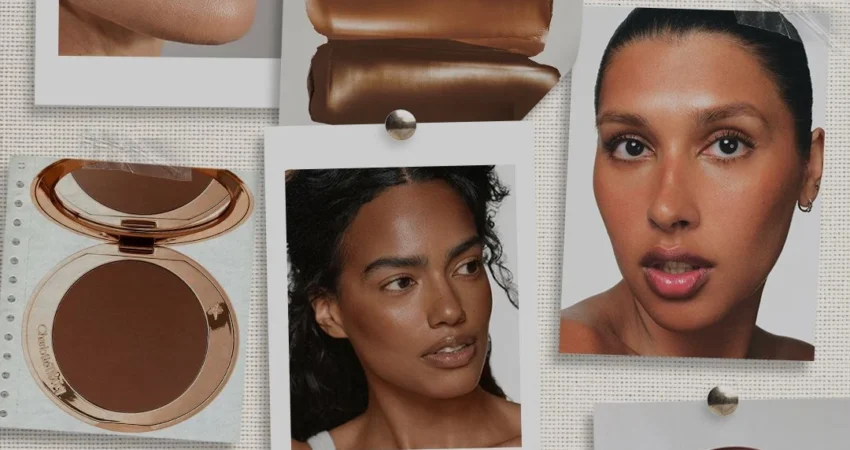
The global beauty industry has undergone a significant paradigm shift in recent years, moving away from the heavy-handed, often monochromatic applications of the early 2000s toward a more sophisticated, skin-first approach to color cosmetics. Bronzer, once a product synonymous with a distinctive orange hue and matte finish, has undergone a comprehensive technological and aesthetic facelift. Today’s premier formulas are characterized by nuanced undertones, easily blendable textures, and finishes designed to mimic the multidimensionality of a natural tan. This evolution is driven by a consumer demand for "quiet luxury" in beauty—a preference for products that enhance rather than mask the natural complexion.
The Modern Landscape of Bronzing Technology
The current market for bronzers is no longer limited to traditional pressed powders. The industry has seen an explosion in product formats, including peptide-infused sticks, sheer balms, and liquid bronzing drops. This diversification reflects a broader trend in the prestige beauty sector where the line between skincare and makeup is increasingly blurred. According to market analysis from 2023 and 2024, the "prestige complexion" category has seen a double-digit increase in sales, specifically in products that claim "hybrid" benefits.
A primary example of this trend is the recent summer launch from Rhode, a brand that has leveraged celebrity influence to normalize high-performance, minimalist makeup. Their peptide-infused bronzing stick, designed in a portable format, emphasizes the utility of bronzer in an everyday, "pared-down" routine. By incorporating skin-strengthening ingredients, brands are successfully marketing bronzer to minimalists who previously avoided the category for fear of appearing over-processed.
Chronology of the Bronzer: From the 1990s to the Present
To understand the current state of the market, one must look at the trajectory of bronzing products over the last three decades.
- The 1990s and Early 2000s (The "Orange" Era): During this period, bronzers were largely limited to matte powders. The pigment technology often relied on heavy iron oxides that resulted in the infamous "orange" streak. Application was generally focused on all-over warmth rather than sculpting.
- The Mid-2010s (The Contouring Boom): Following the rise of social media influencers and high-definition photography, the industry pivoted toward "contouring." This era favored cool-toned, matte products used to reshape the facial structure. Bronzer was often conflated with contour, leading to confusion regarding application and undertones.
- 2020–2022 (The "Clean Girl" Aesthetic): The pandemic catalyzed a shift toward cream formulas and a "no-makeup" look. Consumers began seeking dewy finishes and products that could be applied with fingers, favoring sheer washes of color over heavy sculpting.
- 2023–2024 (The Skincare-Hybrid Era): The current market focuses on "sun-kissed" realism. Products like the Merit Bronze Balm and Westman Atelier Sun Tone Drops prioritize transparency and hydration, allowing the skin’s natural texture to remain visible while adding warmth.
Market-Leading Formulations and Categorization
As the category matures, specific products have emerged as benchmarks for performance in various sub-sectors. These selections, curated by industry experts and editors at Vogue, highlight the specific needs of a diverse consumer base.
The Rise of the Bronzing Stick
Stick formulas have become the preferred format for the modern consumer due to their portability and ease of blending. The Rhode Pocket Bronze has set a standard for this category by utilizing a peptide-rich base. This ensures that the product does not settle into fine lines or dry out the skin throughout the day. Industry reports suggest that stick formats now account for a significant portion of the growth in the "cream color" market.
Minimalist Sculpting: Sheer Balms
The Merit Bronze Balm Sheer Sculpting Bronzer represents the minimalist peak of the industry. Unlike traditional bronzers that deposit heavy pigment, sheer balms are designed to be "un-mess-up-able," catering to the 60% of beauty consumers who identify as "novices" or "time-pressed" individuals.
The Versatility of Bronzing Drops
Liquid bronzing drops, such as the Westman Atelier Sun Tone Bronzing Drops, have gained viral status on platforms like TikTok. These products are designed to be mixed with moisturizers or foundations, providing a customizable "glow from within." This reflects a consumer shift toward DIY-style beauty where products are expected to be multi-functional.
Inclusivity and Undertone Accuracy
Historically, the bronzer category has struggled with inclusivity, often offering a limited range of shades that appeared ashy on deeper skin tones or too red on fair skin. LYS Beauty has been a disruptor in this space with its No Limits Cream Bronzer Stick. By offering a wide array of shades with specific undertones—cool, warm, and neutral—they have addressed a long-standing gap in the market.
Expert Analysis: The Science of Application and Placement
The efficacy of a bronzer is as much about the application technique as it is about the formula. Professional makeup artists have recently debunked several "legacy" techniques that dominated the industry for decades.
Dominic Skinner, a global senior artist for MAC, has publicly challenged the "3-shape" application method—drawing a ‘3’ from the forehead to the cheekbone to the jawline. Skinner argues that this technique often results in "hamster cheeks" by blocking out the entire cheek with a single color. Instead, he advocates for a more surgical approach: buffing product from the top of the ear toward the corner of the mouth, and then from the corner of the eye to the temple. This creates a more natural shadow and highlights the cheekbone without creating a muddy appearance.
Furthermore, Alexx Mayo, a renowned professional makeup artist, emphasizes the importance of distinguishing between contouring and bronzing. According to Mayo, bronzer is intended to add warmth and should be placed on the high points of the face where the sun naturally hits—the forehead, the bridge of the nose, and the tops of the cheekbones. Contour, conversely, should be used sparingly in the hollows of the face to create depth, utilizing cooler, shadow-like tones.
Supporting Data: Consumer Preferences and Industry Trends
Recent surveys of beauty consumers reveal several key insights that are shaping the future of the bronzer market:
- Ingredient Consciousness: Over 70% of prestige beauty buyers now check labels for skincare ingredients like hyaluronic acid, squalane, and peptides before purchasing a bronzer.
- Texture Preferences: While powder bronzers remain the top-selling format by volume, cream and liquid formulas are the fastest-growing segments, with a projected compound annual growth rate (CAGR) of 8.5% through 2026.
- Sustainability: Consumers are increasingly looking for refillable packaging, as seen in luxury offerings like the Fara Homidi Essential Bronzer Compact.
Official Responses and Brand Philosophies
Brands are increasingly vocal about their commitment to "realistic" beauty standards. Official statements from companies like Saie and Westman Atelier emphasize a "skin-first" philosophy. For instance, Saie’s development of the SuperSuede Radiant Baked Bronzer was reportedly driven by the desire to create a powder that "doesn’t look like powder," utilizing a baking process that maintains the hydration of a cream.
Similarly, the focus on neutral undertones in products like the Charlotte Tilbury Bronzing Powder reflects an industry-wide effort to move away from the "artificial" tan look. Brands are now investing heavily in R&D to develop pigments that mimic the natural melanin response of the skin to UV exposure.
Broader Impact and Future Implications
The evolution of bronzer is a microcosm of the broader shifts in the global beauty industry. It reflects a move toward inclusivity, technical precision, and the prioritization of skin health. As technology continues to advance, we can expect to see even more sophisticated "smart" pigments that adjust to the wearer’s skin chemistry and formulas that provide environmental protection against blue light and pollution.
The modern bronzer is no longer just a tool for aesthetic vanity; it is a multi-functional product that serves as a bridge between skincare and art. For the consumer, this means a more intuitive, healthy, and natural-looking result that celebrates individual skin texture rather than hiding it. The "Summer of Bronzer" is not merely a seasonal trend but a permanent recalibration of how we define a healthy, radiant complexion in the 21st century.

0 Comments