
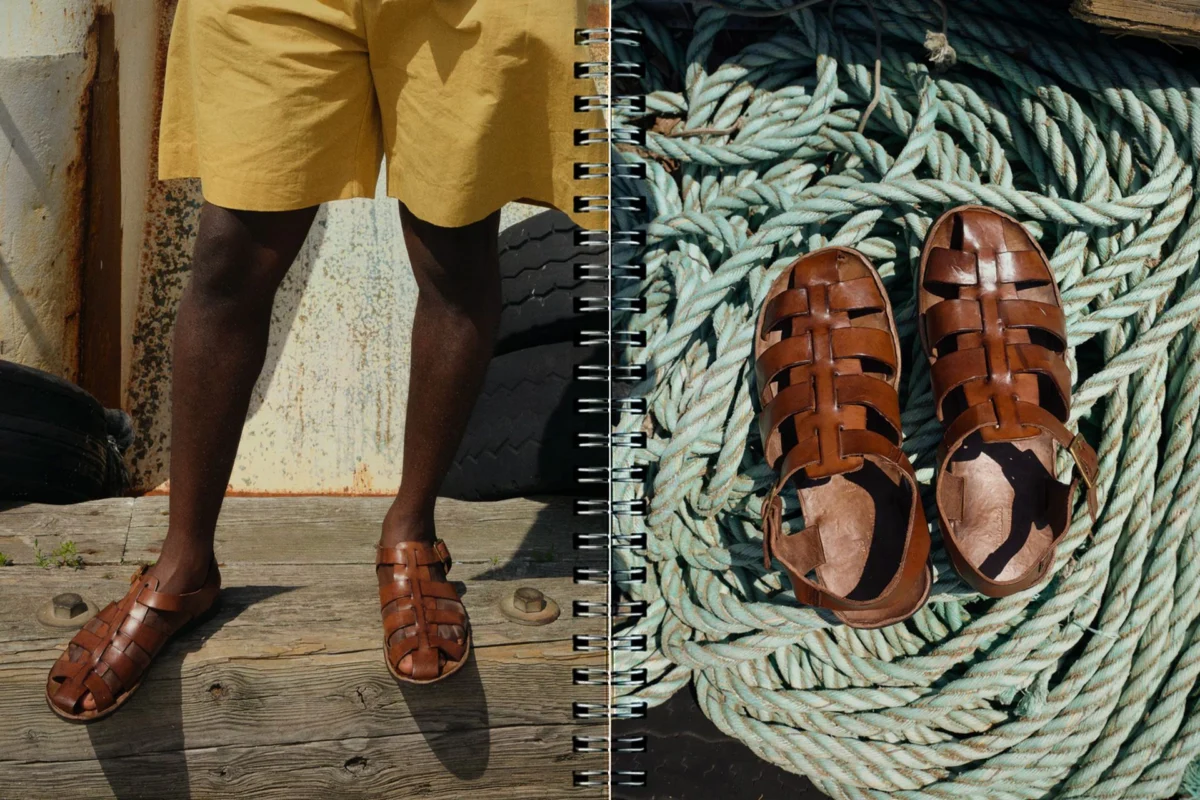
The global footwear industry is currently witnessing a significant resurgence of utilitarian designs, with the fisherman sandal emerging as a primary focal point for both luxury designers and urban consumers. Originally engineered for the practical needs of maritime workers, this footwear style has successfully transitioned from the docks of coastal villages to the high-traffic streets of major metropolises like New York City. Central to this movement is the Sabah Porto, a $275 leather sandal that exemplifies the blend of protective functionality and aesthetic minimalism that modern travelers and city dwellers increasingly demand. As consumers move away from overly athletic silhouettes toward "quiet luxury" and versatile essentials, the fisherman sandal has secured its position as a staple of the contemporary summer wardrobe.
The Technical Design and Functional Utility of the Fisherman Sandal
The fisherman sandal is distinguished from standard summer footwear by its unique structural composition. Unlike flip-flops or slide sandals, the fisherman variety features a semi-closed toe constructed from interwoven strips of leather. This design was historically intended to provide drainage for seawater and breathability for the foot while offering protection against the physical hazards of a ship’s deck. In a modern urban context, this protective element serves a new purpose: shielding the wearer from the environmental hazards of city life, such as subway debris and uneven pavement, while maintaining the cooling properties of an open shoe.
The Sabah Porto model specifically utilizes a minimalist approach to this classic silhouette. While some iterations of the fisherman sandal include a fully closed heel, the Porto employs a simple leather strap, maximizing airflow. The shoe is constructed from exceptionally thin, supple leather, designed to mimic the fit of a sock. This material choice addresses a common consumer pain point in the leather footwear market: the "break-in" period. While initial use may result in minor friction-related discomfort, the thinness of the Porto’s leather allows it to mold to the wearer’s foot within approximately three days, a significantly shorter duration than the weeks often required for heavier leather boots or traditional loafers.
Market Context: The Rise of Functional Luxury Footwear
The popularity of the Sabah Porto and similar models is rooted in broader shifts within the global footwear market. According to recent retail analytics, the "functional fashion" segment has seen a compound annual growth rate (CAGR) of over 6% as consumers prioritize multi-use items. The fisherman sandal fits into the "gorpcore" and "ugly-chic" trends that have dominated the 2020s, where items previously considered purely utilitarian are reimagined through a luxury lens.

Brands like The Row, Prada, and Church’s have released high-end versions of the fisherman sandal, but Sabah has carved out a niche by focusing on artisanal production and travel-ready versatility. The brand, founded by Mickey Ashmore, initially gained fame for its modernized Turkish slippers (Sabahs and Babas). The introduction of the Porto represents an expansion into more structured, seasonally specific footwear that retains the brand’s commitment to high-quality leather and global craft influences.
A Chronology of the Trend: From Tradition to the Runway
The timeline of the fisherman sandal’s evolution reveals a steady climb from niche maritime gear to a mainstream fashion phenomenon:
- Historical Origins: The basic structure of the fisherman sandal can be traced back to ancient Mediterranean civilizations, where woven leather footwear provided the necessary durability for rugged terrain and coastal work.
- Mid-20th Century Utility: For decades, the style remained a practical choice for professional fishermen and a modest option for children’s summer footwear in Europe and Latin America.
- 2019-2021 Resurgence: High-fashion houses began debuting woven leather sandals on spring/summer runways. This period marked the transition of the "fisherman" descriptor from a functional label to a stylistic category.
- 2023-2024 Market Saturation: The style became a "must-have" for the travel community. During this period, fashion editors and travel influencers began highlighting the fisherman sandal as the ideal "one-shoe" solution for trips involving both coastal exploration and city dining.
In early 2024, the trend reached a peak as travelers began seeking out specific artisanal versions of the sandal. This led many to look toward South America, specifically Colombia, as a potential source for high-quality woven leather goods.
Case Study: Sourcing and Craftsmanship in Colombia
The search for the perfect fisherman sandal often intersects with the global interest in artisanal craftsmanship. Earlier this year, travel experts highlighted the coastal regions of Colombia, from Cartagena to Barranquilla, as hubs for traditional weaving. However, a distinction exists between types of craft. While the Caribbean coast of Colombia is world-renowned for palm weaving—producing high-quality bags, hats, and accessories—the specialized leatherwork required for high-end fisherman sandals is more concentrated in high-altitude urban centers like Bogotá.
Katalina Mayorga, founder of El Camino Travel, has been a vocal proponent of investing in established brands like Sabah when traditional local markets do not yield the specific technical footwear required for modern travel. Her recommendation of the Sabah Porto highlights a shift in consumer behavior: the preference for a "vetted" product that combines traditional aesthetics with modern comfort standards. This "expert-backed" approach to shopping has become a hallmark of the modern luxury traveler who seeks to avoid the pitfalls of low-quality souvenirs.

Stylistic Versatility and Consumer Reception
One of the primary drivers of the Sabah Porto’s success is its adaptability across different social environments. Journalistic observations and consumer feedback suggest that the sandal effectively bridges the gap between casual and formal summer attire.
- Barefoot Usage: In casual settings, such as beaches or weekend outings, the sandal is worn without socks, emphasizing its maritime roots.
- The "Sock and Sandal" Trend: In professional or more formal urban environments, the Porto is frequently paired with socks. This styling choice—once considered a fashion faux pas—has been reclaimed by the "streetwear" and "prep" communities. Pairing the sandal with white, brown, or green socks provides a visual contrast that elevates the shoe into a deliberate fashion statement.
- Social Validation: The "compliment factor" remains a significant metric in the footwear industry. Reports from high-density areas like New York’s Rockaway Beach indicate that the Sabah Porto frequently attracts inquiries from strangers, suggesting a high level of brand recognition and aesthetic appeal among the fashion-conscious public.
Broader Implications for the Retail and Travel Industries
The shift toward the fisherman sandal carries broader implications for how footwear is marketed and consumed. First, it highlights the decline of the "disposable shoe." Consumers are increasingly willing to pay a premium—such as the $275 price point for the Porto—for footwear that offers longevity, repairability, and multi-setting utility. This aligns with the "buy less, buy better" ethos of sustainable consumption.
Second, the design of the fisherman sandal reflects the changing needs of the modern traveler. As airline baggage fees increase and travelers opt for carry-on-only trips, the demand for a single pair of shoes that can handle a "river cruise, a city walk, and a dinner out" has never been higher. The Sabah Porto’s flat profile makes it easy to pack, while its leather construction ensures it remains appropriate for upscale venues where rubber flip-flops would be rejected.
Conclusion: The Future of the Silhouette
While fashion trends are often cyclical, the fisherman sandal appears to have moved beyond a temporary fad into the category of a "new classic." Its success is a testament to the enduring value of practical design. As urban environments become more challenging and global travel becomes more frequent, the need for footwear that protects, breathes, and performs across various terrains will only grow. The Sabah Porto represents a successful synthesis of these needs, proving that a shoe designed for the deck of a boat is equally at home on the platform of a New York City subway station. The continued relevance of this style will likely depend on brands’ ability to maintain the high material standards and artisanal integrity that consumers have come to expect from the luxury "fisherman" category.

0 Comments