
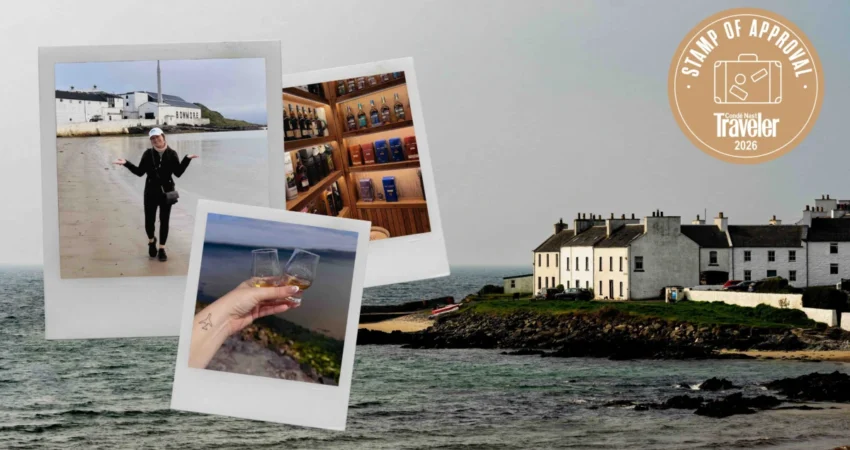
The global Scotch whisky industry, a sector that contributed approximately £7.1 billion to the United Kingdom’s economy in 2023, continues to see a surge in specialized "pilgrimage" tourism, with the Isle of Islay serving as its primary destination. Islay, the southernmost island of the Inner Hebrides, is internationally recognized for its distinct smoky, peated single malt whiskies, a profile derived from the island’s vast peat bogs and maritime climate. To meet the increasing demand for high-end, logistically complex travel to this remote region, operators like Rabbie’s have developed structured small-group expeditions. One such offering, the "Four-Day Islay and the Whisky Coast" tour, provides a comprehensive framework for understanding the intersection of Scottish heritage, industrial production, and luxury tourism.
The Strategic Importance of Islay in the Global Spirits Market
Islay, often referred to as the "Queen of the Hebrides," covers an area of approximately 240 square miles. Despite its relatively small size and a population of just over 3,000 residents, it houses nine active distilleries, with several more in the planning or construction phases. The island represents one of the five traditional whisky-producing regions of Scotland defined by the Scotch Whisky Association (SWA), alongside the Highlands, Lowlands, Speyside, and Campbeltown.

The economic impact of Islay’s distilleries extends far beyond the production of spirits. According to the SWA, whisky tourism has become the fastest-growing segment of the Scottish visitor economy, with over 2 million visits to Scotch whisky distilleries recorded annually. For Islay, the logistics of hosting these visitors are complex, requiring a synchronized network of ferry services, specialized accommodation, and expert guiding to navigate the island’s rugged terrain and remote facilities.
Analytical Chronology of the Four-Day Expedition
The Rabbie’s Islay and the Whisky Coast tour is designed as a modular experience, departing from Edinburgh and utilizing 16-seat Mercedes mini-coaches to ensure access to narrow Highland roads and remote distillery tracks. The itinerary follows a calculated progression from the urban Lowlands through the gateway towns of the West Coast, eventually culminating in a deep immersion into Islay’s distillery culture.
Phase I: Transit and Cultural Orientation
The expedition commences in Edinburgh, moving westward toward the historic town of Falkirk. This initial stage serves as a cultural orientation, featuring the Kelpies—30-meter-high horse-head sculptures designed by Andy Scott that pay homage to the horse-powered heritage of industrial Scotland.

From Falkirk, the route traverses the Lowlands into the Loch Lomond and The Trossachs National Park. This transition into the mountainous Highland boundary fault is critical for understanding the geological diversity that influences the water sources used in whisky production. The group then reaches Oban, known as the "Gateway to the Isles," where the Oban Distillery provides an initial exposure to West Highland malts, characterized by a balance of peat and maritime saltiness.
Phase II: Maritime Logistics and Island Arrival
The transit from the mainland to Islay is facilitated by Caledonian MacBrayne (CalMac) ferries, departing from Kennacraig. The two-hour crossing of the Sound of Jura is a vital component of the experience, offering views of the Paps of Jura—three conical quartzite mountains that dominate the skyline. This maritime approach highlights the isolation that historically protected Islay’s illicit stills and now defines the "island style" of maturation, where sea air is said to permeate the oak casks stored in coastal warehouses.
Phase III: The Northern and Central Distilleries
Upon arrival on Islay, the tour focuses on the central hub of Bowmore. The Bowmore Distillery, established in 1779, stands as the oldest licensed distillery on the island. It is one of the few remaining facilities that continues to use traditional floor maltings, a labor-intensive process where barley is spread across a stone floor and turned by hand to encourage germination.

The itinerary further explores the northern reaches of the island, including Bunnahabhain and Ardnahoe. Bunnahabhain is notable for its historically unpeated style, providing a contrast to the heavy smoke found elsewhere on the island. Ardnahoe, which opened in 2018, represents the modern era of Islay whisky, featuring state-of-the-art equipment designed to produce a classic peated profile using traditional methods like worm tub condensers.
Phase IV: The Southern "Kildalton" Powerhouses
The second full day on the island is dedicated to the "Kildalton Trio": Ardbeg, Lagavulin, and Laphroaig. These three distilleries, located on the southern coast, are world-renowned for producing the most intensely peated whiskies in existence.
- Ardbeg: Known for its complex balance of sweetness and heavy smoke.
- Lagavulin: Famed for its slow distillation process and rich, dried-fruit notes.
- Laphroaig: Distinguished by its medicinal, iodine-heavy profile, largely attributed to the specific composition of the peat harvested from the Glenmachrie peat moss.
This segment of the tour also incorporates a visit to the 8th-century Kildalton Cross, one of the finest surviving examples of Early Christian High Crosses in Scotland, providing historical context to the island’s long-standing Gaelic heritage.

Infrastructure and Accommodation Trends
A significant trend in high-end whisky tourism is the move toward "distillery-integrated" accommodation. Rather than traditional hotels, visitors are increasingly seeking stays in converted distillery worker cottages or on-site guest houses. The Bowmore Distillery Cottages, utilized in the Rabbie’s program, exemplify this shift. These accommodations offer a communal living environment—typically featuring shared kitchens and living spaces—that fosters social interaction among enthusiasts while maintaining the historic aesthetic of the distillery grounds.
This model of accommodation serves two purposes: it maximizes the use of existing distillery real estate and provides an immersive environment where the scents of peat smoke and fermenting mash are ever-present.
Supporting Data: The Cost of Immersive Tourism
The financial structure of specialized whisky tours reflects the high overheads associated with island logistics. A standard four-day Islay tour is priced approximately as follows:

- Base Tour Rate: $600 – $700 (includes transportation and guide).
- All-Inclusive Rate: $1,400 – $1,600 (includes accommodation and pre-booked distillery fees).
These costs are driven by the rising price of ferry transport, the scarcity of accommodation on Islay, and the increasing fees for "warehouse tastings," where participants sample whisky directly from the cask. Industry data suggests that the average spend per visitor in the Scotch whisky sector has increased by 15% over the last three years, as tourists opt for "premiumized" experiences over basic distillery tours.
Industry Perspectives and Economic Implications
The success of structured tours like the Islay Whisky Coast expedition has drawn praise from regional economic boards. A spokesperson for Highlands and Islands Enterprise noted that "specialized tourism is the lifeblood of remote communities, providing year-round employment that offsets the seasonal nature of general travel."
However, the surge in popularity also presents challenges. Islay’s infrastructure, particularly its road network and ferry capacity, often operates at near-peak levels. The "roll with the punches" philosophy mentioned by many travelers refers to the reality of island life, where distillery maintenance schedules or weather-related ferry cancellations can necessitate immediate itinerary adjustments.

The "Rest and Be Thankful" mountain pass, a final stop on the return journey to Edinburgh, serves as a metaphor for the industry’s current state. While the sector is flourishing, it remains subject to the physical and geological constraints of the Scottish landscape.
Conclusion: The Future of the Islay Expedition Model
The Rabbie’s Islay tour represents a successful template for multi-generational, interest-based travel. By combining industrial education (distillery processes), natural history (the Hebridean landscape), and social connectivity (small-group dynamics), the tour caters to a demographic that values expertise and logistical ease.
As the Scotch whisky industry continues to expand—with Islay’s Portintruan and elixir distilleries nearing completion—the demand for structured, expert-led access to these "shrines of spirit" is expected to grow. For the 60th-birthday traveler or the solo enthusiast, these expeditions offer a rare opportunity to witness the intersection of ancient geology and modern commerce in one of the world’s most unique geographic settings. The consensus among participants and industry analysts alike remains clear: for those seeking to understand the soul of Scottish spirits, the journey to the peat bogs of Islay remains an essential and high-value undertaking.

0 Comments