
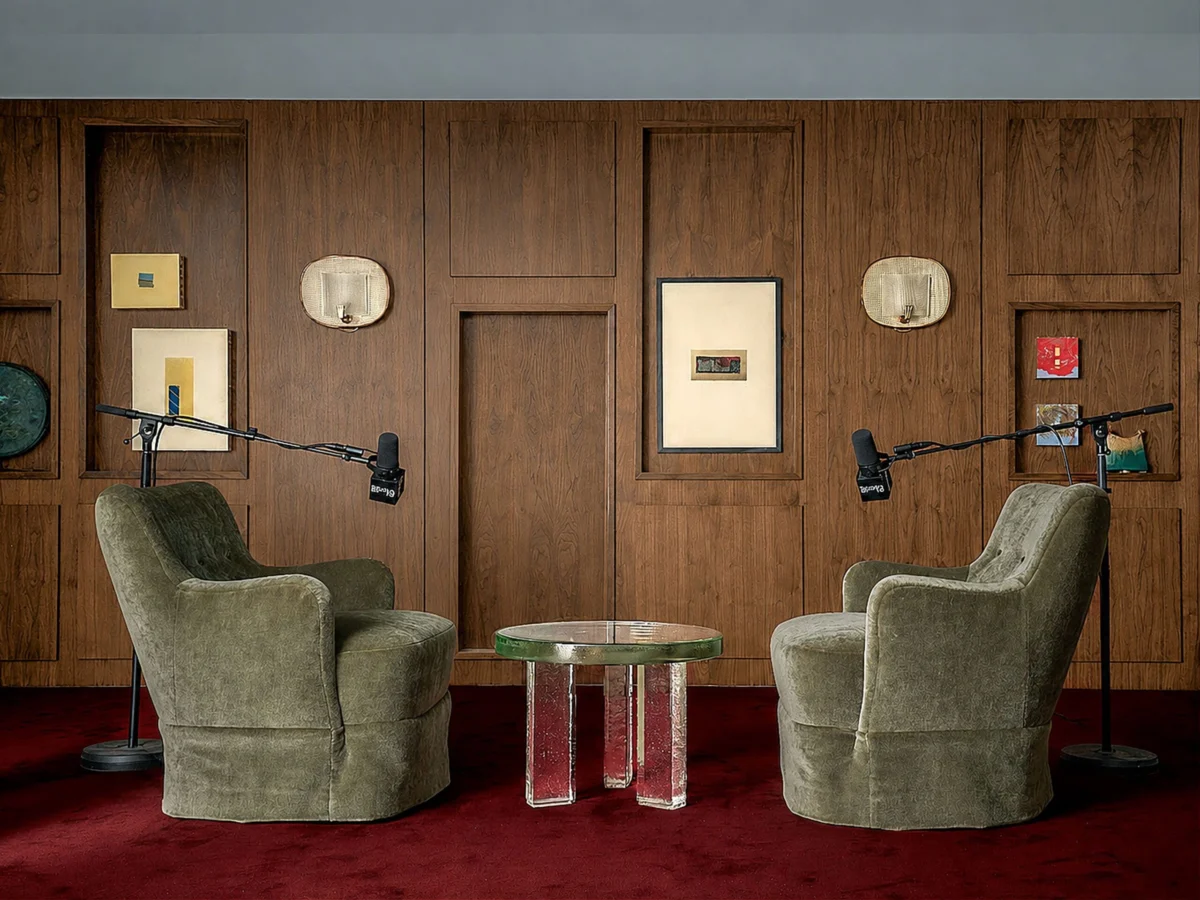
The global podcast sensation On Purpose, hosted by the widely influential author and life coach Jay Shetty, has transcended its digital roots to grace the screens of Netflix this past summer. With an online following of approximately 65 million, Shetty’s platform has amplified his reach, bringing his insightful conversations with high-profile guests to an even larger audience. Central to the visual appeal and intimate atmosphere of the Netflix series is the meticulously designed podcast studio, a space crafted by Los Angeles-based designer Mike Moser. The creation of this sanctuary for profound discussions was far from a simple task, requiring a delicate balance between aesthetic appeal, functional design, and the creation of an environment conducive to vulnerability and genuine connection.
The Genesis of an Intimate Sanctuary
Jay Shetty’s initial brief for the studio was deeply personal: "I’m in this space all the time," he stated, emphasizing the need for a location that felt like an integral part of his home rather than a sterile, traditional set. This vision extended beyond mere visual appeal for the camera; Shetty desired a space that he himself would find comforting and inspiring on a daily basis. "The studio is actually in my home," Shetty explained, "so I wanted it to feel like a natural extension of it rather than a traditional set. I drew inspiration from boutique hotels, libraries, and the kinds of spaces where you naturally slow down." The ultimate goal, he articulated, was to cultivate an environment where guests would feel safe enough to "share the parts of themselves they don’t normally reveal."
This ambition presented a unique challenge for designer Mike Moser, whose primary expertise lies in residential interiors. The project, which began in March, demanded a rapid turnaround, with construction commencing at the end of April and concluding just three weeks later. Moser recounted the intense effort involved: "My team members were working around the clock." The 800-square-foot space, initially a raw, dry-walled shell, was transformed into a sophisticated and welcoming haven.

Design Philosophy: Art, Comfort, and Conversation
Moser’s approach was to infuse the studio with distinct and provocative artistic elements, transforming the functional space into a curated experience. The design hinges on creating an atmosphere that is simultaneously "lavish yet hushed; welcoming yet sharply articulated."
At the heart of the studio’s seating arrangement are two vintage Danish armchairs, luxuriously upholstered in mohair velvet by Designs of the Time. These statement pieces are positioned around a custom round glass table by Courtney Applebaum, distinguished by its three unique, jagged slabs for legs. This unconventional base adds an artistic flair while maintaining a sense of grounded elegance. Complementing the seating and table is a Nordic Knots rug in a deep, rich wine hue, which artfully contrasts with the newly replastered, striking blue ceiling above. This interplay of colors and textures contributes to the room’s inviting yet sophisticated ambiance.
The walls of the studio are a testament to Moser’s innovative design, custom-made and paneled in bleached walnut. Drawing inspiration from architectural masterpieces like Villa Borsani, Moser incorporated deliberate protrusions and recessions. These architectural details not only add depth and definition to the space but also serve as elegant shelves for displaying curated art and objects, such as a vintage vessel and a gong. Moser’s appreciation for patinated materials is evident, with a particular fondness for "verdigris," noting that "patinated copper is so soulful."
The inclusion of art was paramount to Shetty’s vision. "I think one thing that was huge for Jay was bringing in artists that had different perspectives," Moser remarked. A notable piece featured is Rosie Clements’ Calyx (2026), a photograph cleverly transformed into a tactile artwork using bubble wrap and a UV printer. This selection exemplifies Moser’s commitment to integrating unconventional artistic mediums.

A Curated Collection of Art and Furnishings
The artwork strategically placed within the studio is not merely decorative; it’s an integral part of the narrative and atmosphere. Behind the guest’s chair, a striking juxtaposition of artistic styles is presented. A large-scale acrylic on linen piece titled Untitled XXV by Liam Stevens hangs alongside Black and Blue, a layered oil painting by J. Grant. Between these two significant works sits a vintage Fortuny lamp, casting a warm, diffused light that enhances the overall mood. Moser describes this combination as "arresting," but more importantly, designed to be "flattering to guests without flattening into a neutral backdrop." This suggests a deliberate choice to select pieces that enhance, rather than detract from, the human element of the conversation.
Moser also strategically incorporated colors to balance the visual palette and evoke specific emotions. "We used a lot of green in this space as a counterbalance to the blue and the red," he explained, aiming to inject "a sense of nature." He further elaborated on the psychological impact of color, stating, "And, he adds, ‘it’s such a friendly, warm color. Given the type of work Jay does—these are dead serious convos—it should be a space that’s inviting and warm." This sentiment is embodied in Maria Yelletisch’s Repetition Sobre Verde (2023), which hangs above a vintage vessel sourced from JF Chen and a Just Andersen lamp. This thoughtful integration of color and artistic elements creates a welcoming and nurturing environment, essential for the profound discussions that define On Purpose.
The Triple Duty of Design
The design of the On Purpose studio was a multifaceted endeavor, requiring each element to fulfill multiple roles. As Moser observed, "each choice he made had to do triple duty." The studio needed to be welcoming to guests, reflect Shetty’s personal aesthetic, and serve as a compelling backdrop for a globally recognized television series.
On Purpose, launched in 2019, has become a cornerstone of the podcasting world, featuring conversations with prominent figures such as Michelle Obama, Lewis Hamilton, and Selena Gomez. The podcast delves into the intersection of wellness, personal growth, and contemporary culture, positioning it as one of the most influential mental health podcasts globally. The first season on Netflix, which premiered in July, included notable guests like Karl-Anthony Towns, Jake Shane, Lucy Hale, and Camila Mendes, further solidifying its cultural impact.

This broad appeal meant that Moser and his team had to consider not only the aesthetic coherence of the room but also how each element would visually interact with a diverse range of guests. The design had to be adaptable and flattering, ensuring that every individual featured on screen felt comfortable and well-represented. Ultimately, the success of the design was also measured by its impact on Shetty himself. As Moser humorously noted, "Like the red carpet—it just looks incredibly good on Jay. He’s swaggy as hell." This underscores the successful fusion of high-concept design with personal style.
The Impact of Environment on Conversation
Jay Shetty underscored the profound impact of the studio’s design on the nature of the conversations held within it. "One of the most meaningful moments was welcoming guests into the space for the first time," he shared. "It was rewarding to see the studio become a home for meaningful conversations. It reinforced something we’ve always believed: The environment matters. Before a single question is asked, the space can set the tone for a conversation, creating an atmosphere that feels warm, intimate, and conversation-first."
This philosophy of environmental influence aligns with research in psychology and sociology that highlights the connection between physical space and human interaction. Studies on environmental psychology suggest that the design of a room can affect mood, stress levels, and the willingness of individuals to engage in open communication. The intentional choices made by Moser—from the plush velvet armchairs to the calming green hues and the thoughtfully curated artwork—all contribute to creating a sense of safety and intimacy. This, in turn, facilitates the deeper, more vulnerable discussions that have become the hallmark of On Purpose.
The transition of On Purpose to Netflix has not only broadened its audience but also elevated its visual presentation. The studio, conceived as an extension of Shetty’s home and a sanctuary for deep dialogue, stands as a prime example of how thoughtful design can enhance the impact and reach of a media platform. By prioritizing comfort, aesthetic appeal, and artistic expression, Jay Shetty and Mike Moser have created a space that not only looks good on camera but actively fosters the profound connections and insights that define the show’s enduring success. The studio is more than just a backdrop; it is an active participant in the journey of self-discovery and understanding that On Purpose offers to millions worldwide.

0 Comments