
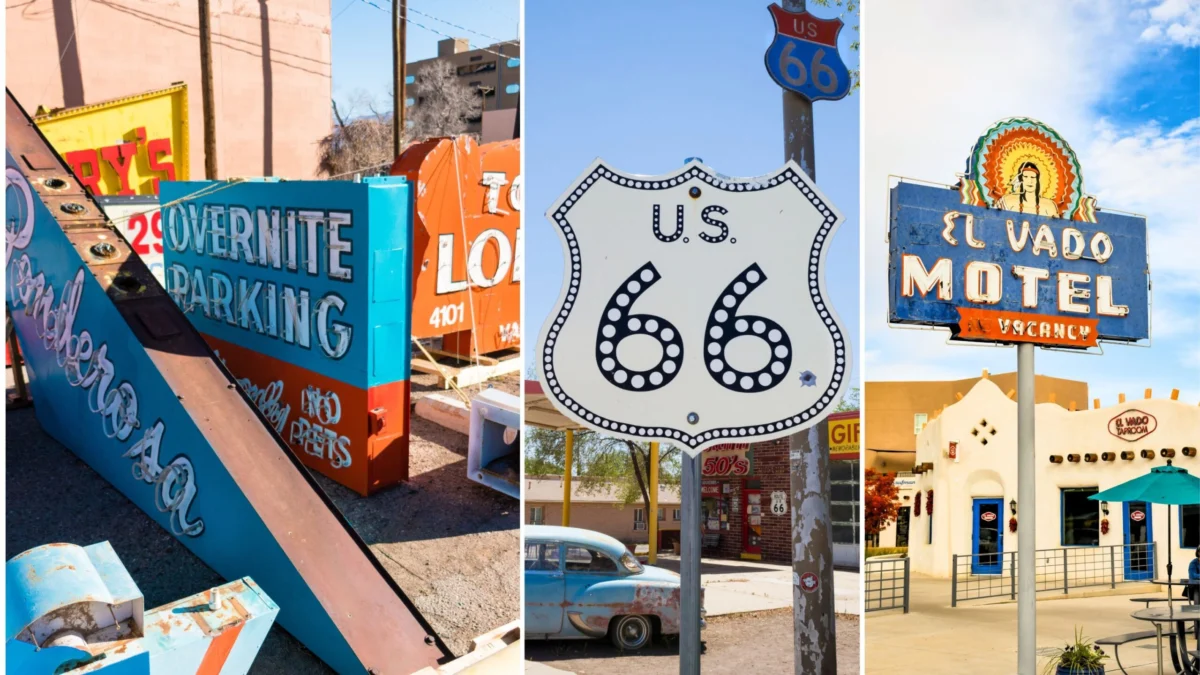
As the United States prepares to celebrate the centennial of Route 66 in 2026, the iconic "Mother Road" remains a central pillar of American cultural identity and domestic tourism. While traditionally navigated by automobile, the 18-mile stretch of the highway that bisects Albuquerque, New Mexico, offers a unique urban case study for pedestrian exploration. Albuquerque holds the distinction of containing the longest continuous urban stretch of the route, which originally spanned 2,448 miles from Chicago to Los Angeles. In New Mexico alone, the road covers 535 miles, more than any other state on the route. This urban corridor serves as a living museum of 20th-century Americana, blending historic neon preservation with the socioeconomic complexities of a modern mid-sized American city.

The Evolution of the Mother Road in Albuquerque
Route 66 was officially commissioned in 1926, but its path through Albuquerque has not remained static. Originally, the road entered the city from the north and south via 4th Street. However, in 1937, the route was realigned to follow an east-west trajectory along Central Avenue. This realignment created a unique historical anomaly at the intersection of Central Avenue and 4th Street, which remains the only location in the United States where Route 66 crosses its own former path.
For the city of Albuquerque, Route 66—known locally as Central Avenue—is more than a nostalgic landmark; it is a vital economic artery. The city’s segment of the road passes through several distinct districts, including the historic Old Town, the commercial Downtown core, the University of New Mexico (UNM) campus, and the vibrant Nob Hill neighborhood. Each of these districts reflects a different era of the road’s development, from the mission-style architecture of the 1930s to the neon-drenched mid-century modernism of the 1950s.

Preservation and the Neon Legacy
A primary draw for Route 66 enthusiasts is the concentration of vintage neon signage and "roadside kitsch." In Albuquerque, city officials and private developers have made significant investments to preserve these landmarks. One notable example is the El Vado Motel. Originally opened in 1937, the motel underwent a massive $18 million redevelopment project that concluded in 2018. The project transformed the historic site into a multi-use space featuring a boutique hotel, a pod-style food hall, and retail spaces, all while meticulously preserving its iconic neon sign and Pueblo Revival architecture.
Similar preservation efforts are visible at the Monterey Non-Smokers Motel and the El Don Motel, the latter of which is currently undergoing renovations to restore its 1950s-era charm. These efforts are supported by the National Park Service’s Route 66 Corridor Preservation Program, which provides cost-share grants to help protect and restore significant historic sites along the highway.

A Chronological Survey of the Urban Corridor
To understand the current state of Route 66, a six-hour pedestrian survey conducted in early June reveals the intersection of history, commerce, and community.
11:45 AM – 1:00 PM: The West Side and Indigenous Art
The survey begins on the western edge of the city, where the road is characterized by sprawling motels and trading posts. The Rio Grande Trading Post stands as a major economic hub in this sector. According to staff, the facility is one of the largest purveyors of Native American art in the country, supplying traditional Navajo sand paintings, Zuni silversmithing, and Hopi pottery to over 800 retail stores across the United States. This sector highlights the symbiotic relationship between Route 66 tourism and the preservation of Indigenous craft economies.

1:00 PM – 2:30 PM: Cinematic History and Urban Transitions
Moving eastward, the landscape transitions into a blend of culinary landmarks and cinematic history. The Dog House, a drive-in restaurant famous for its chili-cheese dogs, has gained international recognition as a frequent filming location for the critically acclaimed television series Breaking Bad and Better Call Saul. The "Breaking Bad Effect" has become a measurable component of Albuquerque’s tourism industry; a 2019 study estimated that the show’s legacy contributes over $70 million annually to the local economy through "set-jetting" tourism.
Nearby, the Good Medicine tattoo shop, housed in a former filling station, exemplifies the adaptive reuse of Route 66 infrastructure. This trend of repurposing mid-century service stations into modern retail and service hubs has been a key strategy in the city’s urban renewal efforts.

2:30 PM – 4:00 PM: Downtown and the Centennial Preparation
The downtown core of Central Avenue is home to the Route 66 Tourist Office, which serves as a headquarters for the upcoming centennial celebrations. Here, officials provide historical context and maps to travelers. This area also features the KiMo Theatre, a 1927 "Pueblo Deco" landmark that represents the unique architectural fusion found only in the American Southwest.
However, this section of the road also brings the city’s social challenges into focus. Business owners, such as those at the thrift shops on 2nd Street, note that the pandemic-era economic shifts have led to increased visibility of the unhoused population and a heightened presence of federal agencies like Immigration and Customs Enforcement (ICE). These realities provide a stark contrast to the romanticized "open road" narrative often associated with the highway.

4:00 PM – 5:45 PM: The University District and Nob Hill
The final leg of the survey passes through the University of New Mexico (UNM) campus. This area is characterized by high pedestrian traffic and a shift toward student-oriented services, such as kava bars and fitness studios. The 66 Diner, another major landmark, serves as an anchor for this district, offering a 1950s-themed experience that remains a staple for both locals and tourists. The survey concludes at the "Greetings from Burque" mural in Nob Hill, a neighborhood that boasts the highest concentration of restored neon signs in the city.
Supporting Data: The Economic Impact of Route 66
The significance of Route 66 to the New Mexico economy is supported by data from the New Mexico Tourism Department. In 2022, tourism spending in the state reached a record $8.3 billion, with a significant portion attributed to road-trip-based travel. The Route 66 Centennial Commission, established by federal law in 2020, is currently coordinating with state agencies to maximize the economic impact of the 2026 anniversary.

Key Statistics:
- Total Miles in NM: 535
- Urban Miles in Albuquerque: 18
- Annual Tourism Revenue (NM): $8.3 billion (as of 2022)
- Preservation Grants: Over $5 million distributed via the Route 66 Corridor Preservation Program since 2001.
Official Responses and Civic Engagement
City leaders have launched several initiatives to improve the perception and safety of the Route 66 corridor. The "Stop Bagging, Start Bragging Albuquerque" campaign is a notable civic engagement project designed to encourage residents to share positive narratives about the city’s unique identity. The campaign highlights Albuquerque as "the most interesting mid-size city in America," focusing on its cultural diversity and historical depth rather than its publicized social issues.

Additionally, the Albuquerque Department of Arts & Culture has commissioned various public art installations along Central Avenue, including the "Alebrijes & Nahuals" collection. These sculptures, created by Oaxacan artists, serve to reinforce the city’s cultural ties to Mexico and provide visual interest for both drivers and pedestrians.
Broader Impact and Implications
The state of Route 66 in Albuquerque serves as a microcosm of the challenges facing historic American infrastructure. As the centennial approaches, the city must balance the demands of heritage tourism with the needs of a growing urban population. The transition of the road from a primary transit artery to a cultural destination has required a shift in urban planning, prioritizing walkability and historic preservation over high-speed traffic.

Furthermore, the pedestrian perspective reveals that the "Mother Road" is not merely a relic of the past but a functioning urban environment. While the kitsch and neon remain central to its brand, the road’s true value lies in its ability to connect disparate neighborhoods and provide a platform for local commerce. As travelers from around the world descend upon Albuquerque for the 2026 centennial, they will encounter a road that is simultaneously a monument to 20th-century ambition and a mirror of 21st-century American life. The success of the centennial will likely be measured not just by tourist numbers, but by the city’s ability to sustain the delicate ecosystem of small businesses and historic sites that make the 18 miles of Central Avenue a singular global destination.

0 Comments