
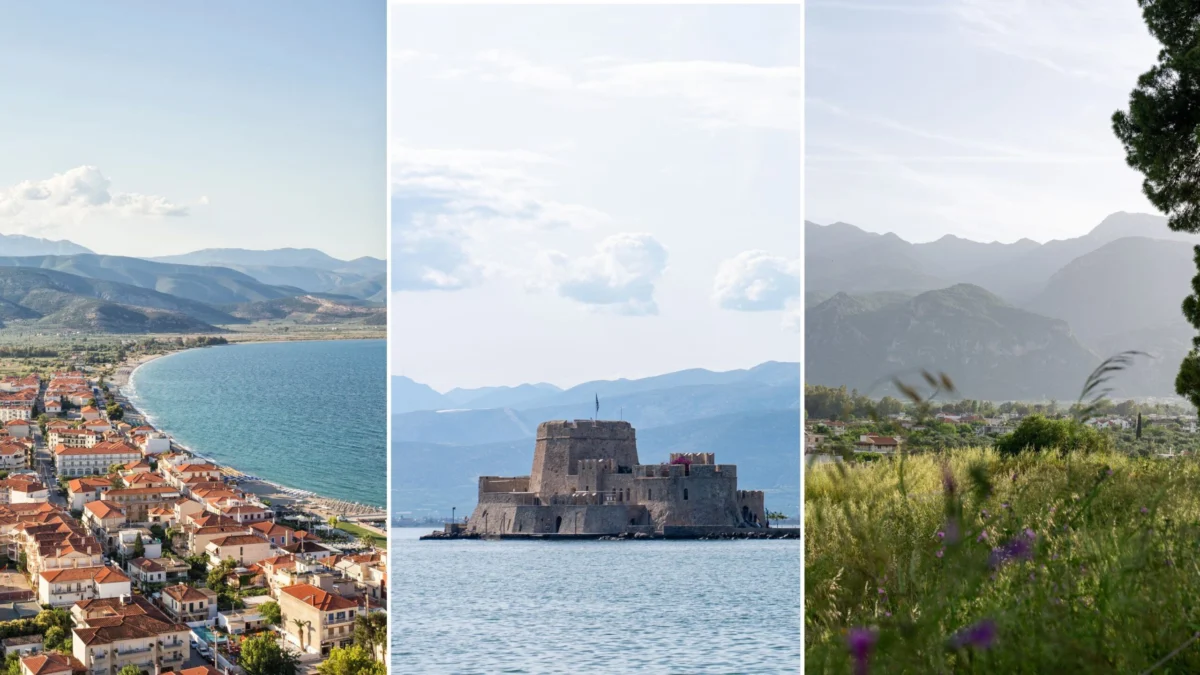
The Peloponnese, a vast and rugged peninsula forming the southernmost part of mainland Greece, is currently undergoing a significant transformation from a well-kept local secret to a global hub for high-end sustainable tourism and cultural exploration. Despite its proximity to Athens and its immense historical density, the region has historically remained in the shadow of the more famous Aegean islands. However, a combination of major cinematic exposure, a massive new hiking infrastructure project, and billions of euros in luxury hospitality investment is fundamentally altering the peninsula’s trajectory. As of 2025, data from the Bank of Greece indicates that only three out of every 100 foreign visitors to the country currently reach the Peloponnese, but industry analysts predict this figure will triple over the next decade as the region positions itself as an alternative to the overcrowded tourist centers of Mykonos and Santorini.

The Odyssey Effect: Cinema as a Catalyst for Regional Growth
The primary driver of the current international interest in the Peloponnese is the release of Christopher Nolan’s epic blockbuster, The Odyssey. Reimagining Homer’s 3,000-year-old narrative for a modern audience, the film was shot extensively on location in the region of Messinia. This cinematic endeavor has brought global attention to specific landmarks such as Nestor’s Cave, where the film depicts the encounter with the Cyclops, and the medieval Methoni Castle, which serves as the backdrop for the character of Telemachus.
The film explores the ancient Greek concepts of xenia—the sacred law of hospitality—and nostos, the theme of homecoming. These themes resonate deeply with the local population, many of whom are returning to the peninsula after decades of economic migration. The "Odyssey Effect" is not merely a matter of film tourism; it has sparked a broader conversation about the peninsula’s identity as the literal and metaphorical home of Greek mythology. For the regional government, the film serves as a high-profile marketing tool to showcase the Peloponnese’s unique landscape, which includes over 860 miles of jagged coastline and dramatic mountain ranges like the Taygetus and Parnon.

A Chronology of Modern Development: From Infrastructure to Luxury
The emergence of the Peloponnese as a world-class destination is the result of a multi-decade strategy aimed at improving accessibility and economic stability.
In the early 2000s, the Greek government initiated a series of infrastructure projects, including the construction of modern highways and tunnels that reduced the travel time from Athens to the heart of the peninsula to under three hours. This was followed by the vision of the late Captain Vassilis Constantakopoulos, a Messinian shipping magnate who sought to revitalize his birthplace. His efforts culminated in the opening of Costa Navarino, an eco-conscious luxury resort that set a new standard for sustainable development in the Mediterranean.

By 2022 and 2023, the region saw the entry of ultra-luxury global brands, including W Hotels and Mandarin Oriental. Looking forward to 2026 and beyond, the "Peloponnese Riviera" near Porto Heli is slated for over €2 billion in further investments. These projects, which include planned developments by Four Seasons and Six Senses, are designed to include not only luxury accommodations but also high-end residences, marinas, and specialized sports facilities. The objective is to create a year-round tourism model that prevents the seasonal "ghost town" effect seen in other parts of Greece.
The Peloponnese Trail Network: 1,200 Miles of Living History
While luxury resorts cater to the high-end market, the Peloponnese Trail Network is designed to attract the growing demographic of "slow travelers" and outdoor enthusiasts. Spanning nearly 1,200 miles, it is the largest organized hiking network in Greece. The project, led by community organizations and experts like Nikos Stakias and Trekking Hellas, connects ancient footpaths that have been used for millennia by shepherds, soldiers, and pilgrims.

The network is divided into 11 official trails, with the Argolis Trail and the Parnon Trail serving as primary examples of the project’s scope. The 64-mile Argolis Trail takes hikers past the 4th-century BC Theater of Epidaurus—a UNESCO World Heritage site—and through the Ottoman-era stone paths leading to the Venetian Palamidi Fortress in Nafplio.
In the southeast, the 143-mile Parnon Trail traverses remote mountain villages such as Pera Melana and Leonidio. These paths are more than just recreational routes; they are economic lifelines for small communities. By bringing hikers through these inland villages, the trail network encourages the preservation of local guesthouses and traditional agriculture, providing an alternative to the coastal-centric tourism model.

Cultural Preservation and the Revival of Ancient Dialects
One of the most profound aspects of the Peloponnese’s reawakening is the focus on "intangible heritage." In the town of Leonidio, nestled beneath the massive red cliffs of the Parnon range, a dedicated group of residents is fighting to save the Tsakonian language. A direct descendant of the ancient Doric dialect spoken by the Spartans, Tsakonian is one of the oldest living languages in Europe.
Topography played a crucial role in the survival of this language; the isolation of the Parnon mountains kept the Tsakonian-speaking villages cut off from the rest of Greece until the mid-20th century. Today, authors and educators like Eleni Manou are publishing children’s books and hosting workshops to ensure the dialect does not vanish with the elderly population. The local Melitzazz festival in July now serves as a platform where Tsakonian traditions are integrated into modern music and art, signaling a shift from preservation to active cultural practice.

Similarly, in the village of Geraki in Laconia, the 5,000-year-old tradition of vertical-loom weaving is experiencing a resurgence. Part of the Greek National Intangible Heritage, Geraki weaving produces kilims featuring geometric designs that date back to the Bronze Age. After decades of decline, the establishment of weaving schools in Geraki and Leonidio has attracted students from across Europe, ensuring that the skills once attributed to Homer’s Penelope remain a viable craft in the 21st century.
Reversing the Brain Drain: Demographic and Economic Implications
The Peloponnese has historically been a region of exodus. Following World War II and the Greek Civil War, and again during the 2008 financial crisis, many young residents left for Athens or overseas. This "brain drain" resulted in several villages becoming nearly extinct. For instance, the village of Vamvakou in Laconia saw its population dwindle to just nine year-round residents.

However, recent years have seen a reversal of this trend. Supported by the Stavros Niarchos Foundation, the Vamvakou Revival project has successfully brought young families back to the village by investing in technology, innovation, and tourism infrastructure. The population has since tripled, and the village now serves as a model for rural regeneration.
Social entrepreneurs like Maria Monastirioti are also playing a key role in this demographic shift. By organizing gastronomic experiences—such as cooking classes focused on traditional trachanokeftedes (fermented milk pasta balls)—they are creating jobs that celebrate local identity. This shift from subsistence farming to value-added heritage tourism is providing a sustainable economic base for the next generation of Peloponnesians.

Analysis of Broader Impacts and Future Outlook
The transformation of the Peloponnese carries significant implications for the future of the Mediterranean travel industry. As global travelers become increasingly wary of "overtourism," the peninsula offers a blueprint for how a region can scale its tourism capacity without losing its soul. The focus on high-yield, low-impact visitors—those interested in hiking, history, and authentic culinary experiences—aligns with the European Union’s broader goals for sustainable regional development.
Furthermore, the Peloponnese is positioning itself as a center for "educational tourism." With sites ranging from the Mycenaean ruins (the birthplace of the first Greek civilization) to Mystras (the last stronghold of the Byzantine Empire) and Nafplio (the first capital of modern Greece), the peninsula provides a chronological map of Western history.

In conclusion, the Peloponnese is no longer just a destination for domestic weekenders or niche history buffs. Driven by the global reach of cinema, a massive investment in outdoor infrastructure, and a grassroots movement to preserve ancient languages and crafts, the peninsula is undergoing a profound nostos. This "homecoming" of the Peloponnese to the global stage represents a balanced approach to modernity, where the ghosts of the past—from Hercules to Odysseus—are not just remembered, but are used to build a resilient and prosperous future for the "blessed land."

0 Comments