
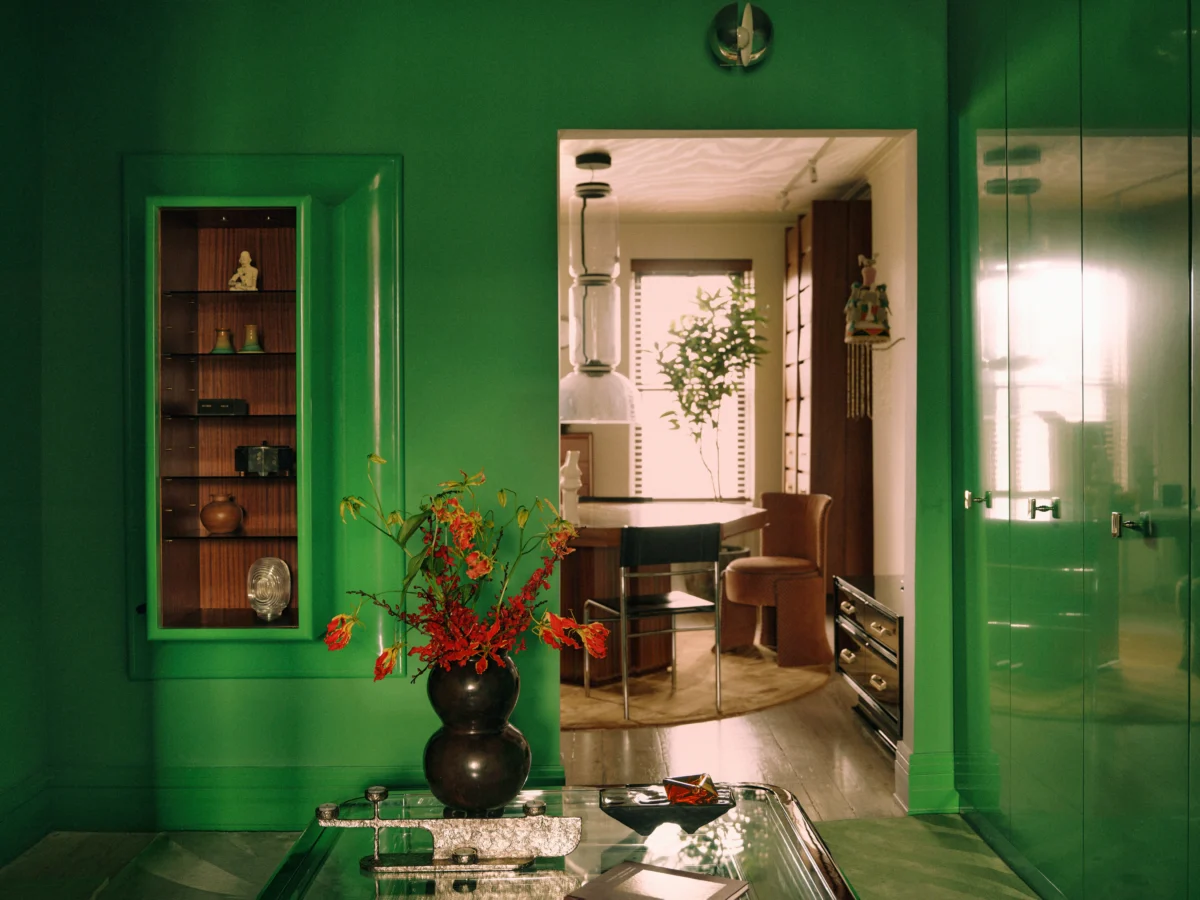
While their design aesthetics diverge significantly, two prominent figures in the interior design world, Athena Calderone and Mark Grattan, have recently illuminated a shared passion for statement lacquer. Calderone, featured in the April issue, incorporates oxblood lacquer on her kitchen island and high-gloss ceilings in her Tribeca apartment. This month, Grattan commands attention in his Brooklyn home, surrounded by a vibrant parrot green lacquer frame that seamlessly integrates with its equally vivid surroundings. For Grattan, lacquer is a primary medium of self-expression, evident throughout his residence, from his gleaming piano-black bed to the meticulously lacquered cabinetry. This trend is not an isolated revival; Architectural Digest had already heralded lacquer’s return in 2024, and Gucci’s impactful Salone exhibit that same year further solidified its contemporary relevance. The current embrace of lacquer signifies a robust affirmation of its enduring appeal.
The Evolution of Lacquer in Interior Design
The application of lacquer in interior design, while experiencing a contemporary surge, boasts a rich history. Originating in East Asia, particularly China and Japan, lacquerware has been prized for centuries for its durability, lustrous finish, and intricate artistry. This technique involves applying multiple layers of a resinous sap derived from the lacquer tree, which hardens upon exposure to air, creating a smooth, impermeable, and often deeply colored surface. Its journey to Western interiors gained momentum during the Art Deco period, where its exoticism and glamorous sheen aligned perfectly with the era’s fascination with modernity and luxury.

The mid-20th century saw lacquer become synonymous with the opulent "Hollywood Regency" style. Designers like Billy Haines and Karl Springer were instrumental in popularizing its use in the homes of film stars and socialites. The "cinematic" quality of lacquer, with its ability to reflect light and create dramatic visual effects, became a hallmark of this era, lending an air of sophistication and theatricality to residential spaces.
Lacquer’s Modern Manifestations: Beyond Freestanding Pieces
Historically, lacquered elements often appeared as freestanding statement pieces – a striking bed, a polished dining table, or an elegant cabinet. However, the current design landscape is witnessing a significant shift towards integrated, built-in applications of lacquer. This evolution signifies a move from lacquer as an accent to lacquer as a foundational element that shapes the very contours of a room.
Examples abound across the design spectrum. In the home of Broadway producer Jordan Roth, light pink and "petroleum green" millwork showcases this trend, demonstrating how lacquer can define architectural features and create immersive environments. Similarly, a compact 646-square-foot apartment features striking red lacquered kitchen cabinets that provide a vibrant counterpoint to a wall of striped, Memphis-style tiling, illustrating how the material can be both functional and a powerful stylistic driver in smaller spaces.

This integration extends to more traditional settings as well. A library, for instance, can be enveloped in dark green lacquered shelving, creating a rich, enveloping atmosphere that draws the eye and adds depth. Designer Miles Redd has incorporated lacquered elements, such as a bar hidden behind a lacquered door within a dining room wall, in his California colonial revival projects, demonstrating its versatility across different architectural styles.
The Democratization of Lacquer: Mass-Market Accessibility
The appeal of lacquer is no longer confined to bespoke installations or high-end designer showrooms. Major retailers are increasingly incorporating lacquered finishes into their offerings, making the material more accessible to a broader consumer base. This democratization is driven by the inherent glamour and polish that lacquer brings to any object, allowing shoppers to imbue their homes with a sense of luxury, even on a smaller scale.
West Elm’s collaboration with Emma Chamberlain, for instance, features a range of lacquered items, from petite table lamps to storage consoles, bringing the trend into more casual living spaces. IKEA offers a stately green lacquered wardrobe, providing a functional and stylish storage solution. CB2 presents a comprehensive collection in white lacquer, while Anthropologie offers sideboard variations in alluring teal and pink finishes. Even outdoor furniture is embracing the trend, with pieces like the CB2 Cassis Lacquered Outdoor Side Table demonstrating lacquer’s resilience and adaptability.

This widespread availability suggests a growing consumer desire for visually impactful and sophisticated home furnishings. The "cinematic" quality associated with lacquer, once the exclusive domain of Hollywood elites, is now attainable through readily available furniture and decor.
The Psychology of Shine: Why Lacquer Captivates
The enduring allure of lacquer can be attributed, in part, to the inherent human attraction to shine and reflectivity. As Aurélien Raymond, co-founder of the Paris-based design studio Akademos, noted, "The human eye is naturally drawn to shininess." This innate response contributes to the captivating quality of lacquered surfaces, making them focal points and elevating the overall aesthetic of a space.
The reflective nature of lacquer also plays a crucial role in interior design. It can enhance natural light, making spaces feel larger and more airy. In smaller rooms, strategically placed lacquered elements can create an illusion of greater depth and spaciousness. Furthermore, the smooth, unbroken surfaces of lacquer can contribute to a sense of calm and order, while the saturated colors often associated with it can evoke a sense of richness and energy.

Lacquer as a Tool for Expression and Curation
For designers like Grattan and Calderone, lacquer is more than just a finish; it’s a deliberate choice that amplifies their design intent. Grattan’s use of vivid green lacquer, for example, is not merely decorative but integral to the architectural and conceptual framework of his home. It frames views, reflects light, and creates a cohesive, immersive experience.
Calderone’s application of high-gloss lacquer on ceilings and islands serves to draw attention to specific architectural details and functional areas, demonstrating how the material can be used to subtly guide the viewer’s eye and highlight key design features. This intentionality aligns with the contemporary approach to home design, where spaces are increasingly curated for their visual impact, often with an eye towards social media sharing.
The rise of lacquer, particularly in built-in applications, encourages a mindset akin to that of a set designer. As Raymond explained, designers often use lacquer "to underline details we wish people to notice through our interiors." This approach transforms homes into curated environments, where every surface and element contributes to a larger narrative. This aligns with the current era of constant visual curation, where homes are increasingly designed to be "photo-ready" for online platforms.

Fact-Based Analysis of Implications
The widespread adoption of lacquer, from high-end residential projects to mass-market retail, has several significant implications for the interior design industry and consumer behavior:
- Increased Demand for Specialized Craftsmanship: While mass-produced lacquered items are becoming more common, the demand for high-quality, bespoke lacquering services is likely to grow. This could lead to increased opportunities for skilled artisans and specialized workshops.
- Trend Towards Bold Color and High-Gloss Finishes: The popularity of lacquer signals a broader consumer willingness to embrace bold colors and highly reflective surfaces. This could influence color palettes and material choices across various design categories.
- Influence on Retail and Manufacturing: Furniture manufacturers and retailers are responding to this trend by expanding their lacquered product lines. This indicates a shift in market demand and a strategic adaptation by the industry.
- Consumer Empowerment and DIY Potential: The availability of lacquered furniture and the inherent appeal of the finish encourage consumers to experiment with their own spaces. Smaller-scale DIY projects, such as lacquering furniture or accent walls, become more appealing.
- Sustainability Considerations: While lacquer offers aesthetic benefits, it’s important to consider the environmental impact of its production and application. The industry may see a push towards more sustainable lacquer formulations and application methods.
- Evolution of Interior Aesthetics: The prevalence of lacquer suggests a move towards interiors that are more visually dynamic, luxurious, and expressive. This can lead to a more theatrical and curated approach to home design.
Notable Examples and Product Highlights
The integration of lacquer is evident across a range of prestigious projects and commercially available products:
- Mark Grattan’s Brooklyn Residence: Features extensive use of lacquer, including a commanding parrot green frame and a piano-black bed, showcasing its transformative power.
- Athena Calderone’s Tribeca Apartment: Utilizes oxblood lacquer on a kitchen island and high-gloss lacquer on ceilings, demonstrating its application in both functional and architectural elements.
- Jordan Roth’s Home: Showcases light pink and "petroleum green" lacquered millwork, exemplifying built-in applications that define architectural spaces.
- Atelier HA’s Colorful Apartment: Incorporates shiny red lacquered kitchen cabinets juxtaposed with striped tiling, highlighting the material’s use in creating vibrant, high-contrast spaces.
- West Elm x Emma Chamberlain Petite Lacquer Table Lamp: A prime example of mass-market accessibility, bringing the lacquered trend to smaller, more affordable home accessories.
- Zara Lacquered Nesting Tables (Set of 3) by Colin King: Offers a sophisticated and versatile lacquered furniture option for various living spaces.
- Anthropologie Wright Lacquer Sideboard: Provides a stylish and functional storage solution with a distinct lacquered finish.
- CB2 Cassis Lacquered Outdoor Side Table: Demonstrates the durability and aesthetic appeal of lacquer in outdoor settings.
- Addison Ross Lacquered Scallop Ottoman Tray: A decorative accent piece that adds a touch of luxury and polish to home interiors.
- The Nautilus Mirror by Astrid Houssin (via The Oblist): A high-end decorative item that embodies the intricate craftsmanship and glamorous finish associated with premium lacquered pieces.
The Enduring Appeal of Lacquer
The current wave of lacquer in interior design is more than a fleeting trend; it represents a rediscovery and reinterpretation of a material with a storied past. Its ability to add depth, vibrancy, and a sophisticated sheen makes it an enduring choice for designers and homeowners alike. From the bold statements of Grattan’s home to the accessible pieces found in major retail stores, lacquer continues to captivate, offering a way to inject glamour, personality, and a touch of theatricality into contemporary living spaces. As the design world continues to explore its multifaceted potential, lacquer is poised to remain a significant element in shaping the aesthetics of our homes for the foreseeable future.

0 Comments