
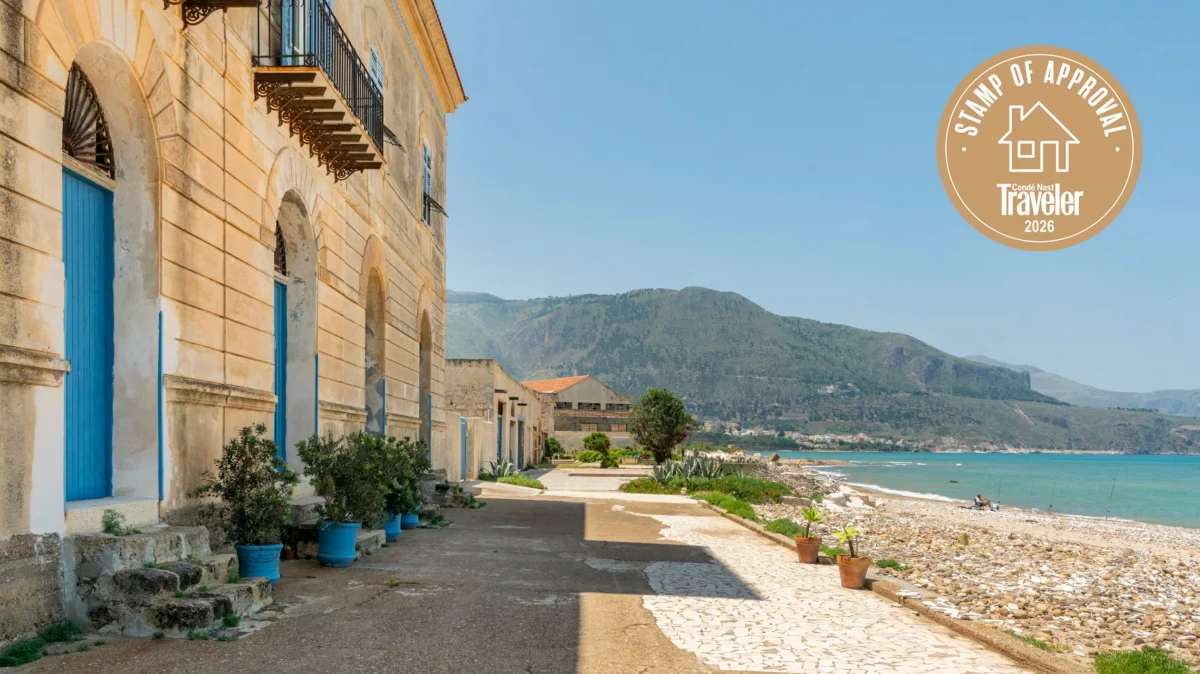
The Sicilian coastline, particularly the stretch along the Alcamo region in the northwest, is currently undergoing a significant cultural and economic transition. At the center of this movement is the Tonnara Foderà di Magazzinazzi, a historic tuna fishery that has been repurposed as a high-end guesthouse. This transition represents a broader trend in the Mediterranean: the conversion of industrial maritime heritage into "slow tourism" destinations. Built in 1913, the Tonnara serves as a physical record of Sicily’s once-dominant tuna industry, which sustained local economies for centuries before falling into decline in the mid-20th century. Today, the property is managed by the sixth generation of the Foderà family, illustrating a successful model for private heritage preservation in a region often challenged by the upkeep of historic estates.
Historical Foundations: The Rise and Fall of the Sicilian Tuna Industry
The history of the Alcamo coastline is inextricably linked to the tonnara—a complex system of fixed nets used to intercept migrating Atlantic bluefin tuna. Archaeological evidence suggests that tuna fishing in this area dates back thousands of years, with rudimentary fisherman dwellings still visible along the coast from the 17th century. However, the industrial golden age of the region began in the late 19th century when prominent Sicilian families, including the Foderà dynasty, consolidated control over the industry.
The Tonnara Foderà di Magazzinazzi was established as a strategic headquarters for these operations. Constructed from local golden stone, the three-story structure was designed to be multifunctional. It served as an Art Nouveau villa for the family, administrative offices for the business, and a storage facility for fishing equipment. The central watchtower, which remains the building’s most distinctive feature, allowed overseers to track the movement of fishing boats and coordinate the mattanza—the traditional, highly ritualized tuna harvest.
The industry thrived until the 1960s, at which point environmental factors, overfishing, and the advent of industrial deep-sea trawling rendered traditional coastal fisheries obsolete. While many similar structures across Sicily were abandoned or demolished, the Foderà family maintained ownership of the Magazzinazzi site, eventually pivoting toward hospitality as a means of ensuring the building’s survival.
Architectural Integrity and Contemporary Adaptive Reuse
The Tonnara Foderà di Magazzinazzi is a notable example of the Stile Liberty, the Italian variation of Art Nouveau, which flourished in Sicily during the early 20th century. The building’s recent renovation has prioritized the preservation of these original features while introducing contemporary aesthetic elements. The exterior is characterized by its sun-bleached golden masonry and a terra-cotta roof, contrasted by modern blue shutters. This specific color palette has drawn comparisons to the highly stylized visual symmetry associated with modern cinema, specifically the works of director Wes Anderson, a factor that has increased the property’s visibility on digital travel platforms.
The interior layout reflects its history as a private residence rather than a traditional hotel. The building is divided into four distinct apartments, which can be booked individually or as a collective unit.
- The Watchtower Suite: The most historically significant portion of the building, the watchtower features vaulted ceilings and a red Murano glass light fixture. The space is characterized by its exposure to the elements; the sounds of the wind and the Mediterranean Sea are integral to the experience. However, the vertical nature of the structure presents logistical challenges, such as a detached bathroom located on a lower floor, highlighting the compromise between historical authenticity and modern convenience.
- The Ground Floor and Shared Spaces: The heart of the property lies on the upper levels, where shared common areas encourage a communal living atmosphere. The kitchen retains a rustic Sicilian aesthetic, featuring mauve-colored wall tiles, vintage dressers, and original flagstone flooring.
- The First-Floor Apartments: These units offer a more conventional layout, featuring high ceilings, checkerboard flooring, and large windows overlooking the Mediterranean or the property’s lush gardens. The decor incorporates Art Deco headboards and vintage film posters, bridging the gap between the building’s 1913 origins and mid-century cultural influences.
Regional Connectivity and Tourism Infrastructure
The success of secluded heritage sites like Tonnara Foderà di Magazzinazzi is heavily dependent on regional infrastructure. Located approximately 35 minutes from Falcone-Borsellino Airport in Palermo, the site requires visitors to utilize private transport, as it sits on a remote stretch of sand away from major residential hubs.
The proximity of Castellammare del Golfo, a ten-minute drive away, provides the necessary commercial support for the guesthouse. Castellammare del Golfo has transitioned from a fishing village to a vibrant tourist hub, with its marina and Corso Giuseppe Garibaldi serving as centers for local gastronomy and retail. This symbiotic relationship between remote heritage stays and nearby urban centers is a key component of the "hidden gem" tourism model currently trending in the Italian market.
Comparative Heritage Models: Tonnara di Scopello and Erice
The Tonnara Foderà di Magazzinazzi does not exist in isolation; it is part of a network of historic sites in northwest Sicily that have successfully monetized their heritage.
- Tonnara di Scopello: Located a short distance away, this site serves as a museum and a protected cove. Unlike the Magazzinazzi property, which focuses on private accommodation, Scopello operates on a high-volume ticketing model. Visitors pay an entry fee (typically under 20 euros) to access the historic grounds and the aqua-water cove. This model demonstrates the high demand for maritime heritage sites, though it also faces challenges related to over-tourism fueled by social media.
- The Hilltop Town of Erice: Situated 2,464 feet above sea level, Erice offers a different perspective on Sicilian history. The town features a medieval fortress, the Castello di Venere, built in the 12th century on the site of an ancient temple. The preservation of Erice’s cobblestone streets and ancient churches complements the coastal heritage of the tonnaras, providing a comprehensive historical circuit for travelers in the Trapani province.
Operational Philosophy: The "Private Residence" vs. The Hotel Model
The current owners, Leonardo and Rosa Maria, have been vocal about their operational philosophy, which rejects the standard hotel service model in favor of a "private residence" experience. There is no formal reception, and daily housekeeping or breakfast services are not provided.
This approach serves two purposes. First, it reduces the overhead costs associated with running a high-service hospitality business in a remote location. Second, it appeals to a specific demographic of travelers seeking "authenticity"—a term that, in a modern tourism context, refers to experiences that feel unmediated by corporate standards. By positioning the Tonnara as a family home that guests are invited to share, the owners have created a product that feels distinct from the standardized luxury offerings found in Taormina or Cefalù.
Analysis of Implications: Heritage, Economy, and the Digital Algorithm
The rise of the Tonnara Foderà di Magazzinazzi as a sought-after destination highlights several critical trends in the global travel industry:
- The Preservation of Family Estates: The fact that the property has remained in the Foderà family for six generations is an anomaly in a globalized real estate market. The conversion to a guesthouse and future wedding venue provides a sustainable revenue stream that allows the family to fund the high costs of maintaining a century-old stone structure in a maritime environment.
- The Impact of the Digital "Algorithm": The article notes that many travelers are searching for "hidden gems untouched by the algorithm." Paradoxically, it is the algorithm itself—driven by high-contrast imagery of striped parasols and Art Nouveau architecture—that brings these locations to the forefront of global consciousness. This creates a tension between the desire for seclusion and the reality of digital-driven tourism.
- Environmental and Cultural Sustainability: As more tonnaras are converted into tourist sites, there is a risk of "museumification," where the functional history of the site is lost to aesthetic appeal. However, the Foderà model, which maintains the "ramshackle" and "atmospheric" qualities of the original building (including its vulnerability to the wind and sea), suggests a more balanced approach to preservation.
Conclusion
The Tonnara Foderà di Magazzinazzi stands as a testament to Sicily’s ability to reinvent its industrial past. By leveraging the historical significance of the tuna industry and the unique architectural heritage of the early 20th century, the Foderà family has created a destination that satisfies the modern traveler’s craving for history, aesthetics, and seclusion. As Sicily continues to navigate its role as a premier Mediterranean destination, the successful adaptive reuse of structures like the Magazzinazzi watchtower will likely serve as a blueprint for other heritage owners across the island. The future of the site, including its expansion into the wedding market, indicates that the demand for "authentic" Sicilian experiences shows no signs of waning, provided the balance between preservation and modernization is carefully maintained.

0 Comments