
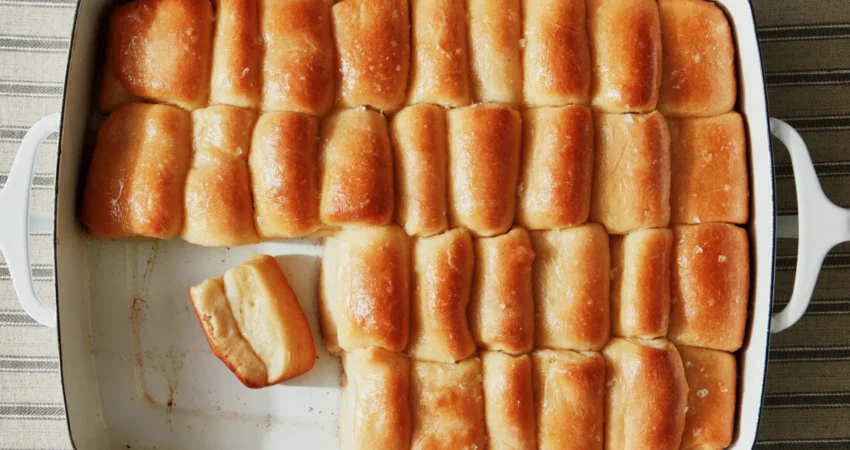
Parker House rolls, with their signature burnished tops, impossibly buttery layers, and a delicate sprinkle of flaky sea salt, stand as a quintessential symbol of classic American comfort food. Their origins trace back to the opulent dining rooms of Boston’s historic Parker House Hotel in the mid-19th century. These soft, yielding yeast rolls, often referred to as "pocketbook rolls" due to their distinctive folded shape, have graced countless holiday tables and family gatherings, embodying a tradition of warmth and hospitality. Their versatility is undeniable, serving as the perfect accompaniment to festive feasts like Thanksgiving turkey or celebratory holiday ham, and their delightful texture makes them equally appealing as a canvas for sweet morning spreads of honey or jam.
The enduring popularity of Parker House rolls is a testament to their simple elegance and approachable preparation. The recipe, notably adapted from the venerable The Fannie Farmer Baking Book by Marion Cunningham, is designed to be accessible even for novice bakers venturing into the world of yeasted breads. The dough, pliable and forgiving, is a pleasure to knead by hand, though a stand mixer can certainly expedite the process. The magic of their characteristic shape and tender texture is unlocked through a meticulous buttering process. Each piece of dough is generously brushed with melted butter before being folded, creating the signature crescent or pocketbook form. A subsequent application of butter after baking bestows upon them a lustrous sheen and intensifies their rich flavor, a detail that elevates them from mere bread to a culinary experience.
The Distinctive Identity of Parker House Rolls
What truly sets Parker House rolls apart from their more commonplace dinner roll counterparts lies entirely in their unique shaping and the resulting textural nuances. While many dinner rolls are formed into simple balls, Parker House rolls undergo a more intricate transformation. The dough is typically rolled or pressed into rectangular portions. A generous application of melted butter is then applied across the surface of each rectangle. This buttery layer not only imbues the roll with flavor but also plays a crucial role in the folding process. The dough is then folded in half, creating a distinct seam, much like a small, enclosed pocket or a folded handkerchief. This folding technique results in the characteristic pocketbook shape and establishes a tender, buttery seam that encourages effortless separation when the rolls are served warm. This deliberate construction contributes to their melt-in-your-mouth quality and their inherent appeal as a pull-apart bread.
A Legacy Forged in Hospitality: The Parker House Hotel
The story of the Parker House roll is inextricably linked to its namesake, the Parker House Hotel in Boston. Opened in 1856, the Parker House quickly became a landmark of American hospitality, renowned for its luxurious accommodations and exceptional dining. The hotel was a hub of social and political life, attracting prominent figures and setting trends in culinary arts. It was within this esteemed establishment, during the latter half of the 19th century, that the Parker House roll is believed to have been conceived. While the precise inventor remains a subject of culinary folklore, the roll’s creation is often attributed to the hotel’s innovative chefs seeking to offer a unique and memorable bread to their discerning clientele. The hotel itself, a grand Victorian edifice, was a symbol of American prosperity and burgeoning culinary sophistication. The roll, therefore, emerged from an environment that valued quality, tradition, and a touch of refined indulgence.
The Evolution of a Classic: Adaptation and Accessibility
The enduring appeal of the Parker House roll has been significantly bolstered by its inclusion in influential cookbooks. The adaptation from The Fannie Farmer Baking Book by Marion Cunningham is particularly noteworthy. Cunningham, a celebrated culinary figure in her own right, revitalized and modernized Fannie Farmer’s foundational work, making classic recipes more accessible to home cooks. Her adaptation of the Parker House roll recipe prioritized clarity and ease of execution, ensuring that the techniques and ingredients were within reach for a wider audience. This democratization of a once-hotel-exclusive delicacy allowed the Parker House roll to transition from a restaurant specialty to a beloved staple in American kitchens across the nation. The inclusion in such a widely read and respected cookbook cemented its status as an American culinary icon.
Mastering the Art: A Frequently Asked Questions Guide
The preparation of Parker House rolls, while straightforward, can sometimes present challenges for even experienced bakers. Understanding common pitfalls and their solutions can ensure a successful outcome.
What makes a Parker House roll different from a regular dinner roll?
The fundamental distinction lies in the shaping and the resulting texture. Regular dinner rolls are typically formed into individual, uniform spheres or oval shapes. Parker House rolls, conversely, are characterized by their folded, pocketbook-like appearance. This is achieved by rolling the dough into rectangles, buttering one side, and then folding the rectangle in half. This folding technique not only creates the distinctive visual appeal but also results in a layered, buttery interior that is remarkably tender and easy to pull apart. The butter incorporated during the folding process creates a moist, flavorful seam, differentiating it from the more uniform crumb of a standard dinner roll.
Can I make Parker House rolls ahead of time?
The flexibility of Parker House roll dough allows for significant make-ahead preparation, a boon for busy hosts and bakers. The dough itself can be mixed up to 8 hours in advance and kept refrigerated, covered tightly. This slow, cold fermentation can even enhance the flavor development. Once the rolls are shaped, they can be refrigerated for at least 30 minutes and up to 6 hours before baking. This chilling period allows the dough to firm up, making it easier to handle and promoting a better rise in the oven. For even greater convenience, baked rolls can be partially cooked. Remove them from the oven about 5 minutes before they are fully done – they should be puffed and cooked through but still pale. They can then be finished baking when ready to serve, allowing for freshly baked rolls with minimal last-minute effort.
Why did my Parker House rolls turn out dense?
Dense Parker House rolls are a common concern, often stemming from a few key factors related to flour measurement and proofing. The most frequent culprit is an excessive amount of flour. Flour absorbs moisture, and too much flour can lead to a heavy, dense dough. For the most accurate measurement, bakers are strongly advised to weigh their flour rather than relying on volume measurements (cups). A kitchen scale provides unparalleled precision. Insufficient rising time is another primary reason for density. Yeast needs adequate time to produce carbon dioxide gas, which creates the airy structure of the roll. Dough should be allowed to rise until it has visibly doubled in size. Conversely, overproofing can also lead to a dense outcome. When dough overproofs, the gluten structure can weaken, and the yeast can exhaust its leavening potential, resulting in a collapsed or dense texture. The "poke test" is an invaluable tool here: gently poke the dough with a floured finger. If the indentation springs back slowly but doesn’t completely disappear, the dough is ready for baking.
Can I freeze Parker House rolls?
Yes, Parker House rolls freeze remarkably well, preserving their delightful texture and flavor for future enjoyment. Baked and completely cooled rolls can be frozen for up to a month. To reheat, thaw them at room temperature and then warm them in a low oven (around 300°F or 150°C) until heated through. A light spritz of water on top of the rolls before reheating can help prevent them from drying out and ensure they regain their plush softness. Alternatively, unbaked, risen rolls can also be frozen for up to a month. Bake them directly from the freezer, adding approximately 5 minutes to the standard baking time to account for the frozen state. This method offers the ultimate convenience, allowing for freshly baked rolls on demand.
Broader Culinary Implications and Enduring Appeal
The Parker House roll’s journey from a hotel specialty to a beloved home-baked treat reflects broader trends in American culinary history. The increasing availability of quality ingredients and the dissemination of refined baking techniques through cookbooks and cooking schools in the late 19th and early 20th centuries played a significant role. The recipe’s adaptability, as seen in Cunningham’s revision, further contributed to its widespread adoption. Its association with holiday meals, a cornerstone of American family life, has solidified its emotional resonance. The roll’s inherent deliciousness, combined with its historical significance and relative ease of preparation, ensures its continued presence on dinner tables and in baking repertoires for generations to come. Its simple yet elegant design, coupled with its satisfyingly tender and buttery crumb, makes it a timeless example of comfort food done exceptionally well. The Parker House roll is more than just a bread; it’s a culinary artifact, a taste of history, and a warm invitation to gather and share.

0 Comments